

Ex-bankers charge Wall Street $25,000 a day to coach AI rollouts
Bloomberg profiles Felipe Sinisterra and Dave Wang, who are billing global banks to operationalize the AI tools their internal teams have struggled to deploy.
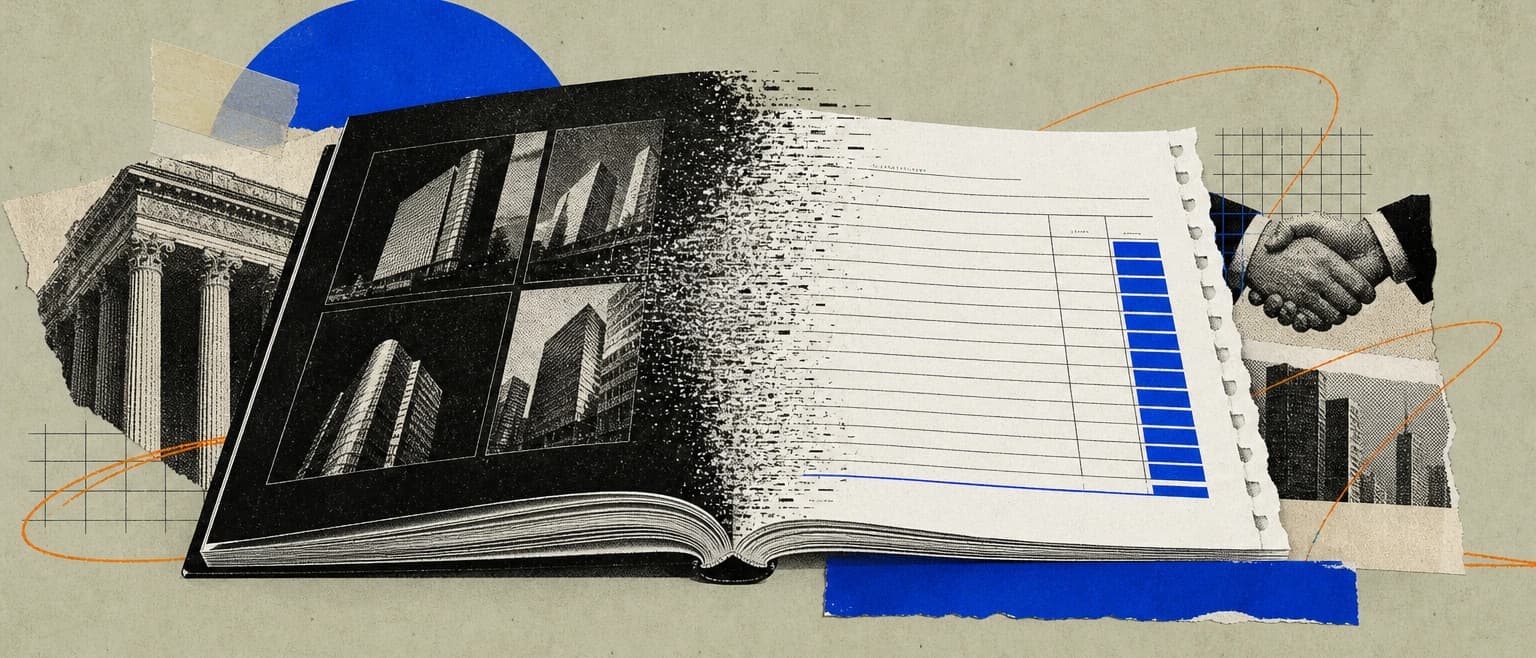
Two former bankers are billing global banks up to USD 25,000 a day to coach their teams on deploying AI tools, according to a Bloomberg feature published Monday. Felipe Sinisterra and Dave Wang are pitching themselves as the bridge between the multi-billion-dollar AI budgets banks have committed and the workflow automation those budgets have so far failed to produce.
Wang, 31, showed how Alphabet's Gemini could be used to analyze founders' pitch videos. The demo Bloomberg describes pairs a transcript with visual cues, body language and facial expressions, drawing on behavioral analysis methods associated with the FBI, to surface potential red flags during diligence. The use case is investment banking-adjacent: pre-investment screening of management teams, a workflow that today depends on in-person meetings and the gut of the senior banker in the room.
The Bloomberg piece frames Sinisterra and Wang's business as a symptom rather than a solution. Global banks have committed billions to AI, but workflow automation, the part that actually changes the cost structure of a deal team, has lagged. The two are selling the missing layer: not the model, not the seat license, but the operator knowledge of which banker workflow can be reshaped around which tool.
The USD 25,000 day-rate is the headline number. For context, that lands in the range of senior management-consulting day-rates from McKinsey, BCG, and Bain, without the firm overhead. Bloomberg does not disclose which banks are paying, the length of typical engagements, or the size of the practice. The reporting also does not quantify the AI spend it references as "billions" beyond that framing.
What the demo signals
The Gemini-plus-behavioral-analysis demo is worth reading as a positioning move more than a product. Bankers do not need another tool that summarizes a pitch deck. The differentiated claim is that the same model can be turned on the founder, not just the document, with a workflow built on top. Whether the underlying behavioral inference holds up is a separate question. Body-language analysis as a diligence input has a thin academic base and a long history of overclaiming. Bloomberg's account does not include validation data.
What the demo does communicate is the consultants' read of where the buyer's attention sits: bankers want to see AI applied to the judgment-heavy parts of the job, not the grunt work, because the grunt work is what junior analysts are already prompting ChatGPT to do unsupervised.
Are your experts using AI to cheat?
Try our free demo to find out today.
The broader signal for the data and research stack: the bottleneck on Wall Street AI deployment in 2026 is not capability. It is the translation layer between what the model can do and what a deal team will actually use on a Tuesday afternoon. Whoever owns that translation layer, in-house enablement teams, ex-banker consultants, or vendors who ship workflow-shaped products rather than raw model access, captures the spend.
Powering institutional-grade transcription for expert networks.
INFLXD provides AI-powered, human-edited transcription with sub-1% error rates for the world's leading expert networks and financial research firms.
Visit inflxd.com →Keep reading.
How Buy-Side Firms Handle Expert-Network Pre-Call Materials: 7 Structural Models
Pre-call attachments sit outside the recorded-call boundary, and buy-side compliance teams have built seven distinct ways to handle them.
Bridgewater CIO Greg Jensen says AI is already doing the equity analyst job
On Bloomberg's Odd Lots, Jensen said machine-side outputs at the fund now stand next to a 50-year human research process.
OpenAI launches ChatGPT for Financial Services, targeting Wall Street research workflows
The vertical release bundles data connectors, cited research, and deck generation, and lands on FactSet and S&P Global's turf.