

Guidepoint plugs its expert library into Claude via MCP
The expert network is exposing its 100,000+ interview archive to LLMs through Anthropic's Model Context Protocol, putting transcript retrieval one prompt away from the analyst's chat window.

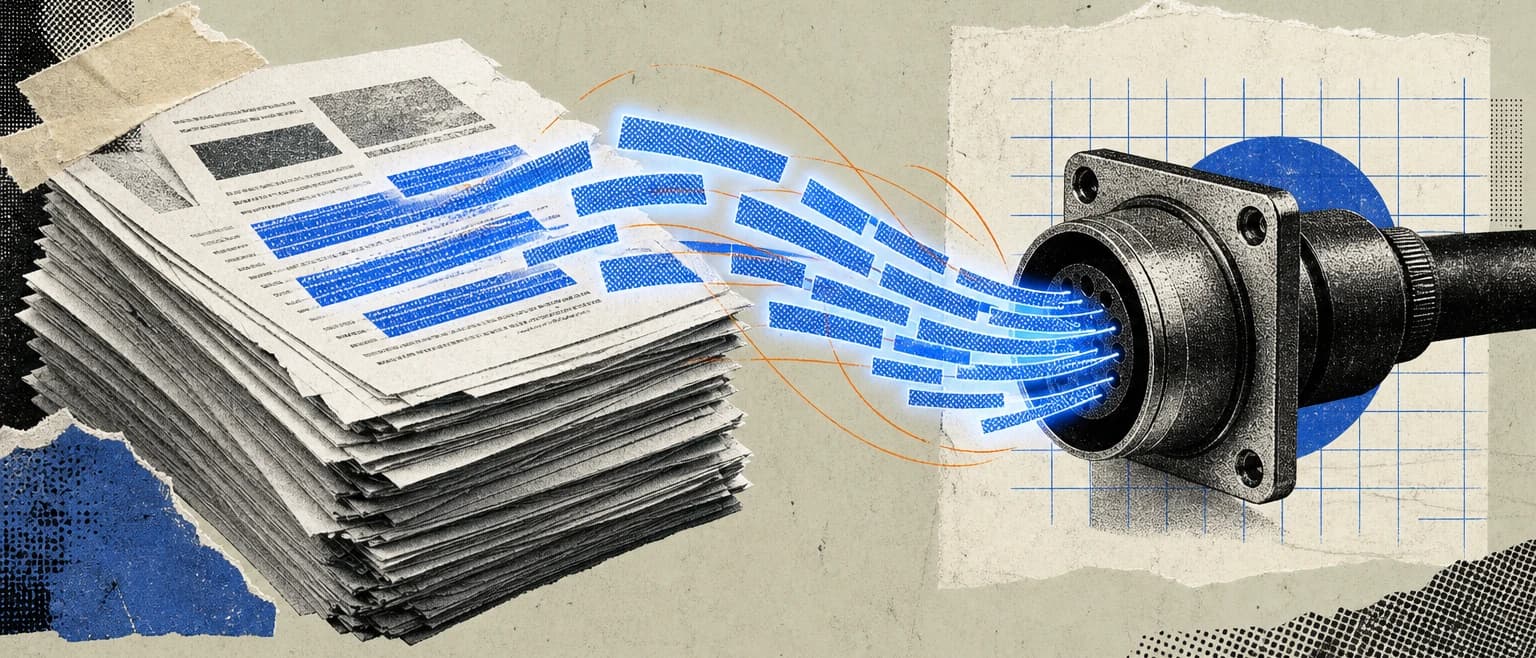
Guidepoint is wiring its expert-interview archive into large language models. In a demo posted on X, the firm showed an analyst querying Claude and getting answers drawn from Guidepoint's library of more than 100,000 expert interviews, with sources cited inline. The connector runs on Anthropic's Model Context Protocol (MCP), the open standard Anthropic released in late 2024 for piping external data and tools into LLMs.
The pitch is workflow compression. Instead of toggling between a research portal and a chat window, an analyst asks a question in Claude and gets a synthesized answer with transcript citations attached.

What the connector actually does
MCP, introduced by Anthropic in November 2024, lets an LLM call out to a registered data source mid-conversation. The Guidepoint connector, per the demo, exposes the transcript corpus as one of those sources. The user prompt triggers a retrieval against the library; the model composes an answer; the citations come back attached.
This is the same architectural pattern AlphaSense has been shipping for two years through its generative search products, and that Tegus (now part of AlphaSense after the June 2024 acquisition) built its transcript summarization stack around. The difference is venue. AlphaSense's generative answers live inside the AlphaSense product. Guidepoint's MCP connector puts the answer inside whatever LLM the analyst already has open.

For a buy-side analyst running Claude as a daily driver, that distinction matters. The transcript becomes a callable resource alongside everything else the model can reach, rather than a separate destination requiring a context switch.
Why expert networks are reaching for this
Expert networks have spent the last two years watching the AI layer get built on top of their content without them. AlphaSense bought Tegus and made transcript search a generative-AI product. Hedge fund analysts started piping earnings transcripts and broker notes into their own Claude and ChatGPT workspaces. The risk for a traditional expert network is straightforward: if the analyst's research surface is the chat window, and the transcript library doesn't show up there, the library gets used less.
MCP is a way to show up there without rebuilding the entire research product. Anthropic does the protocol work. The expert network does the connector and the access controls.
What to watch
Three things over the next two quarters. First, whether GLG and Third Bridge ship comparable MCP connectors, or take a different path (proprietary APIs, partnerships with specific LLM vendors). Second, whether Guidepoint publishes specifics on access controls, audit logging, and how citation provenance is preserved when a Claude session is shared or exported. Third, whether AlphaSense responds by opening its own corpus to external LLMs via MCP or doubles down on keeping generative answers inside its product.
The broader signal: the research analyst's primary interface is shifting toward the chat window. Vendors who don't show up there will get used less, regardless of corpus quality.
Powering institutional-grade transcription for expert networks.
INFLXD provides AI-powered, human-edited transcription with sub-1% error rates for the world's leading expert networks and financial research firms.
Visit inflxd.com →Keep reading.

Magnetar prepares AI-agent equity fund for 2026 launch
The $18 billion firm is building a long-biased equity strategy where hundreds of AI agents handle research work normally done by analyst teams.
Accenture Ventures takes stake in AlphaSense, sets agentic workflow partnership
The consulting firm's venture arm backs the market intelligence platform as the two move to embed AlphaSense data inside enterprise AI agents.

AlphaSense raises $350M at $7.5B valuation, crosses $600M ARR
The market intelligence platform extends its content moat and AI roadmap with fresh capital from J.P. Morgan Private Capital and Viking Global Investors.