

Inside the Accenture Ventures stake in AlphaSense: how a strategic investment became an agentic-workflow distribution channel
A corporate-venture check turned a Big Four consulting firm into a delivery channel for AI-native primary research.

The Accenture Ventures investment in AlphaSense is more than a corporate-venture line item. It is a working example of how AI-native research platforms are using strategic investors to embed agentic primary-research workflows inside Fortune 500 buyers, not just inside hedge funds and asset managers. The mechanics of the deal, and the sequencing of AlphaSense's funding and M&A around it, offer a template for how the next phase of expert-network-adjacent distribution is likely to unfold.
Background: a growth curve that outran its buyer base
AlphaSense spent 2024 and 2025 compounding on two axes at once, capital and content. The company raised USD 150M in mid-2024 at a USD 2.5B valuation, then closed a USD 350M Series F in May 2025 at a USD 7.5B valuation with reported ARR above USD 600M. Company statements around the raise indicated that AI features were driving roughly half of new-business conversations, a shift from AlphaSense's earlier positioning as a search-and-monitoring layer over filings, transcripts, and broker research.
The content side moved in parallel. In mid-2024 AlphaSense acquired Tegus for USD 930M, folding a library of expert-call transcripts and a research workflow product into the platform. Tegus brought a specific asset that AlphaSense did not previously own at scale: a corpus of primary-research conversations with operators, former executives, and industry specialists, structured for search and increasingly for retrieval by AI agents.
That combination, a large content substrate plus an AI-native front end, was well-tuned to AlphaSense's historic buy-side base. The distribution question was what came next. Hedge funds and asset managers are a bounded market. Corporate strategy teams, in-house M&A groups, and the consulting firms that serve them are not, and they buy primary research through different channels, on different procurement cycles, and with different definitions of what a research workflow looks like.
The approach: turn a consulting firm into a channel
The Accenture Ventures deal addresses that question directly. Accenture Ventures took a strategic minority stake in AlphaSense and paired the investment with a partnership to co-develop agentic workflows for enterprise clients. The structure matters more than the check size. A minority investment from a Big Four consulting firm's venture arm is a signal of intended integration into the parent's delivery model, not a passive financial position.
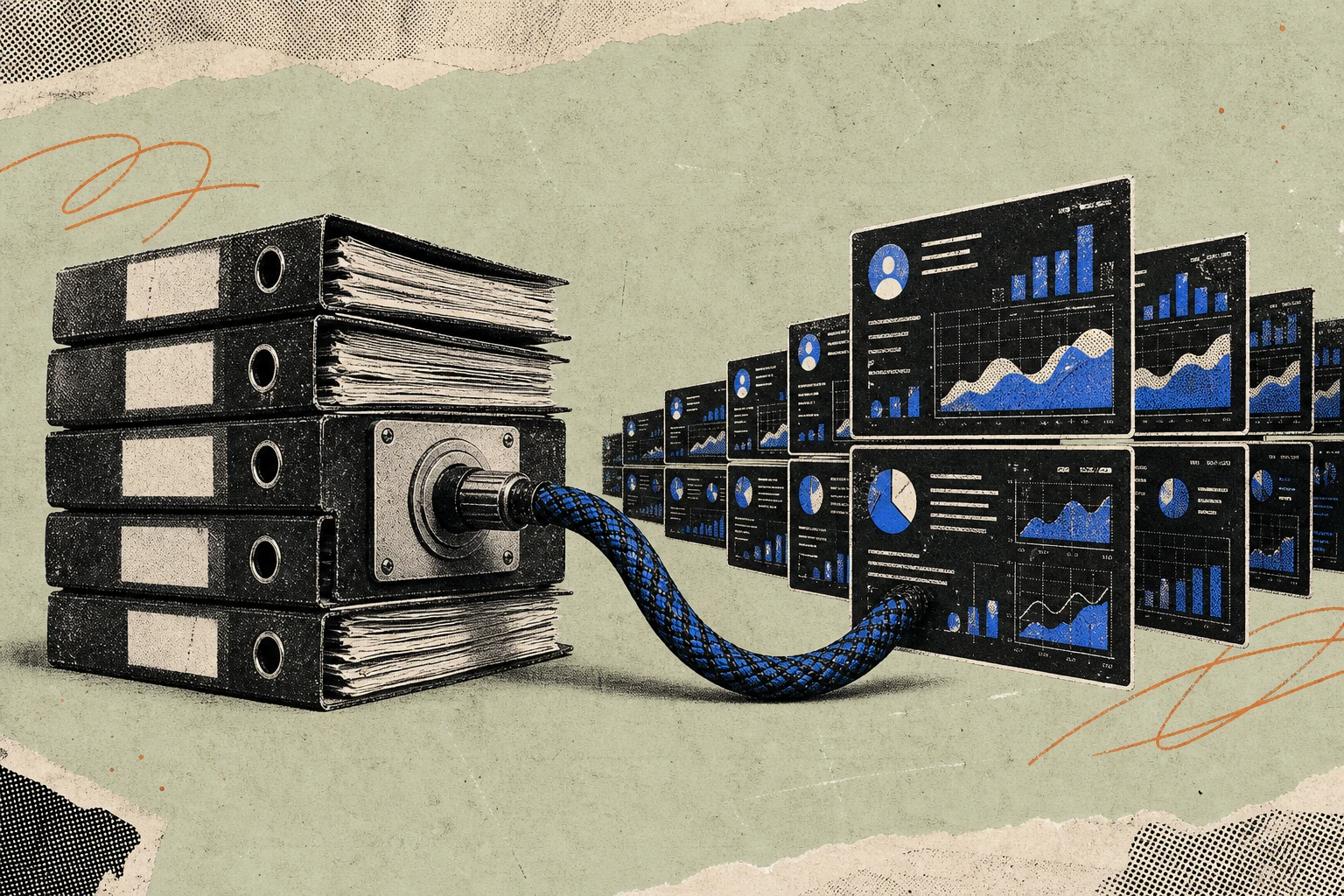
The stated logic is straightforward. Accenture brings systems-integration reach across Fortune 500 buyers, an existing services relationship with those buyers' strategy and M&A functions, and a delivery model built around AI transformation programs. AlphaSense brings the content library, the Assistant product, and the search-and-retrieval infrastructure sitting on top of filings, broker research, and Tegus expert transcripts. In the joint delivery model, an Accenture consultant working on a market-entry or diligence engagement can point client questions at AlphaSense's platform rather than commissioning a bespoke research library or a one-off primary-research project.
Why the shape of the deal fits both sides
For AlphaSense, the arrangement solves the enterprise-distribution problem without requiring a build-out of a large corporate direct-sales motion. Accenture-led engagements come with their own procurement path and their own credibility with corporate legal and compliance functions. Embedding into that path is faster than approaching each corporate buyer cold.
For Accenture, the calculus runs the other way. Building a proprietary content library at the scale of AlphaSense-plus-Tegus is not a serious option for a consulting firm. Licensing and integrating a specialist platform, and taking equity to align incentives, is a more capital-efficient path to putting AI-native primary research inside client engagements. It also positions Accenture to charge for AI transformation work that has a defensible research substrate underneath it, rather than one built on general-purpose web search.
The pattern across the sector
The Accenture-AlphaSense structure is not isolated. Several peer moves in the past 18 months point the same direction: primary-research platforms plugging into distribution partners rather than trying to reach every buyer segment directly.
- Guidepoint has moved to make its expert-network content addressable via the Model Context Protocol, with deployments on Anthropic's Claude and on Perplexity's enterprise product. That treats third-party AI surfaces as distribution.
- GLG has integrated its expert content with Bloomberg's ASKB assistant, putting expert-network material inside a terminal that already sits on the desk of the buy-side reader.
- Rogo, an AI-native workflow product for financial services, has taken partnership capital and technical integration from OpenAI, using a foundation-model relationship as a distribution and credibility asset.
The common thread is a recognition that in AI-native research, the content library and the agent are only two of the three pieces. The third is a distribution surface that already has the buyer's attention. In some cases that surface is a terminal, in others a chat interface, in others a consulting engagement. The Accenture tie-up is the consulting-engagement instance of the pattern.
What it changes inside a Fortune 500 buyer
The operational implication of the deal, if it plays out as announced, is a shift in how a corporate strategy team consumes primary research. Historically, a strategy VP running a market-entry study on, say, industrial automation in Southeast Asia would either commission a consulting project, buy a syndicated report, or subscribe to an expert network and run calls directly. Each of those channels has its own cost structure, its own lead time, and its own compliance envelope.
Under the AlphaSense-Accenture model, some of that work shifts to an agent-mediated interaction with a content library that already includes Tegus expert transcripts, broker research, filings, and industry reports. A consultant configures the workflow, the agent retrieves and synthesises across sources, and the human analyst focuses on judgment, scenario building, and internal narrative. The value proposition to the corporate buyer is a compressed research cycle and a citation trail into named sources.
Whether this displaces bespoke expert calls or increases their total volume is an open question. The likely answer, based on how these substitutions have played out in adjacent research workflows, is both, with the expert call moving upstream from an initial-scoping exercise to a more targeted, post-synthesis validation step.
What it signals for the industry
Three implications sit inside the deal for the broader primary-research market.
Corporate-venture money is becoming a distribution instrument. For late-stage research platforms with IPO optionality, taking a check from a strategic investor whose parent controls a large delivery channel is a way to lock in enterprise pipelines without paying full sales-and-marketing cost. Accenture Ventures is one such investor; the same logic applies to venture arms of the other Big Four firms and to strategic investors adjacent to the financial-terminal market.
Consulting firms are choosing to buy content, not build it. The scale of AlphaSense's content stack after the Tegus acquisition is not something a consulting firm will replicate. That decision, once one Big Four firm takes it publicly, tends to propagate. Peer firms will either partner with AlphaSense's competitors or accept a disadvantage in agentic-research delivery.
Compliance rules will have to travel across the delivery boundary. Expert-network content sits inside a specific compliance envelope: MNPI screening, consent structures, restricted-list checks, and audit trails. Those controls are well-defined inside a hedge fund or asset manager buying directly from Tegus or a peer network. How they translate when the same content is surfaced inside a consulting engagement to a corporate strategy team is less well-defined. The answer will emerge in the specifics of how AlphaSense and Accenture implement the integration, and it will matter to every competitor watching the pattern.
Powering institutional-grade transcription for expert networks.
INFLXD provides AI-powered, human-edited transcription with sub-1% error rates for the world's leading expert networks and financial research firms.
Visit inflxd.com →Keep reading.

7 Ways Buy-Side Firms Structure Expert-Network Call Prep in the Agent Era
How research analysts at hedge funds and PE shops are re-engineering the hour before an expert call, from MCP transcript retrieval to compliance gating.

How NewtonX productized its verified-expert panel into B2B Synthetic Personas
A working example of how a human expert network extends its respondent graph into an AI-priced product without cannibalizing the custom-recruit business underneath it.

7 Ways Buy-Side Firms Structure Expert-Network Compliance Training for New Analysts
A practical map of the training modules and controls that get new analysts and PMs cleared for their first expert call.