

MCP turns expert networks into context providers for buy-side LLMs
Guidepoint, Third Bridge, GLG, and AlphaSense are racing to wire transcript libraries into Claude. The plumbing wins distribution and compresses pricing at the same time.
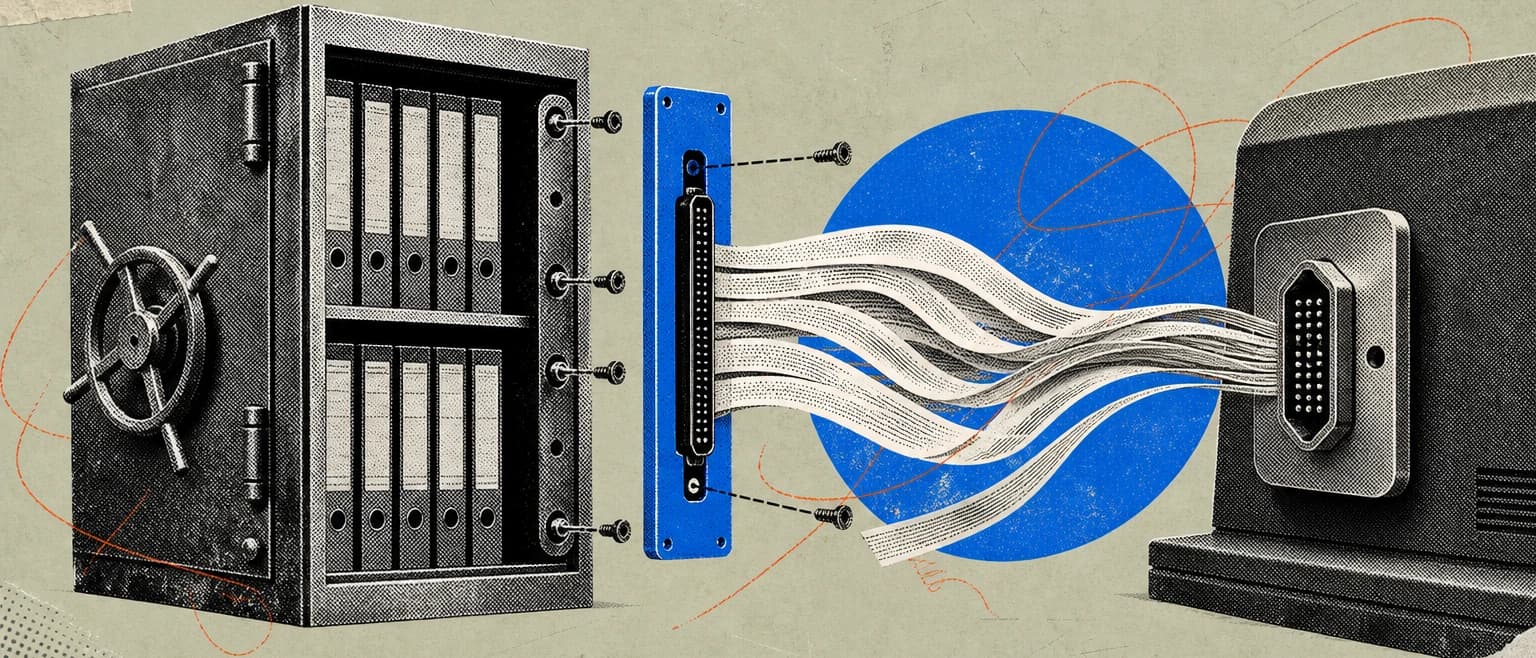
Between Q4 2025 and Q2 2026, the largest expert networks stopped treating AI as a feature and started treating it as a distribution channel. Guidepoint and Third Bridge shipped Model Context Protocol (MCP) servers into Anthropic's Claude. Moody's and IBISWorld followed with their own MCP endpoints. Guidepoint alone is piping more than 100,000 compliance-reviewed transcripts and a 1.8 million-person expert roster through the protocol. GLG relaunched its myGLG client platform with an AI research agent layered over its proprietary roster. AlphaSense, now north of USD 500M ARR, doubled non-US Tegus coverage and shipped Interview Agent.
The strategic logic is simple enough to fit on a slide. Whichever expert network becomes the default context provider inside an analyst's Claude session captures the workflow without having to own the model layer. The analyst opens Claude, queries the transcript archive in natural language, and the answers arrive pre-attributed to a vendor whose logo never leaves the session. Distribution beats product.
Three pressures cut against the distribution story.

The first is interface standardization. MCP is a protocol, not a moat. When every major expert network exposes its archive through the same schema, an analyst (or an agent acting on the analyst's behalf) can query Guidepoint, Tegus, Third Bridge, and IBISWorld in the same session and rank the answers. Phone-call sourcing was never substitutable in this way. A scheduled hour with a former VP of supply chain at a named OEM was a discrete, non-comparable artifact. A transcript pulled through an API is a row in a result set.
The second is the pricing structure. Per-call revenue is the expert network industry's historic margin engine. Scheduled consultations price in compliance overhead, recruiter time, and the scarcity premium of the named expert. Transcript-library API access prices on tokens, seats, or rate-limited query volume. The two revenue models do not convert at par. A buy-side firm that previously paid for 400 scheduled calls a year does not pay the same dollar amount for unlimited transcript queries from the same vendor's archive, and vendor sales teams know it.
The third is the agentic entrant. Ethos raised USD 22.75M from a16z. Bridgetown raised USD 19M from Lightspeed and Accel. Rogo closed a USD 160M Series D. None of these firms is trying to recruit a 1.8 million-person expert roster. They are building research agents that read transcripts, file decks, and earnings calls and produce the diligence artifact directly. If the agent is good enough, the scheduled call that justified the expert network's per-call pricing becomes optional rather than central.
The combined effect is a category that has won a distribution race and lost a pricing war in the same eighteen months.
Powering institutional-grade transcription for expert networks.
INFLXD provides AI-powered, human-edited transcription with sub-1% error rates for the world's leading expert networks and financial research firms.
Visit inflxd.com →Keep reading.

Magnetar prepares AI-agent equity fund for 2026 launch
The $18 billion firm is building a long-biased equity strategy where hundreds of AI agents handle research work normally done by analyst teams.

Accenture Ventures takes stake in AlphaSense, sets agentic workflow partnership
The consulting firm's venture arm backs the market intelligence platform as the two move to embed AlphaSense data inside enterprise AI agents.

AlphaSense raises $350M at $7.5B valuation, crosses $600M ARR
The market intelligence platform extends its content moat and AI roadmap with fresh capital from J.P. Morgan Private Capital and Viking Global Investors.