

The data-residency split: how regional transcript hosting is reshaping expert-network architecture
Cross-border transfer rules are forcing expert networks into regional transcript shards as they wire libraries into LLMs.

Expert networks have spent the last six months connecting transcript libraries to Anthropic's Model Context Protocol. Guidepoint, Third Bridge, and AlphaSense (via Tegus) are all live, with Guidepoint exposing more than 100,000 transcripts through the connector. In parallel, AlphaSense announced an APAC and EMEA expansion that doubled the Tegus transcript library outside the United States, with explicit emphasis on multi-language search and regional content.
These two trends collide at the data-residency layer. The result, in our read, is a regionalised storage and routing architecture that becomes a permanent feature of the category rather than a temporary compliance workaround.
The compliance map
China's Personal Information Protection Law took effect in November 2021. The Cyberspace Administration of China's March 2024 provisions on cross-border data transfer clarified, rather than relaxed, the outbound transfer regime for data collected inside China. Expert interviews conducted with mainland-based experts sit squarely inside that perimeter. Several expert networks paused or restructured their China call programs in 2023; the question now is what happens to the transcripts already in the library when those transcripts get exposed to a US-hosted LLM endpoint.
The EU side is no looser. GDPR Chapter V continues to constrain transfer of personal data to US-hosted models absent Standard Contractual Clauses or reliance on the EU-US Data Privacy Framework. The EU AI Act entered into force in August 2024, with general-purpose model provisions effective August 2025, layering a model-level compliance regime on top of the personal-data regime. Japan's APPI amendments and Singapore's PDPA add further regional texture for APAC content.
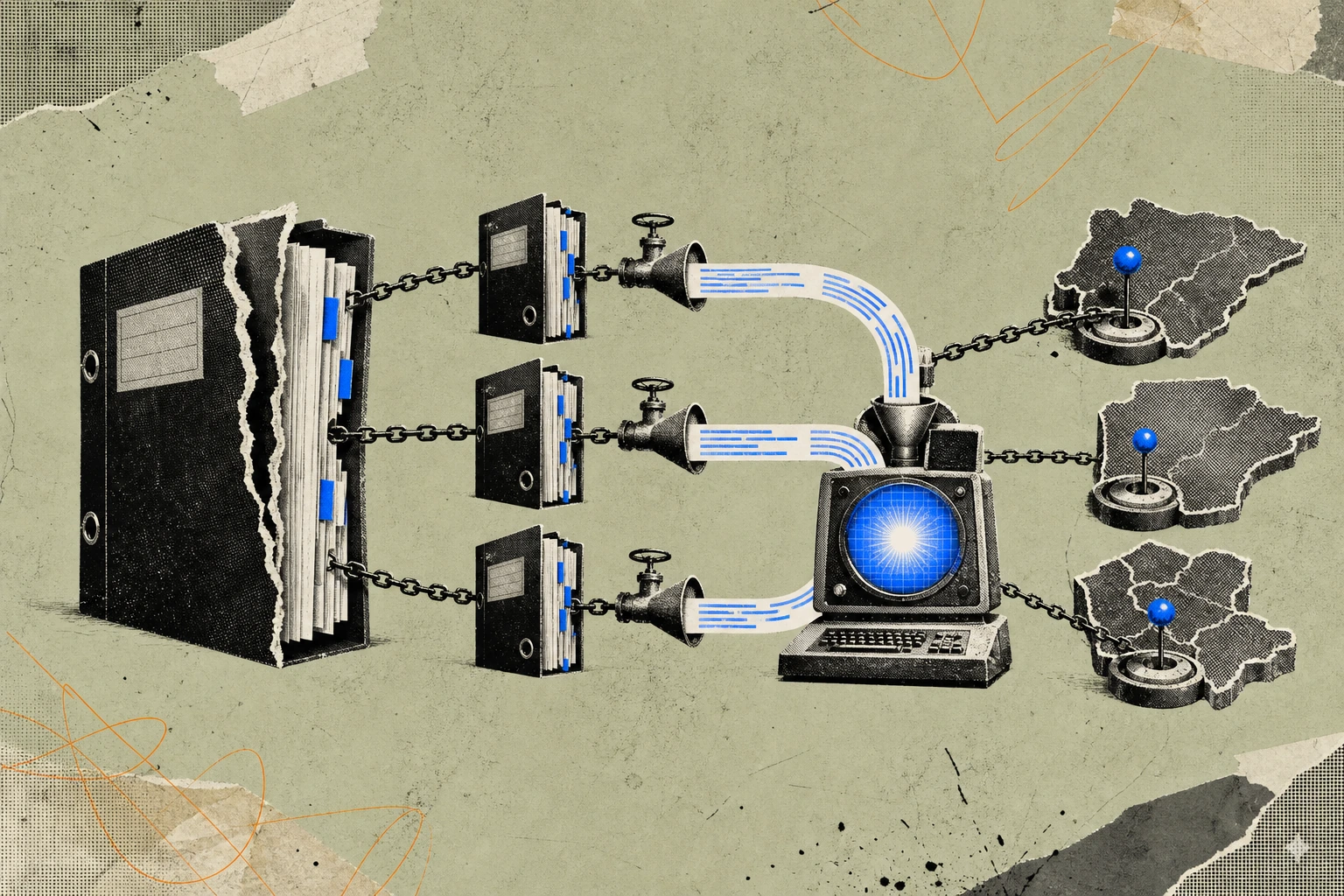
For an expert network, the transcript is not a clean abstraction. It contains the expert's identity, their employment history, their location, and in many cases personal data about third parties they discuss. All of that is in scope.
What the LLM vendors have done
The inference layer is now regionalisable. Anthropic's Claude is available on AWS Bedrock with regional inference across multiple EU and APAC regions, which means a query can be processed without the prompt or completion leaving the region. OpenAI launched EU data residency in early 2024 for ChatGPT Enterprise, the API, and related products.
That solves one half of the problem. The prompt and the model response can stay in-region. The other half, where the source content lives and how the connector retrieves it, is the expert network's problem.
Three architectural paths
We see three MECE paths for an expert network with a global transcript footprint and a live MCP connector.
Path one: single-region store, gated access. Keep the transcript library in one US region. Restrict MCP access to transcripts whose source jurisdiction permits outbound transfer. Block the rest at query time. This is the cheapest engineering path and the most aggressive on coverage. EU and China content effectively becomes invisible to LLM workflows. For a buy-side user running a thematic search across global experts, the result is a silently incomplete answer.
Path two: regional shards, regional routing. Stand up transcript stores in EU and APAC regions matched to the LLM vendor's regional endpoints. Route MCP queries to the regional shard based on the user's jurisdiction and the experts' source jurisdiction. This is the architecturally honest path and the expensive one. It requires regional infrastructure, regional access controls, and a routing layer at the MCP connector that knows where each transcript was collected. It also requires a metadata regime that tracks collection jurisdiction at the transcript level, which not every expert network has today.
Path three: regional shards, federated query. Keep regional stores but allow a single user query to fan out across regions, with results assembled on the user side rather than the server side. This preserves coverage but pushes the compliance question to the user's seat. Whether a buy-side firm wants that question on its desk is a separate matter.
Who's affected
The primary effects land on three groups. Expert networks with mature transcript libraries and active LLM integrations are the most exposed; the larger the existing US-region store, the larger the re-architecture bill. LLM vendors with regional inference compete on a feature, regional endpoints, that maps to a real compliance pain. Buy-side users of MCP-integrated transcript workflows will eventually notice that their query results vary by region, and they will want disclosure of which path their vendor has chosen.
Second-order: cloud providers with regional footprints (AWS, Azure, GCP) become more central to the EN architecture conversation. Compliance vendors that can map collection jurisdiction to transcripts at scale become useful in a way they weren't when the transcript was just a PDF in a research drawer.
The transcript library was always a regulated asset. The MCP era just made the regulation legible to engineering.
Powering institutional-grade transcription for expert networks.
INFLXD provides AI-powered, human-edited transcription with sub-1% error rates for the world's leading expert networks and financial research firms.
Visit inflxd.com →Keep reading.

Magnetar prepares AI-agent equity fund for 2026 launch
The $18 billion firm is building a long-biased equity strategy where hundreds of AI agents handle research work normally done by analyst teams.

Accenture Ventures takes stake in AlphaSense, sets agentic workflow partnership
The consulting firm's venture arm backs the market intelligence platform as the two move to embed AlphaSense data inside enterprise AI agents.

AlphaSense raises $350M at $7.5B valuation, crosses $600M ARR
The market intelligence platform extends its content moat and AI roadmap with fresh capital from J.P. Morgan Private Capital and Viking Global Investors.