

The provenance stamp: how transcript vendors are standardizing content credentials for AI-ingested primary research
C2PA-style content credentials are moving from newsroom deepfake defense into buy-side research infrastructure. The transcript vendors that ship signed manifests will own the compliance conversation for agent-mediated research.
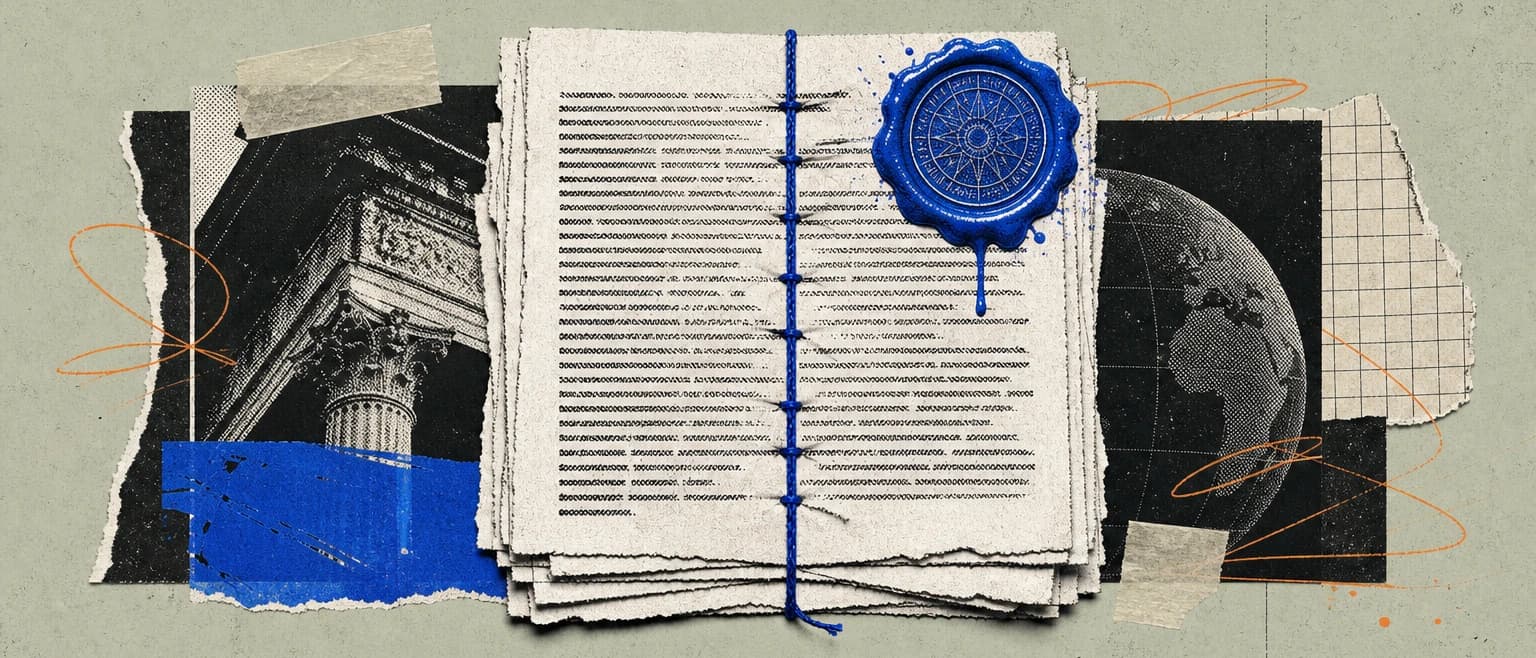
The question a buy-side compliance officer now asks about a transcript is not whether the citation link resolves. It is whether the artifact a Claude or Bloomberg ASKB agent surfaced at 3pm is byte-for-byte the same artifact the expert network moderator approved at 10am, and whether that fact is cryptographically provable to a regulator six years later.
That is a different question from the one the transcript industry has been answering. Citation anchors, deep links, and paragraph-level source pins solve the user-experience problem: the analyst sees where the claim came from. They do not solve the authenticity problem: the compliance function cannot prove the surfaced text is the surfaced text. As agentic research workflows chunk, summarize, translate, and re-emit primary-source transcripts across three or four intermediary systems before the analyst reads a sentence, the gap between citation and provenance widens into a category.
Our read is that the primitive that closes this gap is a cryptographic content credential attached to the transcript at export, in the schema published by the Coalition for Content Provenance and Authenticity. C2PA started as a newsroom defense against synthetic media. It is on the path to becoming the signed-manifest layer underneath buy-side primary research.
From citation faithfulness to signed manifest
INFLXD's prior coverage of the transcript stack has worked through the layers immediately adjacent to this one. Citation faithfulness sits at the evaluation layer: does the model's answer match what the transcript actually says, and can the analyst click through to verify. Entity resolution sits at the language layer: is the ticker the model attached to a comment the correct ticker. MNPI redaction sits at the compliance-preprocessing layer. Audit-trail logging sits at the workflow layer. MCP identity sits at the agent-authorization layer.
Underneath all of them sits a primitive that none of them address: the transcript itself, as a bytestream, arriving at the model's context window with no cryptographic assertion about what it is, where it came from, or whether it has been altered since the moderator approved it.
The citation-anchor pattern that vendors like Aiera and AlphaSense have shipped is a good UX answer. It is not a compliance answer. A citation anchor tells the analyst where the surfaced text came from at the time of retrieval. It does not survive the round trip through an agent that summarizes the transcript, hands the summary to a second agent that re-embeds it into a memo, and then hands the memo to a third system that stores it in the fund's research archive. By the time the compliance function asks whether the archived memo faithfully represents the moderated transcript, the citation link has become a hyperlink to a mutable resource, not a proof.
A signed manifest is a proof. C2PA's specification defines a claim generator (the software that produced the asset), a set of assertions (about the asset's origin, edits, and ingredients), and a cryptographic signature over the whole bundle, anchored to a certificate chain that ties back to an identifiable signer. When an agent chunks the transcript, the chunks can carry the parent manifest by reference. When a downstream system re-emits a summary, it can attach its own manifest citing the source manifest as an ingredient. The chain is inspectable end to end.
This is what the newsroom industry adopted first, and for the same underlying reason: the artifact was moving through more hands than the audit trail could track.
The newsroom precedent, and why it maps to research
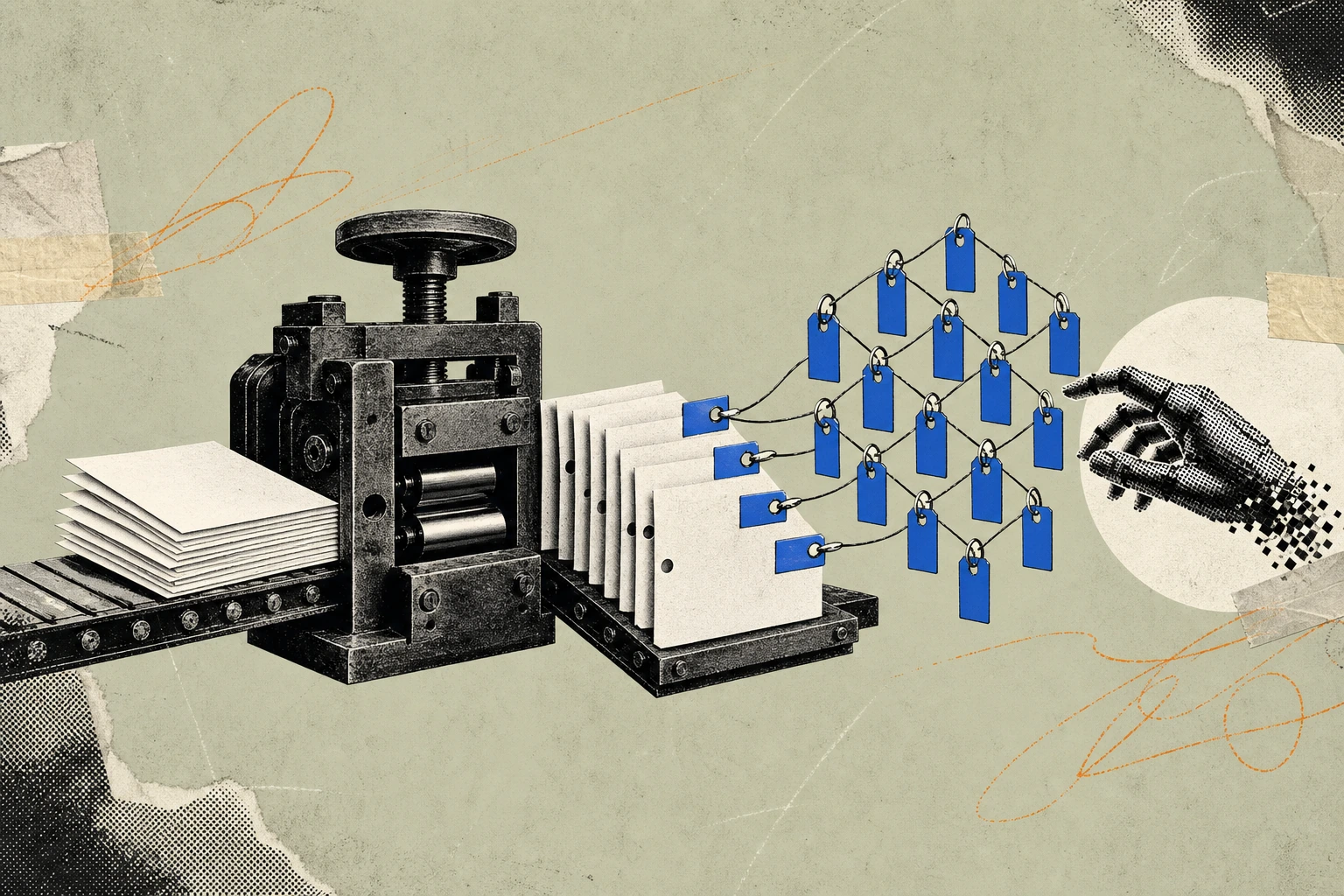
The C2PA specification was designed for a problem the buy-side has not traditionally framed as its own. Adobe, Microsoft, the BBC, Sony, and the New York Times built the coalition to give a wire photo, a news video, or a synthesized image a portable proof of origin as it moved across social platforms, editing suites, and downstream publications. The 2.1 spec formalized the manifest structure. The Content Credentials logo went public in October 2024 as the consumer-facing mark. OpenAI joined the steering committee in May 2024 and started attaching credentials to DALL-E and Sora outputs shortly after. Google's SynthID and Meta's provenance labels overlap in intent.
The photo-desk use case and the transcript use case share a structural feature. Both are primary-source artifacts that pass through multiple ingestion, editing, and republication systems before reaching the end consumer. Both live in a regulatory or reputational environment where the consumer of the artifact needs a defensible answer to the question, is this what the source said. Both have historically relied on out-of-band trust (a Reuters byline, a Guidepoint compliance stamp) that does not travel with the bytes.
Reuters adopting Content Credentials on wire photos in May 2024 is the interesting precedent, because Reuters is not a consumer-facing brand for photos. It is a wholesale supplier of primary-source artifacts to downstream distributors. Its customers are newsrooms, and its newsrooms' customers are readers. The manifest travels because the wholesale layer decided the retail layer needed it to. That is the shape of the transcript-vendor decision as well. The expert network is the wholesale supplier. The buy-side firm is the retail distributor to its own portfolio managers. Whether the manifest travels is a wholesale-layer call.
The regulatory pressure that turns a nice-to-have into plumbing
The reason this matters now, rather than as an abstract standards question, is that the retention regime for research inputs was written before agent-mediated retrieval existed and does not accommodate it cleanly.
SEC Rule 17a-4 requires broker-dealers to preserve records in a non-rewriteable, non-erasable format, with an audit trail sufficient to reconstruct the record's history. MiFID II Article 16 imposes analogous requirements on European investment firms, and extends them to the recording of communications that lead to a transaction. Both regimes were extended to electronic records in ways that assume the artifact retrieved from the archive is the artifact that entered it.
That assumption holds when a transcript is downloaded once, filed once, and read once by a human analyst. It strains when the same transcript is retrieved via an MCP-connected agent, chunked into embeddings, summarized into a research note, and referenced in an investment committee memo, with each hop producing a new artifact that references the transcript without carrying it. The compliance function needs to answer, when the memo cites the transcript, what proves the cited passage matches the moderated transcript. A hyperlink to a mutable URL is not the answer regulators drafted for.
A signed manifest is closer to the answer they drafted for. The manifest is immutable by design, ties the asset to a signer identity via a certificate chain, and permits downstream assertions to be added without invalidating the original signature. This is the same reason financial-message standards like FIX and SWIFT layer signatures over payloads: the payload has to survive being handled.
We are not arguing that C2PA in its current form satisfies 17a-4 or Article 16 out of the box. The certificate infrastructure, the retention obligations on the manifests themselves, and the interaction with existing WORM (write-once-read-many) storage regimes are all open questions. The point is narrower: the regulators are going to ask about agent-mediated research chains, and the vendors with a manifest to show will be having a different conversation than the vendors without one.
Where the transcript-vendor landscape sits today
The current state of the market is that citation anchors have become table stakes and cryptographic manifests are absent. Aiera and AlphaSense publish transcripts with citation anchors that let downstream applications pin a claim to a timestamp or a paragraph. Bloomberg's transcript surfaces in ASKB behave similarly. The expert networks , Guidepoint, GLG, Third Bridge, Tegus, Dialectica, Capvision, Arches , deliver transcripts through portals with authentication and access logging, but the artifact that leaves the portal carries no cryptographic assertion about itself.
The C2PA-signing-as-a-service layer already exists. Truepic offers signed capture and content credentials as an API. Numbers Protocol offers a similar service with a public ledger anchor. Neither is a transcript-industry product, but both are drop-in for a vendor that wants to attach a manifest at export without operating its own PKI.
What the transcript industry has not yet done is the schema work. A wire photo's C2PA manifest asserts things like capture device, capture time, GPS coordinates, editing history. A transcript's manifest would need to assert different things: source event identity (issuer, event type, date), speaker roster, moderator identity, compliance-review status, redaction flags, transcription-engine version, and human-review status. Some of these overlap with the C2PA assertions library. Others need to be defined by the industry, either as a shared schema or as vendor-specific assertion namespaces.
We read the schema question as the interesting one, and the one where an industry consortium could plausibly form. The photo desks needed C2PA because no single publisher could unilaterally establish a mark that consumers would trust. The transcript industry has the same structural need: a manifest that only Vendor A signs does not help the buy-side firm that also consumes Vendor B and Vendor C's transcripts. A shared assertion schema, even without a shared certificate authority, would let the buy-side compliance stack treat manifests from multiple vendors as instances of the same object.
Three scenarios for how this plays out
We hold these loosely; the point is to mark the range.
Consortium path. One or more of the large expert networks, one or more of the transcript-analytics platforms, and one or more of the model providers agree on a shared C2PA assertion schema for primary-source research transcripts. The schema is published, an interoperability profile is registered with C2PA, and manifests become expected on transcript export within eighteen to twenty-four months. This is the newsroom pattern replayed. The buy-side compliance function benefits most, because it can standardize its intake. The vendors benefit in aggregate but no single vendor wins on manifest alone.
Vendor-lock path. A single dominant vendor , plausibly one with existing PKI infrastructure and a large captive corpus , ships proprietary signed manifests with a bespoke schema, tied to its own retrieval and agent-integration stack. Downstream systems that want to consume the manifest have to integrate against the vendor's SDK. This creates a distribution moat around the manifest layer. The compliance conversation with the buy-side is easier for the incumbent and harder for challengers. This is the pattern that emerges when a standards body is slow and a commercial actor is fast.
Regulatory-mandate path. The SEC, ESMA, or the FCA issues guidance or a rule amendment that explicitly names cryptographic provenance as a component of a compliant record-retention regime for AI-ingested research. Vendors adopt reactively rather than proactively. Timelines compress. The consortium and the vendor-lock scenarios collapse into a scramble, with the vendors that already have a manifest shipping capturing the window. This is the least likely path in the next twelve months and the most likely path in the next thirty-six.
Which path plays out matters less to the buy-side than the fact that all three converge on the same primitive being present. The vendor selection question the Head of Research is going to be asked in 2026 is not whether the transcript library has good coverage. It is whether the transcript library ships a manifest.
Second-order effects across the research supply chain
The primitive is small. The consequences are not.
Expert networks. Compliance functions inside GLG, Guidepoint, Third Bridge, Tegus, and their peers already sit closest to the transcript-authenticity problem, because they own the moderator layer that produces the artifact. A C2PA-compatible manifest attached at moderation-approval time gives the compliance function a portable version of the assertion it already makes internally. The engineering cost is real but bounded. The distribution benefit , being the vendor whose transcript survives an agent chain intact , is meaningful. We do not read this as a winner-take-all move; we read it as a table-stakes move that arrives on a two-year timeline.
Transcript-analytics platforms. AlphaSense, Aiera, Bloomberg's transcript surfaces, and the newer agent-native entrants sit downstream of the expert networks and upstream of the analyst. Their choice is whether to consume manifests, generate their own manifests over derived artifacts (summaries, cross-transcript syntheses, thematic reports), or both. The derived-artifact case is where the interesting product work sits, because it requires deciding how a summary of a signed source asserts its faithfulness to the source. C2PA has an ingredients assertion designed for exactly this.
Model and agent providers. OpenAI is on the C2PA steering committee. Anthropic, Google, and Meta are all engaged with provenance standards at some layer. The agent-side question is whether the retrieval tool call preserves the manifest through the context window and back out to the response. Today, in most implementations, it does not. Fixing that is a specification and tooling problem more than a research problem.
Buy-side compliance. The immediate work is inventory. Which vendors deliver which artifacts through which channels, and what assertion, cryptographic or otherwise, currently accompanies each. That inventory is what compliance will be asked for when the first enforcement action or examination letter references AI-ingested primary research. Building it in 2026 is cheaper than building it in 2028.
Regulators. The SEC, FINRA, ESMA, FCA, and their peers are watching the newsroom deployment of C2PA closely enough to have written about it in speeches and consultation papers through 2024 and 2025. The move from watching to citing in guidance is the transition to watch.
What a research analyst should ask an expert next
If we were framing the questions an analyst covering this space should put to an expert on the buy-side compliance stack, or to a transcript-vendor CTO, over the next quarter:
- What percentage of the transcripts your firm consumed in the last twelve months arrived with any cryptographic provenance assertion, and what percentage arrived through an agent-mediated retrieval layer.
- Where in your record-retention stack does the transcript's audit trail terminate, and what artifact do you produce to a regulator to demonstrate faithfulness of a research memo to the underlying transcript.
- If your firm's largest transcript vendor shipped C2PA manifests tomorrow, what would need to change in your archive, your retrieval, and your compliance-review workflow to consume them.
- Which of the three paths , consortium, vendor-lock, regulatory-mandate , does your firm's vendor-selection process currently price into its two-year procurement horizon.
- What is the tolerable false-negative rate for a manifest-verification failure in a production research workflow, and who owns the escalation.
These are the questions we think will separate the vendor conversations that are ready for 2026 from the ones that are still being had in 2024's frame.
Are your experts using AI to cheat?
Try our free demo to find out today.
Powering institutional-grade transcription for expert networks.
INFLXD provides AI-powered, human-edited transcription with sub-1% error rates for the world's leading expert networks and financial research firms.
Visit inflxd.com →Keep reading.
How Buy-Side Firms Handle Expert-Network Pre-Call Materials: 7 Structural Models
Pre-call attachments sit outside the recorded-call boundary, and buy-side compliance teams have built seven distinct ways to handle them.
Bridgewater CIO Greg Jensen says AI is already doing the equity analyst job
On Bloomberg's Odd Lots, Jensen said machine-side outputs at the fund now stand next to a 50-year human research process.
OpenAI launches ChatGPT for Financial Services, targeting Wall Street research workflows
The vertical release bundles data connectors, cited research, and deck generation, and lands on FactSet and S&P Global's turf.