

The transcript-citation standard: how MCP-era expert-network outputs are converging on a common provenance schema
As Claude pulls transcripts from Guidepoint, Third Bridge, and AlphaSense in the same session, the metadata each vendor ships becomes the compliance artifact, and the buy-side will pick a winner.

When a hedge fund analyst asks Claude a question and the model answers with a quote from a Guidepoint expert call, a Third Bridge interview, and an AlphaSense transcript in the same response, the analyst's compliance team has a new problem. The quotes look the same. The provenance payloads behind them do not.
That mismatch is the early shape of an interoperability fight the expert-network category has not yet acknowledged in public. As transcript libraries pipe into general-purpose LLMs through the Model Context Protocol, the citation metadata each vendor returns alongside a quote, the transcript ID, the speaker's role, the timestamp, the redaction state, the consent tier, stops being a UI flourish and starts being the artifact that satisfies internal audit.
What the citation payload actually has to carry
When an expert-network transcript is exposed to Claude through an MCP server, the server returns more than text. It returns a structured object: the resource URI, a chunk of transcript content, and a metadata envelope. The text is the answer. The envelope is the audit trail.
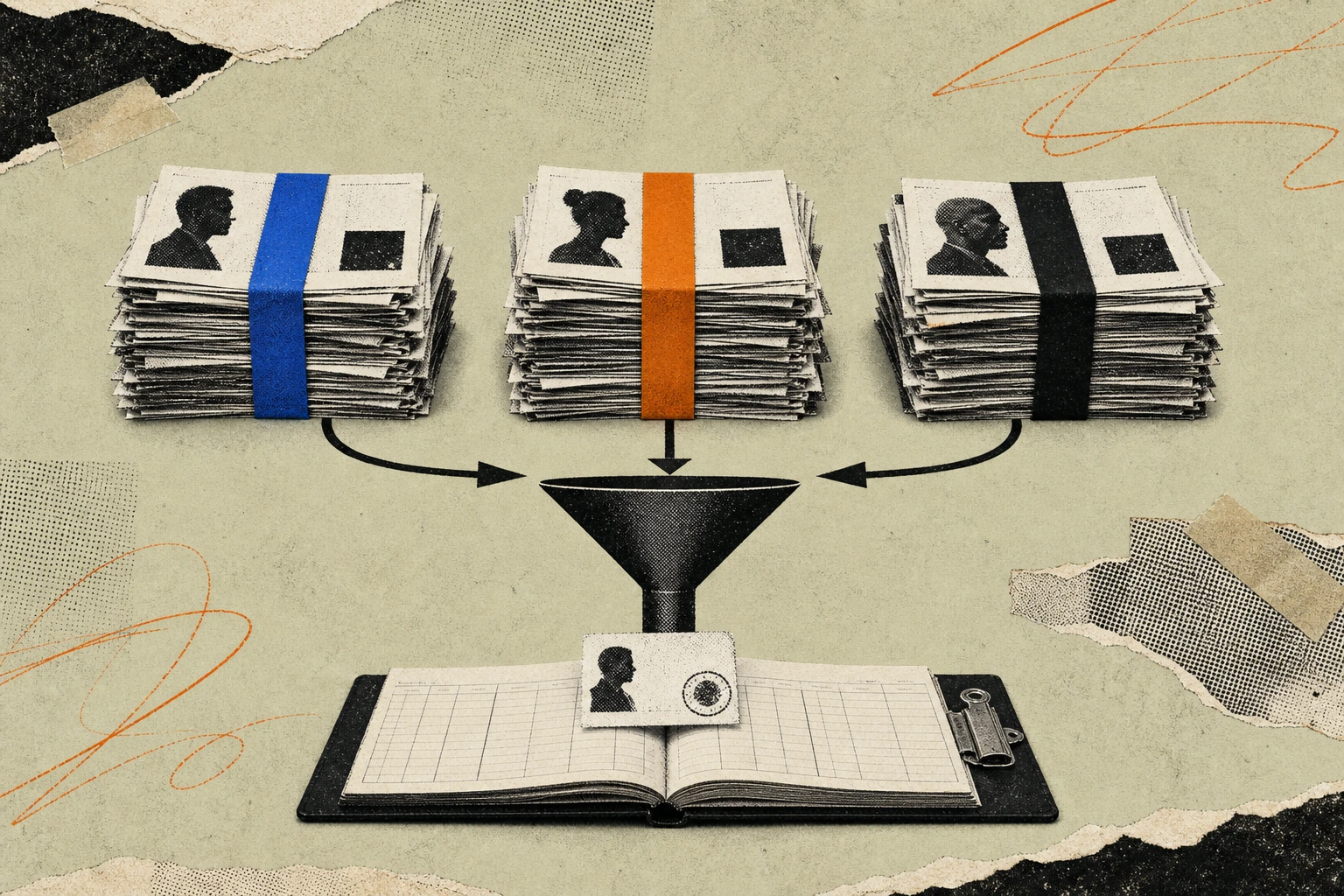
For an expert-call transcript, a defensible envelope has to identify at minimum five things. The transcript ID, so the original artifact can be retrieved on demand. The speaker's role, expert, moderator, client, because the compliance weight of a quote depends on who said it. The timestamp inside the call, so the quote can be verified against the source recording. The redaction state, whether the vendor's compliance team applied MNPI screening before the chunk was made retrievable. And the consent tier, because some experts agree to internal use only, some to redistribution, some to no AI training, and a compliance team needs to know which bucket a quote came from before it is pasted into an investment memo.
Today each expert network ships its own shape of that envelope. Guidepoint's MCP server, the Anthropic connector directory confirms, exposes more than 100,000 vetted transcripts to Claude with its own metadata structure. Third Bridge, Moody's, and IBISWorld each expose their own. AlphaSense, which acquired Tegus in 2024, is building toward the same surface with its own schema again.
A buy-side analyst running all of these in one Claude session gets four different provenance shapes back. A compliance officer reviewing that session three weeks later, under a Rule 204A-1 personal-trading review, has to normalise them by hand.
Why a de facto schema is the likely outcome
The MCP spec is not going to fix this. Anthropic's protocol documentation is explicit that MCP standardises the transport, tool invocation, resource URIs, capability negotiation, and leaves domain-specific metadata to the implementer. That is the right architectural choice for a general protocol. It also guarantees that someone else has to write the citation schema for expert-network content, and that someone is the data providers themselves.
Finance has been here before. OFX won in retail banking data exchange because two large institutions adopted it first and everyone else had to integrate against them. FIX won in equities order routing the same way. The pattern is consistent: in categories where the buyer runs multiple vendors simultaneously and needs them to look the same in one workflow, the first two large vendors to publish a compatible schema set the standard, and the rest spend the next 24 months conforming.
The expert-network category now has the same structural conditions. The buyer, a multi-strategy hedge fund or a long-only research desk, runs more than one EN. The workflow, an MCP-mediated Claude session, requires the vendors to be inter-comparable in real time. The compliance regime, Rule 204A-1 on the investment-adviser side and FINRA 4511 recordkeeping on the broker-dealer side, treats the citation payload as the artifact of record. The conditions for a de facto standard are present.
What it could borrow from
The EN category does not have to invent a provenance schema from scratch. Two adjacent bodies of work are already mature enough to lift from.
C2PA, the Coalition for Content Provenance and Authenticity, has shipped a 1.3 specification for cryptographically signed provenance manifests on images, video, and documents. Its model, a chain of signed assertions about who created what, when, and what was modified, maps cleanly onto the transcript case: who recorded the call, who transcribed it, who applied redactions, who exposed it via MCP.
IPTC's media provenance work covers similar ground for newsroom assets. And FINRA Rule 4511 already obliges broker-dealers to keep books and records in a specified form and for a specified period, including the kinds of communications that expert calls generate. A citation schema that maps to 4511's recordkeeping expectations on day one gives compliance teams less to argue about on day two.
None of these is a drop-in. C2PA was written for media files, not LLM tool responses. FINRA 4511 predates MCP by more than a decade. But the EN category does not need a greenfield design. It needs two majors to agree, and a regulator-friendly precedent to point at.
The transcripts are already flowing. The schema is the thing still in motion.
Powering institutional-grade transcription for expert networks.
INFLXD provides AI-powered, human-edited transcription with sub-1% error rates for the world's leading expert networks and financial research firms.
Visit inflxd.com →Keep reading.

Magnetar prepares AI-agent equity fund for 2026 launch
The $18 billion firm is building a long-biased equity strategy where hundreds of AI agents handle research work normally done by analyst teams.
Accenture Ventures takes stake in AlphaSense, sets agentic workflow partnership
The consulting firm's venture arm backs the market intelligence platform as the two move to embed AlphaSense data inside enterprise AI agents.
AlphaSense raises $350M at $7.5B valuation, crosses $600M ARR
The market intelligence platform extends its content moat and AI roadmap with fresh capital from J.P. Morgan Private Capital and Viking Global Investors.