

The transcript timestamp problem: why MCP-era retrieval is forcing a citation-to-audio standard
As agents pull from earnings and expert calls through the Model Context Protocol, the next provenance layer the buy-side will demand is a citation that resolves to a specific second of source audio.
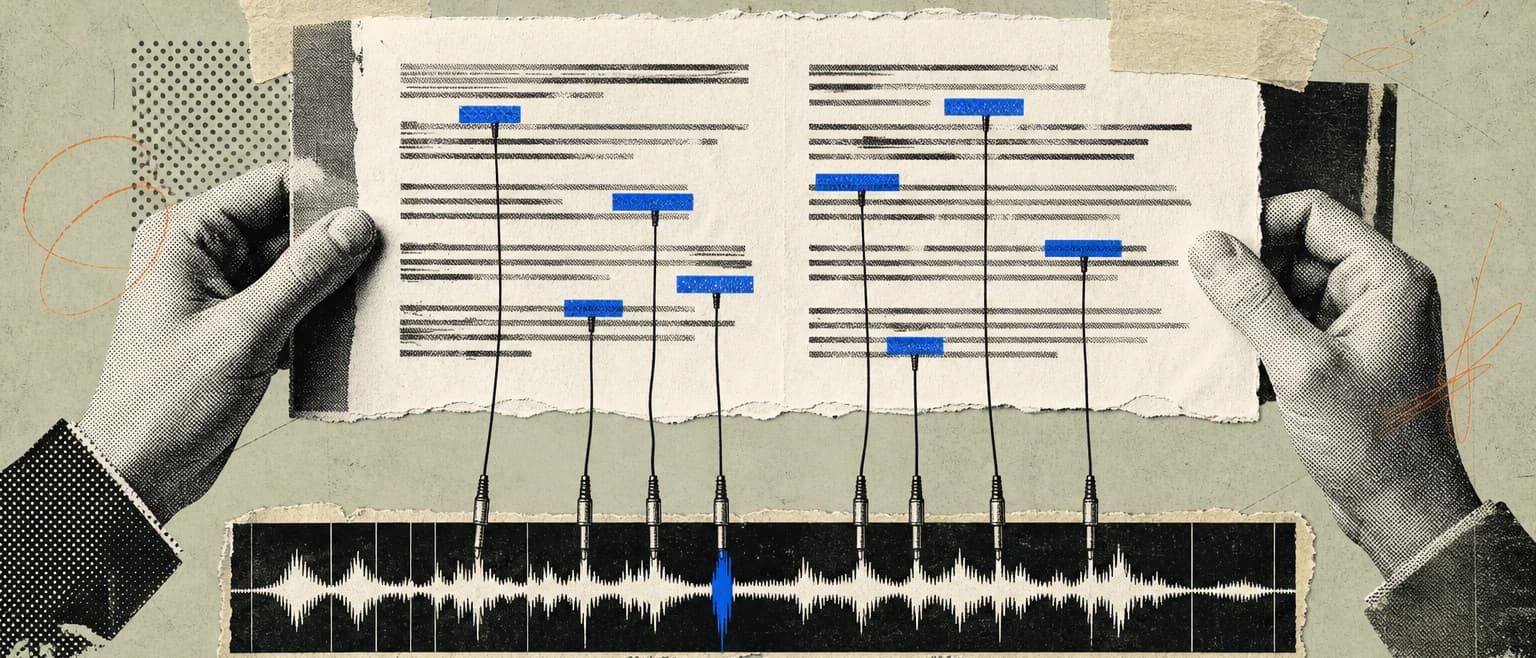
Buy-side research desks have spent the last eighteen months wiring Model Context Protocol connectors into the transcript stacks they actually use: earnings calls, expert-network interviews, management roadshows, channel checks. The plumbing works. An analyst can now ask an agent for what a CFO said about gross margin on the Q1 call and get a passable paraphrase with a citation that resolves to a transcript ID and, on a good day, a paragraph.
That is not enough. The next provenance layer the buy-side will require is temporal: a citation that resolves to a verifiable offset inside the source audio, not just a span of text in a document that may or may not match what was actually said.
This is our read of where MCP-era research provenance is heading, and why the vendors whose pipelines preserve word-level timing end-to-end are quietly setting a standard the rest of the market will have to meet.
The shape of an MCP transcript citation today
When an agent answers a buy-side question by pulling from a transcript through an MCP server, the citation it returns is, in practice, a string that points at a document. The richer implementations add a page anchor, a section heading, or a paragraph index. A few add a speaker turn. The analyst opens the citation, lands inside a text view of the transcript, and reads the surrounding paragraphs to satisfy themselves that the paraphrase is faithful.
That workflow has two failure modes that compound as agents do more of the reading.
The first is the paraphrase-to-source gap. An LLM that rewrites a CFO's hedged answer into a clean declarative sentence can subtly shift meaning. A human reading the surrounding paragraph usually catches this. A human reading only the summary, with a citation that just confirms a paragraph exists, often does not.
The second is the transcript-to-audio gap. Earnings call transcripts distributed as text, even high-quality ones, are downstream artifacts of an ASR or human-transcription pass over the original audio. Speaker labels can be wrong. Disfluencies are smoothed. Cross-talk is collapsed. Numbers occasionally drift. The question of whether the CFO actually said gross margin was 200 basis points lower or 220 basis points lower is, in a non-trivial number of cases, a question the text alone cannot settle.
Neither problem is theoretical. Both are well within the working knowledge of any equity research analyst who has spent ten minutes scrubbing through a recording to confirm what someone said.
What a timestamp-anchored citation actually is
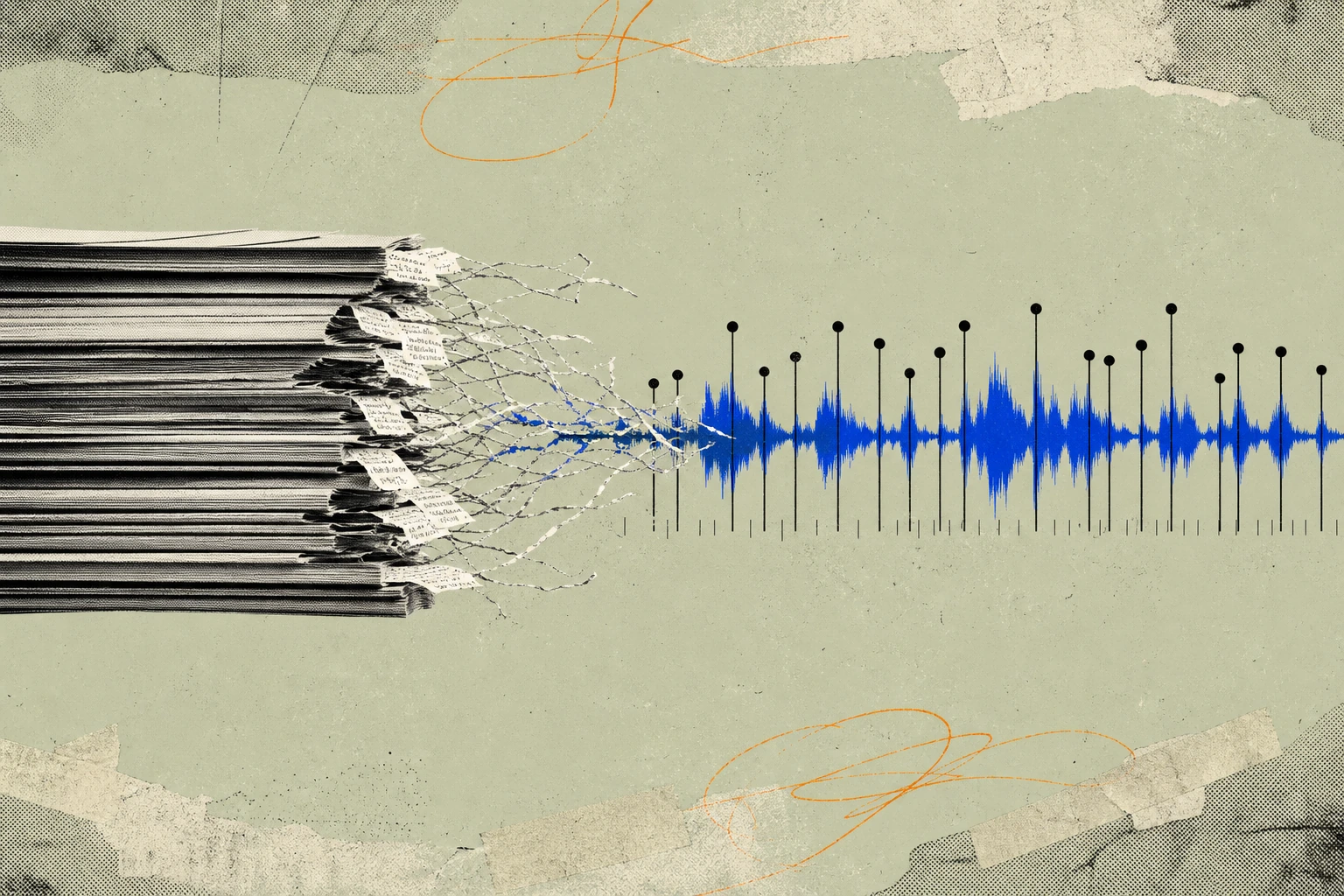
The technical primitive needed here is not new. The W3C Media Fragments URI specification has defined a syntax for addressing a temporal slice of a media resource since 2012: append #t=start,end to an audio or video URL and a compliant player will seek to that range. It is the same mechanism that lets a YouTube link open at a specific second.
Applied to research provenance, a timestamp-anchored citation looks like a structured object rather than a string. The fields that matter:
transcript_id, the canonical identifier for the callstart_msandend_ms, the time range of the cited utterance in the source audioaudio_url, the URL of the playable source, ideally with a media-fragment suffix that resolves directly to the cited rangespeaker_idandspeaker_role, the attributed speaker on that turntext, the verbatim transcript span the agent paraphrased
A citation in that shape is a different artifact from a page reference. An analyst clicking it does not land in a text view and start reading. They land at the second of audio the agent claims to be paraphrasing, hear the speaker say it, and form their own judgment about whether the paraphrase is faithful. Compliance officers reviewing the same workflow have a chain of evidence that survives a regulator's question about what an analyst relied on.
The other thing this shape does is make agent outputs evaluable in a way that page-level citations do not. A paraphrase that cites a 12-second range is either supported by what is in that range or it is not. The disagreement is settleable. A paraphrase that cites a paragraph leaves room for an evaluator to argue that the gist is correct even when specific numbers are off.
Why the buy-side is going to ask for this
Three pressures converge here, and none of them are about agent capability.
The first is audit. Research desks at regulated firms already maintain audit trails for the inputs that go into a published call or a position. As more of the synthesis work moves to agents, the question of what exactly the agent read becomes a compliance artifact, not just an engineering one. A page-level citation that the underlying transcript may have since been corrected or republished is a weak audit primitive. A timestamp range pointing at an immutable audio file is a strong one.
The second is the MNPI and Regulation FD review process. Compliance teams reviewing expert-call outputs already triangulate the moderator's notes, the vetted transcript, and, in escalations, the recording. As that work scales beyond what humans can review call-by-call, the review tooling needs to operate on the same primitives. A reviewer scanning a hundred agent-generated summaries for potential MNPI exposure needs the ability to jump from the flagged claim to the exact audio of the source utterance, not to a transcript page that may have been edited after the fact.
The third is the evaluation problem we have written about before. Buy-side teams piloting research agents have struggled to build defensible evaluations because the unit of ground truth has been ambiguous. Once a citation resolves to an audio offset, evaluation becomes mechanical: a sample of generated claims, a check that the cited range contains the claimed information, a numeric pass rate. That is the kind of metric a head of research can show an investment committee.
We read these three pressures as cumulative rather than independent. Any one of them justifies the work. Together, they make the existing page-citation pattern look like an interim solution that the market will move past.
What the existing pipelines actually do with timing
The state of the world today splits the transcript market into two layers that handle timing very differently.
The AI-native layer, which includes products like Aiera's transcript platform and Quartr's earnings player, treats audio as the source of truth and text as a derived view. Per-utterance timestamps are surfaced in the product. A user can click a sentence in the transcript and the audio jumps to that point. The data structure behind that experience already contains the fields needed to emit a timestamp-anchored citation. The work to expose those fields through an MCP server is a packaging exercise rather than a re-architecting one.
The ASR providers that sit beneath much of this layer, including names like Deepgram and AssemblyAI, emit word-level timing as a default output. A transcript that comes off a modern ASR pipeline arrives with start and end offsets on every word. Whether those offsets survive the trip through editorial review, speaker-label correction, formatting, and distribution depends entirely on the pipeline.
The legacy data-vendor layer, which still distributes a large share of earnings call transcripts consumed by the buy-side, generally does not preserve timing through to the consumer. The transcript is a text document. Audio, where it exists at all, is a separate asset with no canonical mapping back to the text. A vendor that wanted to add timestamp-anchored citations to its MCP integration today would need to either re-process its catalog against the original audio or accept that its citations remain page-level while competitors offer audio-level.
This is the practical asymmetry that makes the standard worth tracking. The vendors that already preserve word-level timing through their pipeline can offer a richer citation primitive with engineering work measured in weeks. The vendors that do not are looking at a catalog re-processing problem.
The standards layer: what an MCP-shaped solution would look like
MCP itself is deliberately unopinionated about what a resource looks like beyond a small set of structural requirements. A server can return a resource with whatever metadata it wants, and a client can use that metadata however it sees fit. The protocol is not the constraint. The constraint is convention.
The convention that would unlock interoperability here is a small one: a recommended shape for transcript-resource metadata that includes start_ms, end_ms, and audio_url, and a recommended use of the Media Fragments syntax on the audio URL so that clients with no special transcript support still get a playable link to the cited range.
There is precedent for how this propagates. JSON-LD provenance patterns, schema.org's Clip type, and the broader practice of attaching machine-readable temporal anchors to media have all matured in the last decade. The work to specify a transcript-citation envelope for MCP is not a research problem. It is a coordination problem among the vendors whose customers are starting to ask for the same thing.
The coordination will happen unevenly. Our base case is that one or two AI-native transcript vendors emit a citation envelope with audio offsets in their MCP server, customer compliance teams notice that the audit story is materially better, and the request shows up in RFPs at other vendors within a quarter or two. The legacy vendors will follow on the timeline that their catalog allows.
The counterargument: text is good enough
It is worth taking seriously the case that page-level citations are fine and that the audio layer is over-engineered.
The argument runs roughly as follows. The transcripts buy-side analysts work with are already high-quality. Reading a paragraph around a cited claim is a 30-second check that humans do well. Building audio-resolved citation infrastructure adds engineering cost, storage cost, and bandwidth cost to every workflow for a marginal improvement in verifiability. The audit risk can be mitigated by versioning transcripts rather than by jumping to audio.
We find this argument less convincing for three reasons.
First, the cost is not actually marginal once agents are doing the synthesis. The human eyeball that used to read the paragraph is no longer in the loop on most claims. The verification has to be either replaced by a mechanical check or rebuilt at a different point in the pipeline. Timestamp-anchored citations make mechanical checks straightforward; page-level citations do not.
Second, the storage and bandwidth arguments assume audio has to be served alongside every citation. It does not. The citation is a pointer. The audio sits where it already sits, and the pointer resolves to it only when an analyst or a reviewer asks. The marginal cost is the cost of carrying two integer offsets and a URL.
Third, the audit risk is not symmetric. A versioned transcript is still a text artifact that can be challenged. A timestamped pointer into an immutable audio file is closer to the standard of evidence that regulated workflows already rely on for trade records and call recordings. The compliance-side preference, once the option exists, is fairly predictable.
What this means for the vendors that produce the transcripts
The practical implication for any vendor whose product appears in a buy-side MCP integration is that the value of preserving word-level timing through the pipeline goes up. That preservation is a series of small decisions: how the ASR output is stored, whether editorial corrections re-align to original timing, whether speaker-label fixes carry timestamps, whether the distribution format includes timing fields at all.
None of these decisions are individually dramatic. Together they determine whether a vendor can offer a timestamp-anchored citation to an MCP client at all, or whether the citation degrades to a page anchor because the timing was discarded somewhere upstream.
For expert-network transcripts specifically, the same logic applies with an additional compliance dimension. The vetting layer that strips MNPI and confirms a call's compliance status is also the layer that, in most current pipelines, operates on text. Re-tooling that layer to preserve and surface timing requires real work. It also opens a more defensible audit posture for the network's customers, which is the kind of thing customers tend to notice in renewal conversations.
What we would ask an expert next
If we were briefing a research analyst on this shift and pointing them at an expert call, these are the questions we would put on the agenda:
- For a transcript vendor: at which stage of your pipeline is word-level timing first discarded or aggregated, and what would it take to preserve it through to the MCP response?
- For a compliance officer at a buy-side firm: what is the current evidentiary standard for an agent-generated research claim, and how does that standard change if the citation resolves to an audio offset?
- For an MCP server implementer at an expert network: are customers asking for audio-resolved citations today, in RFPs or in pilot feedback, and how is that being prioritized against other roadmap items?
- For an ASR provider: what fraction of your enterprise transcript volume is consumed downstream in a form that preserves word-level timing, and what fraction is flattened to plain text before the customer sees it?
- For a buy-side head of research: if a research-agent evaluation could be expressed as a pass rate against audio-anchored claims, would that change the threshold at which you are willing to put an agent into a production workflow?
Are your experts using AI to cheat?
Try our free demo to find out today.
Powering institutional-grade transcription for expert networks.
INFLXD provides AI-powered, human-edited transcription with sub-1% error rates for the world's leading expert networks and financial research firms.
Visit inflxd.com →Keep reading.
How Buy-Side Firms Handle Expert-Network Pre-Call Materials: 7 Structural Models
Pre-call attachments sit outside the recorded-call boundary, and buy-side compliance teams have built seven distinct ways to handle them.
Bridgewater CIO Greg Jensen says AI is already doing the equity analyst job
On Bloomberg's Odd Lots, Jensen said machine-side outputs at the fund now stand next to a 50-year human research process.
OpenAI launches ChatGPT for Financial Services, targeting Wall Street research workflows
The vertical release bundles data connectors, cited research, and deck generation, and lands on FactSet and S&P Global's turf.