

How Hebbia plugged into SS&C Intralinks DealCentre AI: a case study in live data-room access for buy-side AI agents
A walkthrough of how an agentic research platform got authenticated, permissioned access to a virtual data room without breaking the audit trail.
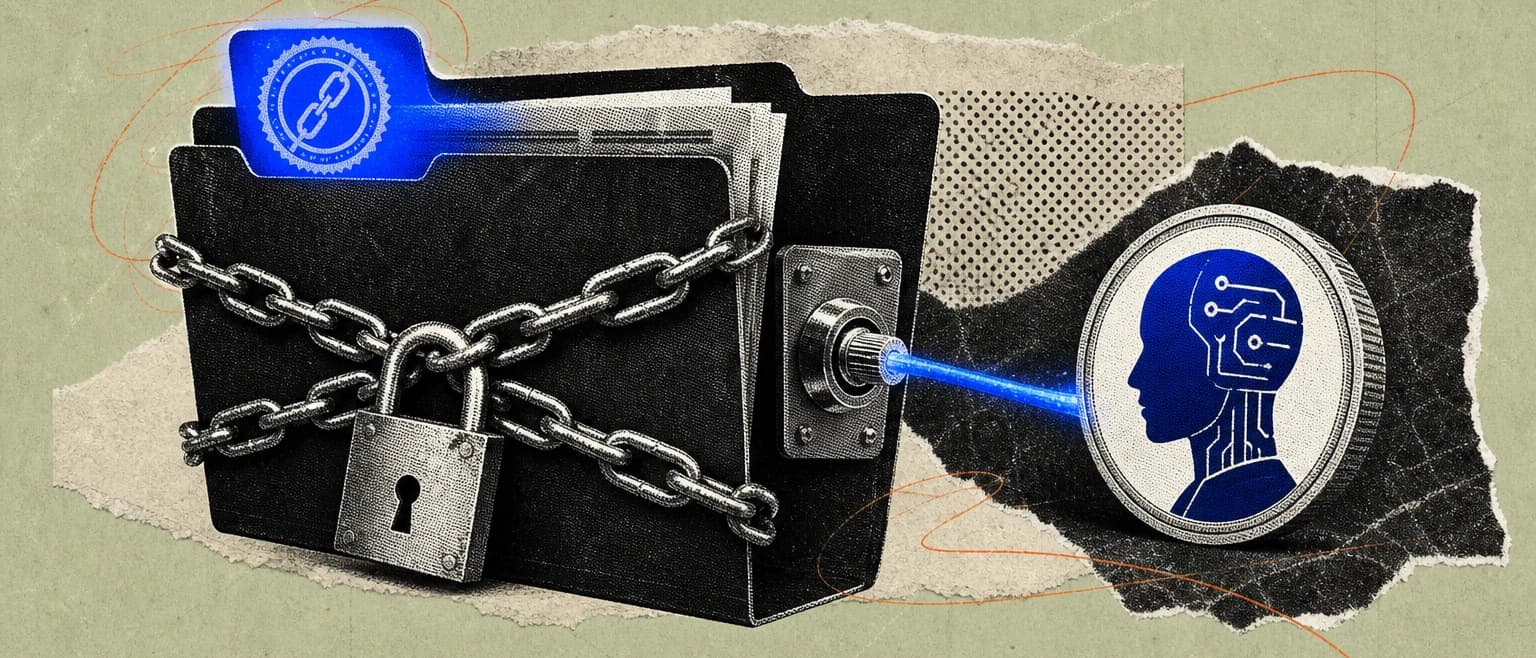
Diligence teams have spent the last two years running a quiet workaround. Documents sit inside a virtual data room with watermarking, granular permissions and full audit logging. The AI tool the analyst actually wants to query them with sits outside that perimeter. The workaround has been to download, re-upload, and hope compliance doesn't ask too many questions about the parallel copy. The 2026 integration between Hebbia and SS&C Intralinks' DealCentre AI is a worked example of how that gap is being closed, and it points to a broader pattern in how AI research platforms are wiring into regulated-content systems rather than trying to replace them.
Background: the parallel-copy problem in diligence
Virtual data rooms exist because deal documents are sensitive. A confidential information memorandum, a management presentation, a list of customer contracts, the seller's working capital schedule: each is gated by an access list that the sell-side advisor controls. Intralinks, Datasite, and a handful of other VDR providers built their businesses on that control plane. Every file view is logged. Every download is watermarked to the user. Every permission change is auditable. For a sell-side process, that audit trail is the product.
The rise of document-heavy AI research tools created an awkward seam. An associate running diligence on a mid-market industrials target has hundreds of files to read in a compressed window. AI platforms like Hebbia are built precisely for that workload: multi-step agents that read across a document set, extract specific facts, and assemble a structured output. The natural workflow is to point the AI at the data room. The actual workflow, until recently, was to download the files locally, upload them to the AI tool, and run the analysis on a copy that now lives outside the VDR perimeter.
That parallel copy is the compliance problem. The watermark from the VDR is on the PDF, but the AI tool's index is not subject to the data room's access controls. If the associate leaves the firm, the VDR access can be revoked in a click. The AI tool's vector store is a separate question. If the sell-side advisor pulls a file from the VDR because diligence has moved to a different bidder, the AI tool's copy is unaffected. For deal-team leads and compliance officers, this is the kind of gap that gets AI rollouts paused.
The approach: a connector that preserves the control plane
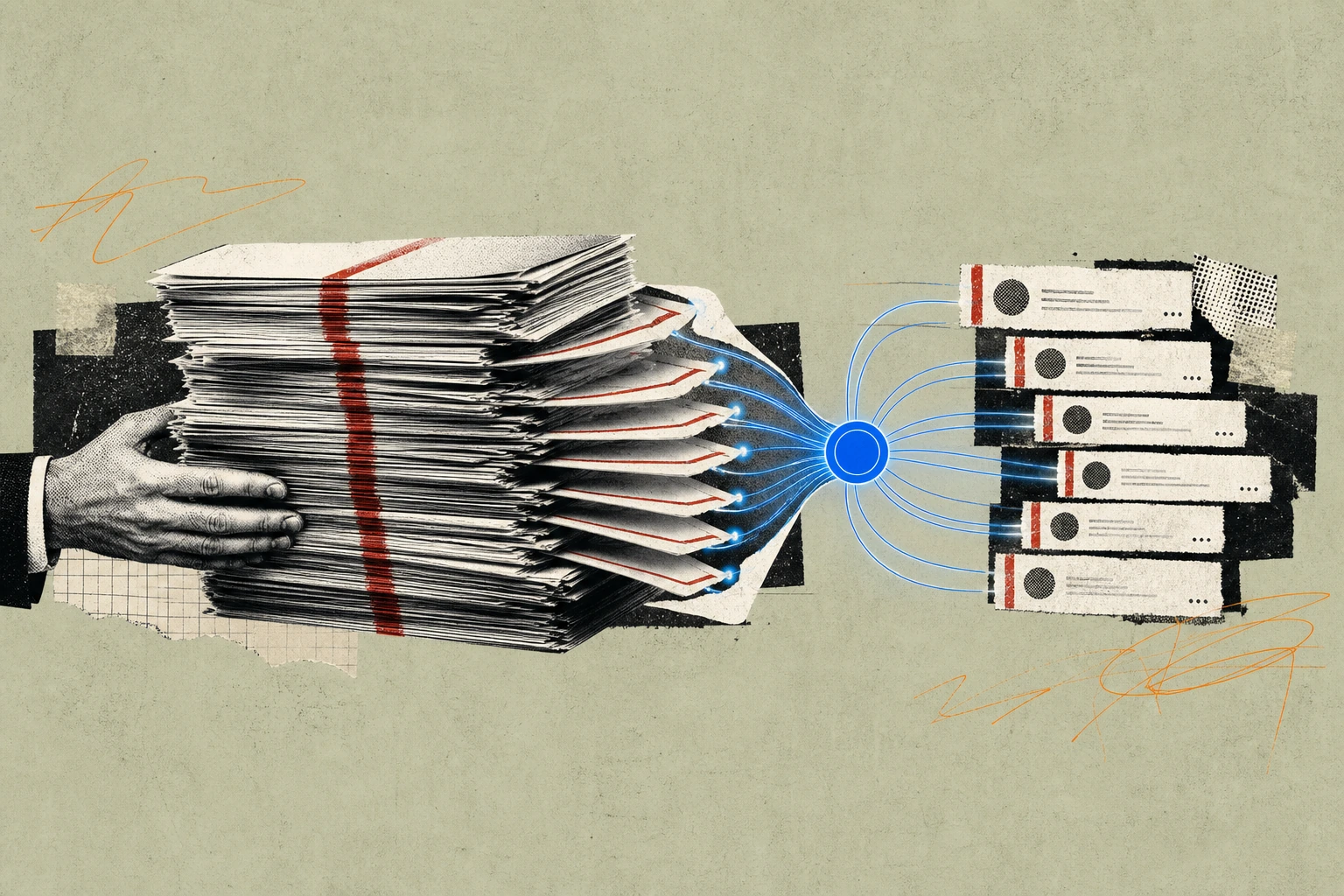
The Hebbia and SS&C Intralinks integration, announced in 2026, sits inside DealCentre AI, the SS&C Intralinks product that embeds AI workflows into active deal rooms. Rather than building a parallel document store, Hebbia connects to the live VDR through an authenticated connector. When an analyst runs a query through Hebbia, the request resolves against the documents the analyst is actually permissioned to see inside the Intralinks room. The files are not downloaded, re-indexed in a separate system of record, or copied to a parallel store outside the VDR's audit boundary.
The division of labour is worth stating plainly because it sets a template. Intralinks remains the system of record for the underlying files, the access list, the watermarking, and the audit log. Hebbia is the orchestration and reasoning layer: the agentic interface that takes a question, plans a multi-step retrieval and analysis path, and returns a structured answer. The VDR knows who can see what. The AI platform knows how to read across what the VDR has authorised.
What the analyst experience looks like
For the user, the practical change is that the AI query and the data room are now the same workspace. An associate reviewing a CIM, a management presentation, and a set of customer contracts can ask Hebbia to extract revenue concentration across the top ten customers, reconcile the figure against the CIM's stated metrics, and flag contracts with change-of-control clauses. The query runs against the live files. The VDR logs the access. The watermark on any extracted text traces back to the same user identity that the VDR already tracks.
If the sell-side advisor revokes a folder, the next Hebbia query against that folder returns nothing, because the underlying permission has been withdrawn at the system of record. The AI layer does not need its own permission model. It inherits the VDR's.
Why the connector pattern matters technically
The broader trend this sits inside is the move toward authenticated connectors as the default way AI platforms reach regulated content. Hebbia's addition to the Anthropic Claude Marketplace is part of the same shift on the distribution side: AI research capability arriving where the user already works, rather than asking the user to leave their workflow. On the data side, the equivalent move is connectors into VDRs, expert-call transcript libraries, filings databases, and internal research stores. The system of record stays where it is. The AI layer reaches in under the existing access controls.
This is a different architectural bet from the one that dominated the first wave of generative-AI research tools, which assumed the AI platform would also become the document store. The connector pattern accepts that for regulated content, that consolidation is not going to happen. Compliance teams will not sign off on it. The VDR providers are not going to cede the audit log. The AI platforms that win in this segment are the ones that integrate cleanly with the systems where the documents already live.
What changed for diligence teams
The workflow compression is the obvious gain. A step that used to involve downloading, re-uploading, and reconciling two access lists becomes a single query inside the existing data room. For a deal team running parallel diligence streams (financial, commercial, legal, operational) against a tight signing date, removing that step from each stream is measurable.
The compliance gain is the more durable one. The audit log inside the VDR now captures the AI-mediated access alongside the human access. If a regulator, a deal counterparty, or an internal compliance review asks who saw which files when, the answer is in one place. The parallel-copy risk, which several compliance leads have flagged as the primary blocker to AI adoption inside deal teams, is reduced because there is no parallel copy.
There are constraints worth naming. The integration depends on the deal being run through Intralinks; firms with a mixed VDR footprint will still face the parallel-tool problem on rooms hosted elsewhere. The AI layer's quality is bounded by what the data room contains, which is itself a function of how completely the sell-side has populated it. And the analyst still has to know what to ask. An agentic interface compresses retrieval and synthesis. It does not replace the judgement layer that decides which questions are worth asking in the first place.
What it signals for the industry
The Hebbia and Intralinks integration is one data point, but it fits a pattern visible across the primary-research stack. Expert networks are wiring transcript libraries into AI research tools through authenticated APIs rather than letting clients export PDFs. Filings databases are exposing structured access to AI agents under per-seat permissioning. The connector trend, often discussed under the MCP label, is the architectural form this is taking across the regulated-content layer.
For VDR providers, the strategic read is that the AI workflow is going to happen, and the choice is whether it happens inside the data room or outside it. Embedding the AI layer inside the product, as DealCentre AI does, keeps the audit log intact and the system of record at the centre of the diligence workflow. For AI platforms, the read is that distribution into regulated environments runs through partnerships with the incumbents of those environments, not around them.
For buy-side and corporate development teams, the practical signal is that the workaround era is ending. The next generation of diligence AI is being designed to operate inside the same access boundary as the documents it reads, and the workflow gain comes from that integration rather than from a more capable model in isolation.
Are your experts using AI to cheat?
Try our free demo to find out today.
Powering institutional-grade transcription for expert networks.
INFLXD provides AI-powered, human-edited transcription with sub-1% error rates for the world's leading expert networks and financial research firms.
Visit inflxd.com →Keep reading.

How Buy-Side Firms Handle Expert-Network Call Cancellations: 7 Structural Models
A field guide to the fee, rebooking, and consultant-compensation structures that shape cancellation economics across the expert-network industry.
How Expert Networks Handle Scheduling Across Time Zones: A Field Guide to Global Primary Research
The operational mechanics that decide whether a London analyst gets a Tokyo engineer on the phone by Wednesday or Friday.

How Expert Networks Retain High-Value Consultants: 7 Structural Models
The supply side is the binding constraint on premium topics. Here is how the major networks keep scarce experts responsive.