

Inside Guidepoint's MCP deployment: wiring 100,000+ expert transcripts into Claude and Perplexity
How one of the largest traditional expert networks routed its transcript archive into two LLM ecosystems without unbundling its compliance layer.
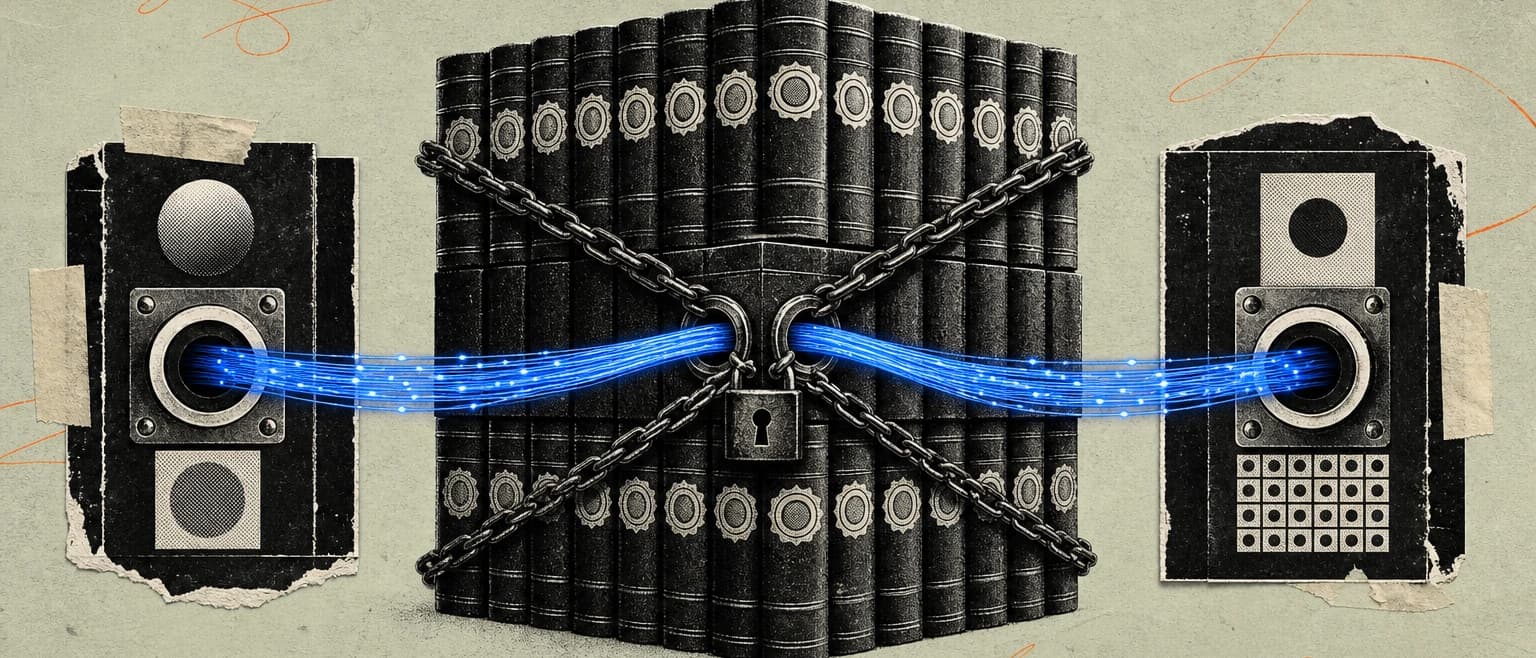
Through 2025, buy-side research teams stopped asking expert networks for PDFs and portal logins and started asking for something else: direct retrieval inside the chat surfaces analysts already keep open. The vehicle for that request, by the back half of the year, was the Model Context Protocol. Guidepoint's late-2025 launch of an MCP server on Claude, followed by an extension of the same transcript backend to Perplexity, is the clearest worked example so far of a traditional expert network operationalizing that shift without breaking the compliance model that makes its content sellable in the first place.
This case study walks through what Guidepoint actually wired up, how the architecture handles entitlements and citations, and what the move signals about where primary-research distribution is heading in 2026.
Background: the workflow problem MCP was solving
For most of the 2010s, the buy-side workflow for expert content was linear. An analyst scheduled a call through a research portal, took notes live, and either uploaded a transcript to an internal drive or queried the expert network's own search interface later. The transcript library was the asset, but the surface for using it was the vendor's portal. That arrangement held while the dominant interface for analysis was a spreadsheet and a browser tab.
The interface shifted in 2024 and 2025. Buy-side analysts began running material parts of their reading and synthesis work inside chat clients, most visibly Claude and Perplexity, with sector-specific copilots layered on top. The friction was obvious: the transcripts that anchored a thesis were one tab over, behind a portal login, and not retrievable inside the chat where the analyst was already drafting the memo. Copy-paste was the workaround. PDF uploads were the workaround. Neither was a workflow.
The Model Context Protocol, introduced by Anthropic in late 2024 and adopted across other LLM vendors through 2025, gave content owners a standard way to expose a tool or a corpus to an LLM client without rebuilding their own front end. For an expert network, the relevant property of MCP is not that it makes content accessible to AI. The property that matters is that it makes content accessible conditionally, with the vendor still controlling who sees what at query time.
The situation Guidepoint walked into
Guidepoint runs one of the largest transcript libraries among traditional expert networks. The commercial logic of that library has always rested on three things: the depth of the back catalogue, the compliance review wrapped around each call, and the entitlement structure that determines which subset of the library a given client can actually read. A buy-side client pays for access to a defined slice of the corpus, screened through a defined compliance lens. Stripping any of those three out turns the library from a research product into an undifferentiated text dump.
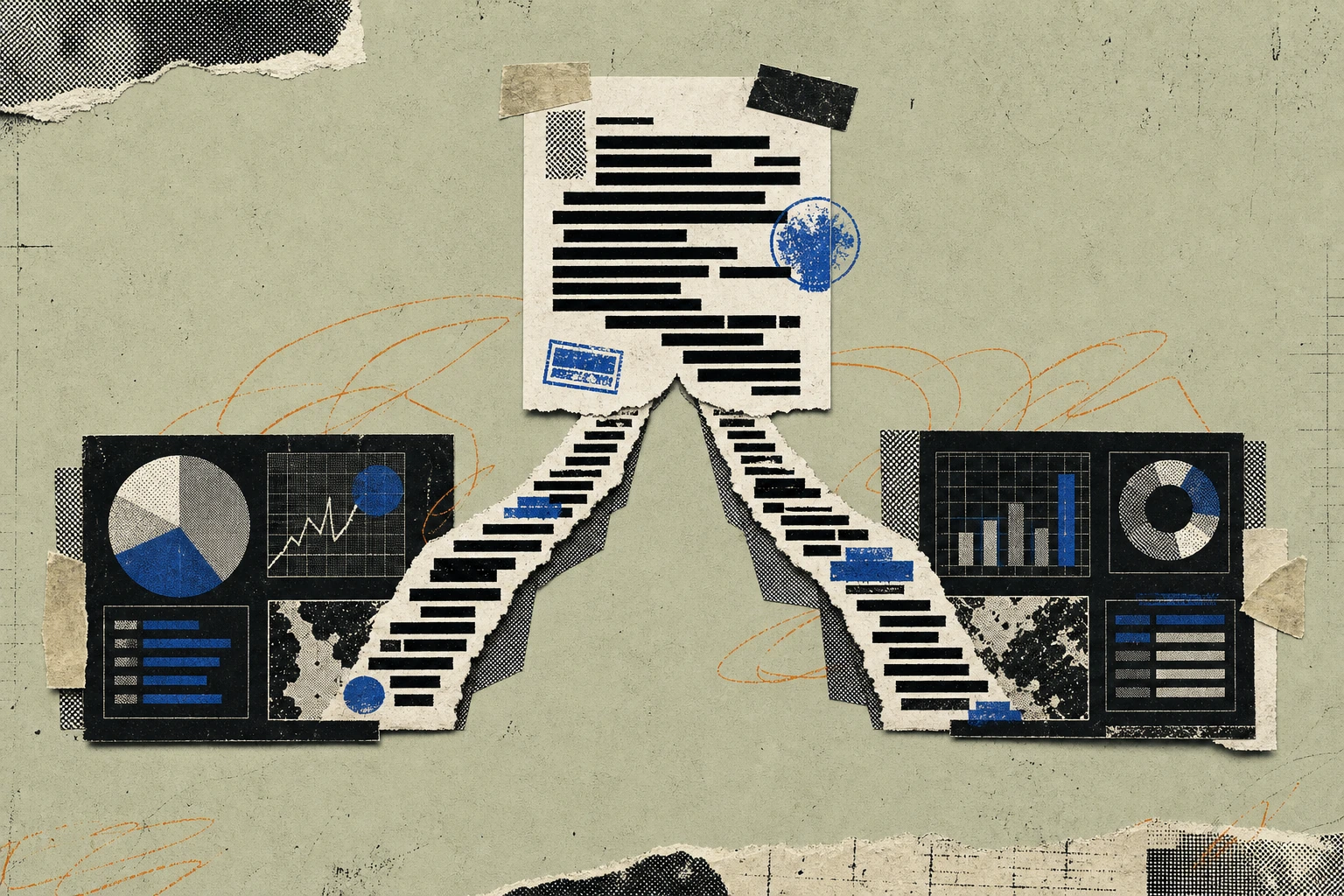
Through 2025, requests from buy-side firms pointed in one direction: get the transcripts into the LLM surface, but do not break the entitlement or the compliance layer in the process. That framing is what made MCP, rather than a simple API or a bulk export, the right shape for the deployment. MCP lets a server respond to a query from an LLM client in real time, apply its own authorization logic, and shape what comes back, all without the client ever holding the underlying corpus.
The approach: transcript archive as system of record, MCP as the rail
The architecture Guidepoint built treats the transcript archive as the durable asset and MCP as a distribution rail, not a replacement for the underlying product. Three design choices carry most of the weight.
Entitlement passthrough at query time. When a Claude or Perplexity user invokes the Guidepoint MCP server, the server checks the requester's existing Guidepoint subscription and entitlements before returning anything. The LLM client does not get a blanket view of the corpus. It gets the view that the client's existing contract already authorized. This is the same model that governed portal access; the difference is that the check now happens in the path of an LLM query rather than a browser session. Practically, a client whose subscription covers, say, semiconductor calls sees semiconductor calls in Claude. A client whose subscription does not cover that sector does not.
Citations back to the underlying transcript. Every result the server returns links back to the source transcript inside Guidepoint's system. The LLM surface becomes a retrieval and synthesis layer; the transcript itself remains canonical. For a buy-side analyst, that matters for two reasons. First, the citation chain is what makes a claim defensible up to an investment committee. Second, it preserves the audit trail that compliance teams need when a thesis built partly on expert content has to be reconstructed later.
Compliance review stays inside Guidepoint. The decision about which experts can be surfaced for which clients, and which calls clear review at all, sits inside Guidepoint's existing process. MCP does not change that pipeline. It changes the last mile, where a reviewed transcript meets the analyst's interface. The compliance layer is not being delegated to Anthropic, to Perplexity, or to the analyst's own prompt discipline.
The combination is what makes the move workable for a traditional expert network. A bulk export to an LLM vendor would have collapsed all three controls into one act of trust. An MCP server preserves all three and shifts only the surface.
What happened: distribution across two LLM ecosystems on the same backend
The Claude deployment came first. Guidepoint's MCP server made more than 100,000 expert transcripts queryable inside Claude clients, with access scoped by entitlement and results citing back to Guidepoint's transcript records. The Perplexity extension followed shortly after, surfacing the same library inside Perplexity's MCP directory for its enterprise and pro tiers.
The operationally interesting part is that both deployments run on the same backend. Guidepoint did not build a Claude product and a separate Perplexity product. It built an MCP-anchored transcript service and pointed two LLM ecosystems at it. The cost of adding a third LLM client, in principle, is the cost of registering a new MCP connection, not the cost of building a new integration from scratch. That is the structural payoff of MCP as a layer: it turns LLM-client coverage into a configuration question rather than a roadmap question.
Guidepoint is not alone in routing primary research through this rail. AlphaSense's agentic partnership with Accenture Ventures targets the same buy-side workflow shift through a different channel. GLG's integration of expert transcripts into Bloomberg's ASKB puts expert content directly inside the terminal surface where many buy-side analysts already work. Aiera has built an MCP content platform aimed at similar primary-research distribution. The pattern across these moves is consistent: the asset is the corpus, the question is which surfaces it reaches, and MCP and adjacent agentic protocols are the connective tissue for 2026.
What it signals for the industry
Three things are worth flagging from the Guidepoint case specifically.
First, the transcript library is becoming the durable asset more clearly than it was a year ago. When the front-end portal was the product, the library was a feature inside it. When the LLM surface is the front end, the library is the product and the portal is one of several surfaces. Networks with deep back catalogues, long compliance histories, and clean transcript metadata are positioned for this shift differently than networks whose moat sat in the scheduling and matching layer.
Second, entitlement and compliance gating are the parts of the expert-network model that have to survive the transition, and the Guidepoint deployment shows they can. The risk for the category, through most of 2024, was that an LLM-native distribution model would force expert networks to choose between reach and control. MCP, used the way Guidepoint used it, suggests that choice was a false binary. The server can sit between the corpus and the LLM client and enforce the same controls the portal used to enforce.
Third, multi-ecosystem distribution from a single backend is now a credible posture rather than a roadmap aspiration. Guidepoint live on Claude and Perplexity on the same transcript service is the existence proof. Whether other expert networks follow into the same pattern, or build toward terminal-resident distribution the way GLG has with Bloomberg, the underlying question for the category in 2026 is the same: which surfaces does the corpus need to reach, and what does the rail to each one cost.
Powering institutional-grade transcription for expert networks.
INFLXD provides AI-powered, human-edited transcription with sub-1% error rates for the world's leading expert networks and financial research firms.
Visit inflxd.com →Keep reading.

Inside the Hebbia-Centerview deployment: how an advisory firm operationalized agentic research across its bankers
What it actually takes to put an agentic research platform in front of a banker base, traced through the Centerview Partners rollout.
AlphaSense raises USD 150M at USD 2.5B valuation
The market intelligence platform's latest round lands as buy-side demand for AI research tools keeps compounding.

6 Pricing Models for Expert Network Calls: How Buy-Side Firms Actually Pay for Primary Research
A structural breakdown of the commercial models buy-side procurement and research operations encounter when contracting expert-network access.