Inside the PE data-platform stack: how expert-network transcripts became a structured research layer
A three-layer pattern has emerged across private-equity data platforms, wiring expert-call transcripts into deal workflows alongside financials and CRM.
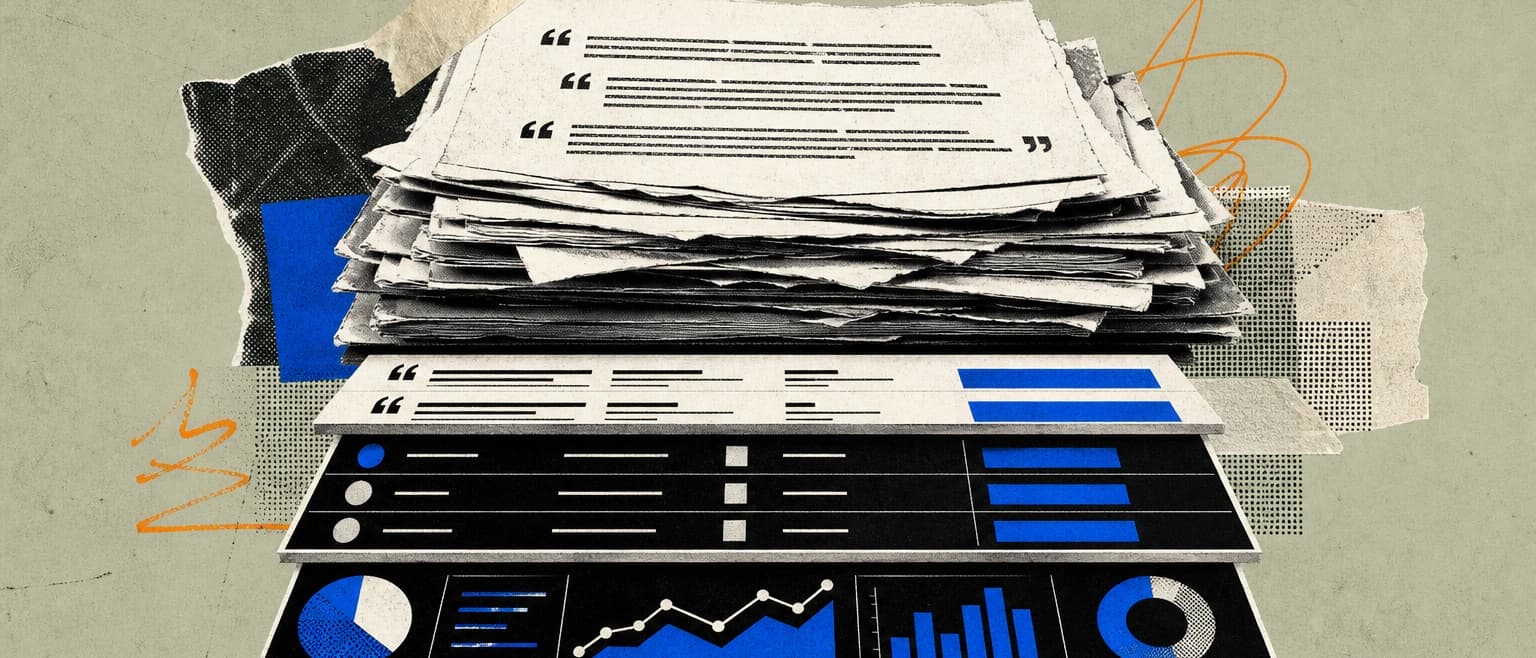
Private-equity firms spent the last decade building internal data platforms around portfolio financials, CRM records, and third-party market data. Primary research sat outside that perimeter, accessed through separate expert-network portals and stored, if at all, as loose PDFs on shared drives. Over 2024 and 2025, a working pattern has emerged for closing that gap: transcript vendors feeding firm-side data lakes via API and MCP, with an agentic query layer on top. The case is worth walking through in detail because it is the clearest public example of primary research being treated as a structured input rather than a reference document.
Background: primary research sat outside the data platform
The starting condition, described publicly by several large PE firms over the past two years, is that internal data platforms were built for structured inputs. Portfolio financials came in from finance systems. Deal pipeline came from CRM. Market data came from third-party feeds. Primary research, meaning expert calls, industry interviews, and channel checks, lived in a parallel universe: analyst inboxes, expert-network portals, and unstructured note files.
That mattered less when expert calls were a low-volume input used at diligence peaks. It began to matter more as the volume of primary research per deal grew and as PE firms started running continuous coverage on sectors rather than only on live targets. Bain's 2024 global private-equity report documented the broader shift toward data-driven sourcing and portfolio monitoring across the industry, of which the research layer is one component.
BC Partners disclosed across 2024 and 2025 that it had built an internal data platform to unify deal, portfolio, and research inputs, following a pattern also visible at EQT's Motherbrain and inside Blackstone's data science group. The internal branding varies. The architectural intent, based on the public descriptions, does not: pull the primary-research layer inside the same walls as everything else the deal team already queries.
The approach: transcripts in, entity resolution in the middle, agents on top
The working architecture that has emerged is a three-layer stack. Each layer has a distinct owner and a distinct commercial model, which is part of why the pattern has held.
Layer 1: the transcript vendor as primary content source
At the base sits the expert-network transcript library. Two sources are cited most often in public statements from PE firms and from the vendors themselves. The first is AlphaSense's Tegus corpus, absorbed through the USD 930M acquisition that closed in 2024, which combined AlphaSense's document and filings library with Tegus's private-company expert-call transcripts. The second is Third Bridge's Forum, a subscription transcript library populated by the firm's own moderated expert calls.
Guidepoint's transcript library became a third integration surface in 2025 when the firm connected 100,000+ transcripts to Perplexity via MCP, a delivery pattern that made the same library reachable from any MCP-aware client, including in-house agents.
Layer 2: the firm-internal data platform as entity-resolved store
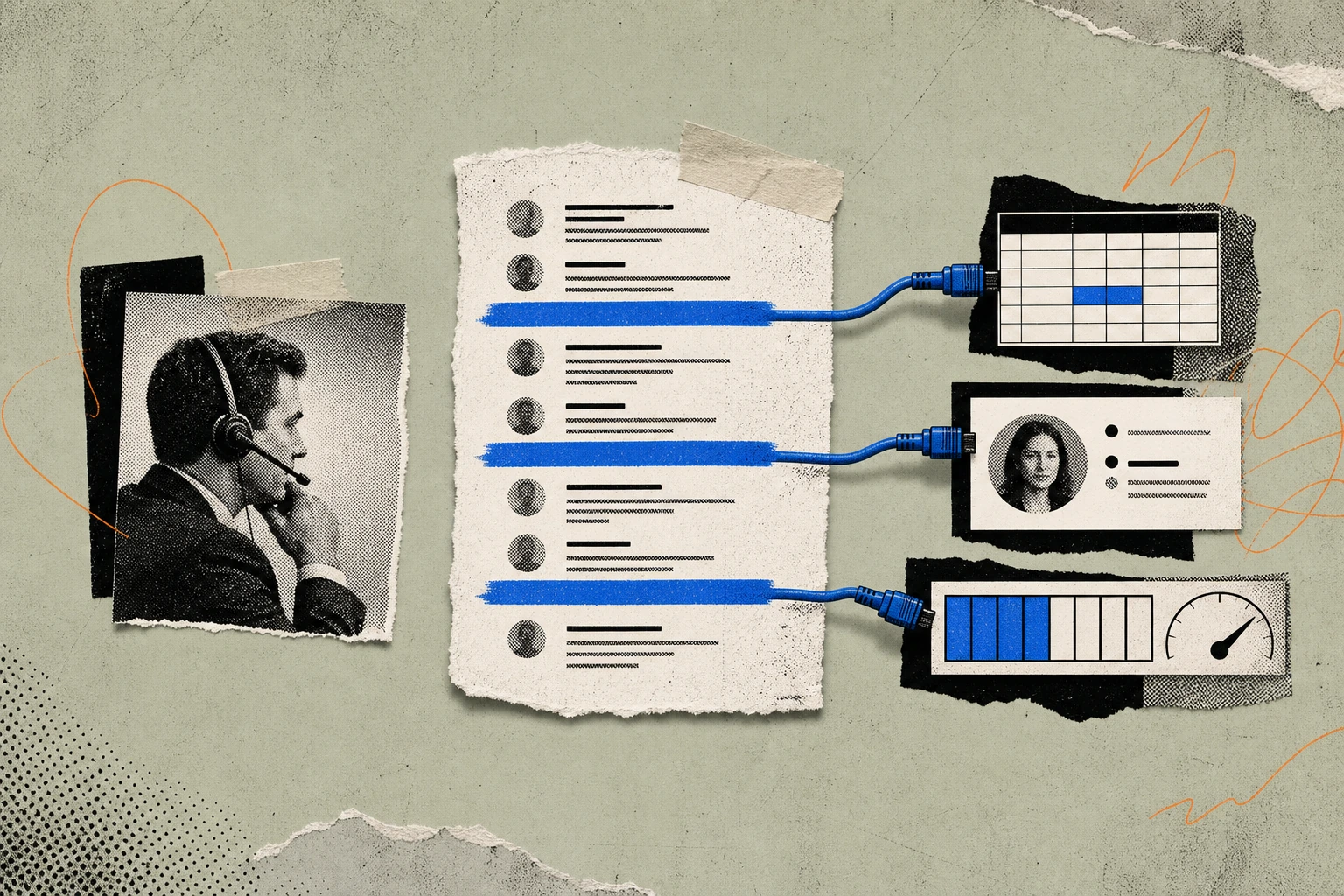
The middle layer is the PE firm's own data platform. This is where transcripts stop being documents and start being records joined to entities the firm already tracks: portfolio companies, pipeline targets, comparable companies, sectors, and the people inside them. AlphaSense CEO Jack Kokko has publicly stated that enterprise clients increasingly consume Tegus transcripts via API, and more recently via MCP endpoints, rather than through the web UI. That shift, from portal to API, is what makes the middle layer possible. A transcript retrieved by API can be tagged, entity-resolved, and stored next to the CRM record for the same company.
Entity resolution is the unglamorous work at this layer. A transcript about a private SaaS company mentioned by three former customers has to be resolved to the same company entity that appears in the CRM as a pipeline target, in the portfolio system as an existing holding's competitor, and in the market-data feed as a fundraise event. Without that resolution, the transcript is searchable but not joinable.
Layer 3: the agentic query layer
On top of the joined dataset sits the query layer. Two vendor patterns and one build pattern are visible in public disclosures. Rogo, which disclosed 25+ investment-firm deployments at its Series B, and Hebbia are the two most cited third-party agentic layers. The build pattern is in-house agents constructed on Claude or OpenAI models, pointed at the firm's own joined dataset through internal APIs or MCP servers.
Which pattern a firm picks depends on how much of the joined data model is proprietary. Firms that treat the entity-resolved store as differentiating tend to build the agent layer in-house against it. Firms that treat the store as plumbing tend to buy the agent layer.
What the working stack lets a deal team do
The practical outcome, based on the public descriptions from vendors and firms, is a query-time join. A deal team looking at a private target can pull every expert call touching that company across multiple expert networks in one interface, alongside the CRM history for the same company, the portfolio company adjacencies, and the public filings pulled from AlphaSense's document layer.
The questions the joined dataset makes tractable are the ones that used to require an analyst to open four tabs and reconcile the results manually. Every mention of a target company across Tegus and Third Bridge Forum over the last 18 months. Every former employee of a portfolio company's largest competitor who has appeared on any expert call. Every channel-partner call that touched a specific product line inside a target's category. None of these queries are new questions. What is new is that the answer arrives from a single query rather than from a week of analyst assembly.
The compliance layer sits at the transcript vendor, which is the correct place for it. Each of Tegus, Third Bridge, and Guidepoint runs its own compliance review before a transcript enters the library. The firm-internal platform inherits that review by ingesting only vendor-cleared content. This matters because it means the PE firm is not, itself, deciding what is publishable expert commentary and what is MNPI-adjacent. That decision remains with the expert network.
What it signals for the expert-network industry
Three structural signals fall out of the pattern.
The first is that transcript delivery is bifurcating. The web UI remains the primary surface for individual analysts running ad-hoc research. The API and MCP surfaces are becoming the primary channel for enterprise clients wiring content into internal platforms. Jack Kokko's public framing of Tegus as increasingly API-consumed is consistent with Guidepoint's MCP rollout and with the underlying architectural pull from the buy side. Vendors that do not offer a clean API-and-MCP surface will find themselves excluded from the middle layer of the stack, regardless of how strong their transcript library is.
The second is that entity resolution is becoming a competitive surface. The value a PE firm extracts from the joined dataset scales with how cleanly transcripts map to the entities the firm already cares about. Transcript vendors that ship strong entity metadata (canonical company IDs, resolved speaker roles, sector tags) reduce the middle-layer work the buy side has to do. Vendors that ship raw text push that work onto the client.
The third is that the agentic layer is where the acquisition contest is likely to concentrate. Transcript libraries are moated by decades of moderator relationships and compliance infrastructure. Data-platform middleware is moated by proprietary data models. The agentic query layer, by comparison, is a newer and more contestable layer, which is why Rogo's 25+ deployments and Hebbia's enterprise footprint are being watched closely by both PE firms and by the transcript vendors themselves.
Powering institutional-grade transcription for expert networks.
INFLXD provides AI-powered, human-edited transcription with sub-1% error rates for the world's leading expert networks and financial research firms.
Visit inflxd.com →Keep reading.

7 Ways Buy-Side Firms Vet Expert Credentials Before an Engagement
A practical map of the verification steps research teams and expert-network operators run before a paid consultation clears compliance.
Inside the Accenture Ventures stake in AlphaSense: how a strategic investment became an agentic-workflow distribution channel
A corporate-venture check turned a Big Four consulting firm into a delivery channel for AI-native primary research.

7 Ways Buy-Side Firms Structure Expert-Network Call Prep in the Agent Era
How research analysts at hedge funds and PE shops are re-engineering the hour before an expert call, from MCP transcript retrieval to compliance gating.