

Inside Third Bridge's Discover launch: repositioning a Forum transcript archive as an AI-ready research surface
How one of the category's largest curated interview libraries became a searchable, ingestion-ready product line alongside the 1:1 call business.
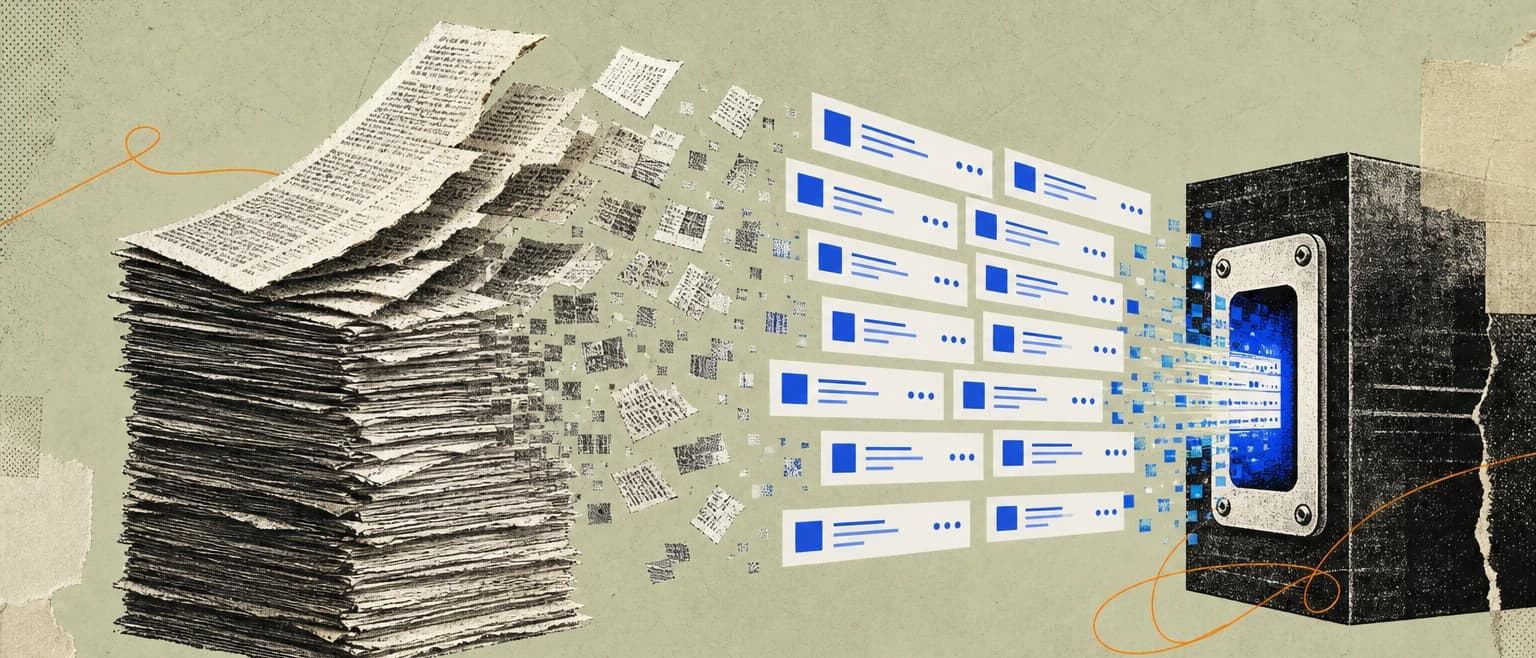
The buy-side primary research stack spent 2024 and 2025 reorganizing around searchable transcript libraries. Third Bridge, which has been publishing moderated interviews under its Forum service since 2016, responded by launching Discover, a search-first surface that exposes the full Forum transcript archive as a primary-research product rather than as an accessory to booking calls. The move is a useful case study in how a top-tier expert network can reposition a decade of curated interview content for a market that increasingly buys transcripts as a corpus, not as a byproduct.
Background: how transcript archives became the asset
For most of the last decade, expert networks priced the 1
call. The transcript was a downstream artifact, sometimes shared with the client who commissioned the interview, sometimes retained internally, sometimes syndicated. The primary product was human access: a moderator, a vetted expert, a scheduled hour.That pricing model still exists, and it still funds the category. What changed is that the transcript stopped being the byproduct and started being the asset. Two shifts pushed the change. First, buy-side analysts began wanting asynchronous access to past conversations rather than only new ones, driven by tighter research budgets and the reality that most questions have already been answered somewhere in someone's archive. Second, the arrival of retrieval-augmented workflows and agentic research tools created a class of buyers who wanted transcripts not as PDFs to read but as a corpus their systems could search, cite, and ingest.
The clearest market signal came in mid-2024, when AlphaSense closed its USD 930M acquisition of Tegus. The strategic logic was widely read as consolidation of the searchable expert-transcript layer under a single roof, on top of AlphaSense's existing filings, broker research, and news content. The Tegus archive, well over 100,000 expert call transcripts by public accounts at the time of the deal, was priced into the transaction as a durable content asset in its own right.
That repricing set the question every other expert network with a large archive had to answer. If a curated transcript library is a standalone product, what should the surface look like for buyers who want to use it that way?
Third Bridge's starting position
Third Bridge came into that question with two useful things. The first was the Forum archive. Forum is Third Bridge's moderated interview service, running since 2016, in which Third Bridge analysts conduct structured conversations with former executives and industry specialists and publish the transcripts to clients. Third Bridge has publicly described the archive as spanning tens of thousands of Forum Interviews across sectors, which puts it in the same order of magnitude as the peer archives that have become competitive assets in the category.
The second was a research-analyst operating model. Unlike a pure marketplace expert network, Third Bridge staffs its own sector analysts who run the interviews, shape the question sets, and stitch conversations into sector coverage. That model produces transcripts with a consistent structural spine, which is a meaningful input for anything downstream, whether that is a taxonomy, a semantic search index, or a set of embeddings feeding an agent.
What Third Bridge did not have, until Discover, was a client-facing surface that treated the archive as the primary product rather than as a companion to booking new interviews.
The approach: search-first, archive-forward
Discover is that surface. Publicly, Third Bridge has positioned it as a search-first platform giving clients access to the full Forum transcript library, with company and industry pages sitting alongside the raw transcripts as navigational entry points. The design choices worth flagging for anyone tracking product patterns in the category:
- Semantic search over the corpus. Analysts can query by concept rather than only by ticker or expert name, which is the table-stakes retrieval behavior once a transcript library exceeds a certain size.
- Sector taxonomies as navigation. Company and industry pages give the archive a browseable skeleton, so a buyer researching a specific vertical can traverse the corpus without knowing which specific interviews to ask for.
- Transcript-level citations. Search results anchor back to the underlying transcript, which is how the surface stays defensible for investment-committee use. A claim without a citation to a specific transcript passage is not a claim a research analyst can carry up the chain.
- Integration paths. Third Bridge has publicly discussed API and downstream integration paths for clients pushing content into internal research systems, which is the necessary condition for the archive to be useful inside a client's agentic workflow rather than only inside Third Bridge's own UI.
Running in parallel, Third Bridge has expanded Third Bridge PE Insights, its private-equity commercial due diligence business, around the same archive. PE Insights uses transcripts as the underlying evidentiary layer for diligence deliverables, which is a second commercial pattern worth noting: the same corpus can power a self-serve platform for public-market analysts and a services-heavy diligence product for private-market buyers.
What it means competitively
The launch reframes Third Bridge in market terms. It is still a human network with moderators and experts. It is also, now explicitly, a content-and-platform business, with a product that a procurement team can evaluate on the same axes it would evaluate a Tegus-style archive: corpus size, sector coverage, search quality, citation fidelity, and integration paths.
The peer set for that evaluation is small and identifiable. AlphaSense-Tegus is the anchor comparison after the 2024 acquisition close. Guidepoint is the other. In 2025, Guidepoint connected its expert transcript library to Perplexity via the Model Context Protocol, an integration that makes the archive queryable inside a general-purpose agentic research tool rather than only inside Guidepoint's own platform. That is a slightly different bet than Discover's platform-first framing, but the underlying strategic move is the same: treat the transcript library as a product, expose it to the tools clients actually use, and price it accordingly.
For buy-side buyers, the practical effect is that RFPs specifying a searchable, AI-ingestion-ready expert transcript corpus now have real optionality. Two years ago, that RFP had one obvious answer. Today it has three defensible ones, and the differentiation moves to corpus depth by sector, moderation quality, and how cleanly the archive drops into whatever retrieval stack the client already runs.
What it signals for the industry
The broader pattern the Discover launch fits into is straightforward. Expert networks with deep interview archives are productizing them as standalone research surfaces to remain relevant to workflows in which the human call is one input among many rather than the whole product.
That productization has a few second-order effects worth watching:
- The compliance perimeter widens. A 1 call has a clear compliance envelope: one client, one expert, one moderator, one call. A searchable archive delivered to many clients, and increasingly to their AI agents, forces the network to think about redaction, right-to-forget, and expert consent as ongoing platform concerns rather than per-call ones.
- Sector taxonomies become a moat. Once every serious network exposes a searchable corpus, raw transcript count matters less than how cleanly the corpus is organized. The networks with disciplined sector coverage and analyst-shaped question sets have a structural advantage over pure-volume archives.
- The buyer's stack decides more than the vendor does. The MCP integration Guidepoint published is the tell. Buyers who standardize on a particular agentic research surface will pull in the transcript library that plugs into it most cleanly, which pushes networks toward supporting the protocols clients adopt rather than defending closed platforms.
Powering institutional-grade transcription for expert networks.
INFLXD provides AI-powered, human-edited transcription with sub-1% error rates for the world's leading expert networks and financial research firms.
Visit inflxd.com →Keep reading.
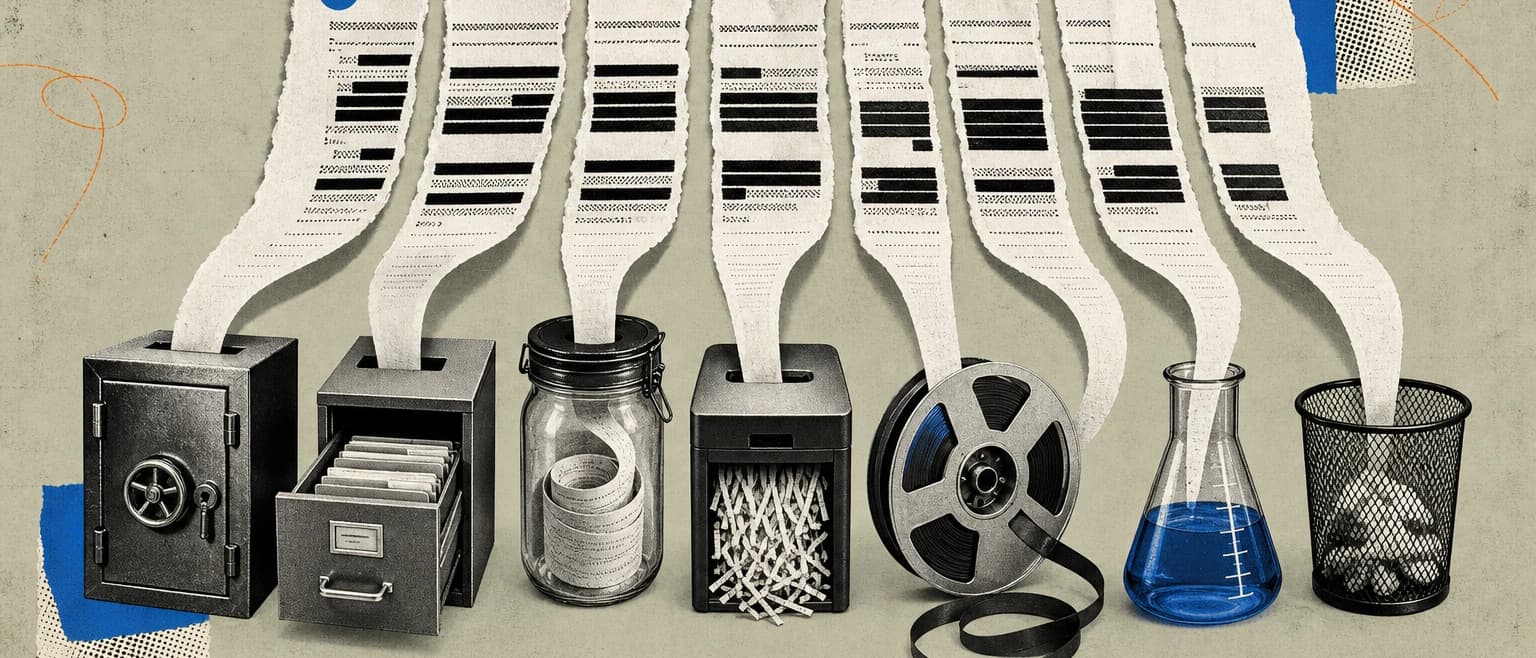
7 Ways Buy-Side Firms Are Structuring Expert-Call Retention for AI Agent Retrieval
As agents pull historical expert-network transcripts into research workflows, buy-side firms are settling on seven distinct retention architectures , each with its own licensing, MNPI, and recall trade-offs.
Inside AlphaSense's Morgan Stanley Wealth Deployment: A Template for Generative Research at Scale
How a 15,000-advisor rollout became a proof point for citation-linked generative search and a new distribution channel for expert-network content.
6 Ways Buy-Side Firms Structure Expert-Network Follow-Up Workflows After a Call
The post-call motion, not the sourcing, is where expert-network spend converts into updated theses and defensible research artifacts.