

The earnings-call embargo layer: how transcript vendors are engineering around issuer copyright in the MCP era
Issuer copyright over call audio was a webpage-era nuisance. In an agent-endpoint world, it becomes a rights-metadata problem that no one has solved.

Earnings calls sit on a piece of legal ground that has never been fully mapped. The issuer hosts the call. The issuer owns the audio and the prepared-remarks script. Regulation FD, codified by the SEC in 2000, governs how material information must be disclosed to the public but says nothing about who owns the recording once it airs. For twenty-five years that ambiguity did not really matter, because the redistribution surface was a webpage and a PDF, and issuers had little incentive to fight republication that mostly helped their investor relations reach.
That surface is changing. Transcript libraries are being exposed to large language model agents through the Model Context Protocol, and the same paragraph of a CEO's prepared remarks can now be pulled verbatim into a third-party agent, restated in a chat window, and cited in an automated research memo without a human ever visiting the vendor's site. The commercial and legal geometry has shifted, and the industry has not yet built the plumbing to match. Our read is that a formal embargo and rights-metadata layer for earnings-call content is now the most under-discussed infrastructure gap in the transcript stack.
The legal ground has always been softer than the industry treats it
The standard assumption inside financial data workflows is that earnings-call transcripts are, in some functional sense, public. They are quoted in sell-side notes, indexed by search engines, embedded in fund letters, and rehashed on retail investing forums. The Motley Fool has built a two-decade content franchise on republishing them, and Seeking Alpha's transcript archive has been a staple of buy-side prep since the mid-2000s.
None of that settles the copyright question. The call is a live performance of a scripted work hosted by the issuer. The audio is a fixed recording. Both are, on their face, copyrightable, and the prepared remarks in particular meet the originality bar without difficulty. What has protected republishers has been a combination of fair-use argument (transformative purpose, factual reporting, limited excerpting) and, more practically, issuer forbearance. Companies that want their message amplified do not send cease-and-desist letters to the outlets doing the amplifying.
The most-cited US precedent is Swatch Group v. Bloomberg, decided by the Second Circuit in 2014, which held that Bloomberg's unauthorized publication of a Swatch earnings-call recording was fair use. The ruling was narrow. It turned on the news-reporting purpose, the factual nature of the content, and the limited market harm to Swatch. It did not create a blanket license for redistribution, and it did not address the situation in which a machine agent, rather than a newsroom, is doing the reproducing. A dozen years later, no US court has revisited the question in the context of automated retrieval and generation.
Regulation FD, adopted by the SEC in Release 33-7881, sits alongside all of this but does not answer it. Reg FD requires that material information be disclosed broadly rather than selectively. It obliges the issuer to make the call accessible to the public in some form. It does not oblige the issuer to permit third-party recording, resale, or redistribution of the call itself. Issuers have historically complied with Reg FD via a webcast plus a transcript posted to the IR site, and the terms under which those artifacts can be reused have been governed by IR-platform contracts and site terms of service, not by securities law.
Why the webpage era hid the problem
For most of the last two decades the redistribution surface was human-scale. A transcript vendor published a page. An analyst read it, extracted the parts they needed, and worked them into their own memo. The vendor's terms of service typically permitted individual research use and restricted bulk redistribution, and enforcement was largely honor-system with occasional legal warnings to obvious offenders.
That model worked because the surface was slow, the copies were limited, and the substitution effect on the issuer's own IR distribution was negligible. A retail investor reading a Motley Fool summary of a call was, if anything, a marketing win for the company. A hedge fund analyst reading a Seeking Alpha transcript was a customer segment the issuer already assumed had access to the audio. Nobody, on either side of the transaction, had a strong reason to press the copyright question.
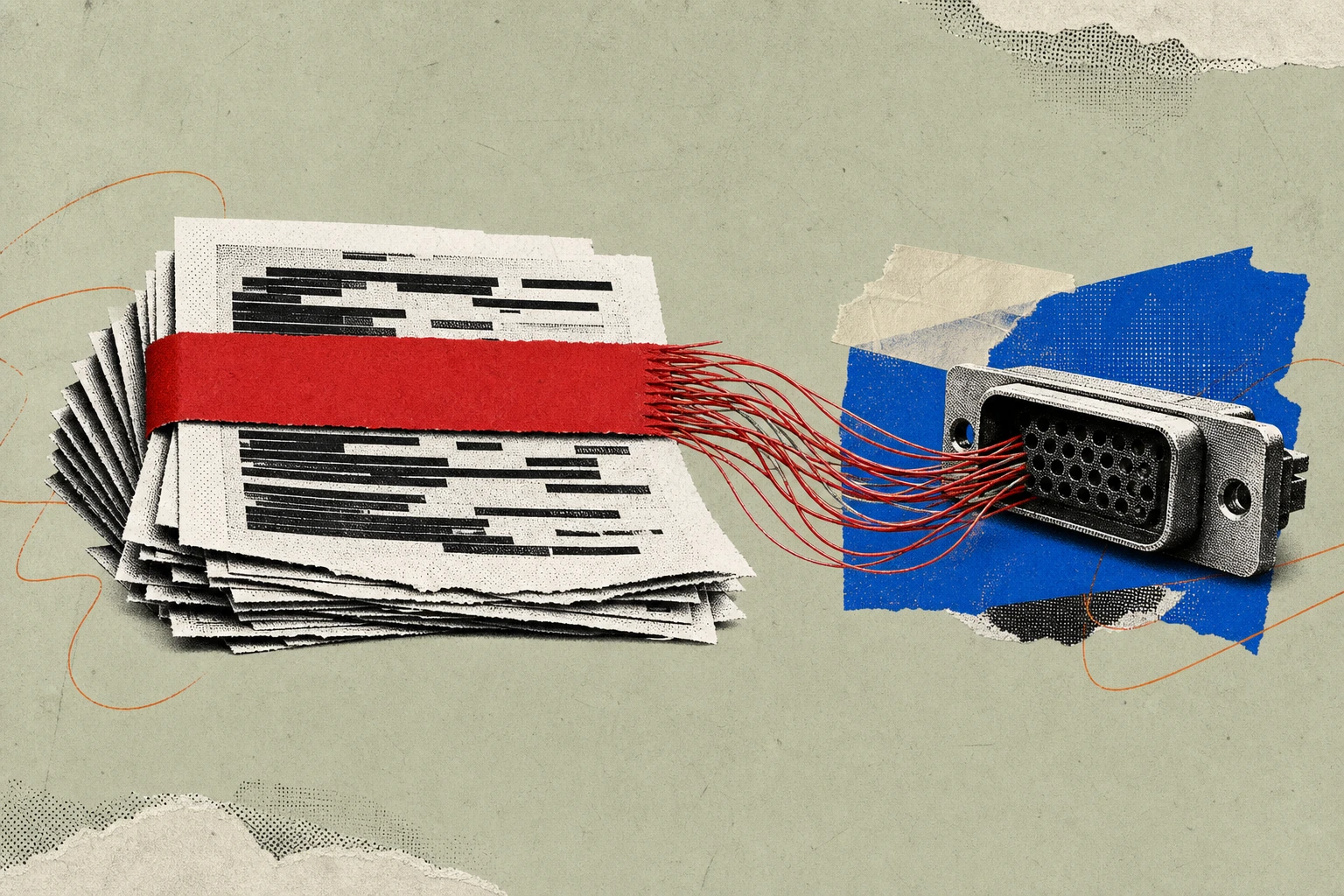
The MCP era changes three things at once. First, the copy is no longer scoped to a human reader; an agent can retrieve, reproduce, and restate the passage inside a downstream product that never surfaces the original vendor. Second, the substitution effect grows: an issuer's carefully staged IR narrative can be summarized and reframed by an agent whose training and prompting are opaque to the company. Third, the identifiable counterparty changes. In the webpage era, the party republishing was the transcript vendor. In the agent era, the party reproducing the content in front of an end user is a third-party application that the vendor may not have contracted with directly.
The current transcript-to-agent surface
Several vendors have already exposed transcript archives to LLM-facing workflows. Aiera publishes an event-intelligence platform that pipes live and archived call content into agent workflows. Quartr offers a global filings and call archive that has increasingly been positioned for programmatic consumption. AlphaSense's acquisition of Tegus integrated an expert-call transcript library into the same product surface as issuer disclosures. And Bloomberg's ASKB has added GLG expert-network content to the terminal, a step that puts expert-call material and, by adjacency, the broader disclosure corpus into a conversational agent used across the buy side.
Each of these surfaces raises a slightly different rights question. Issuer-hosted earnings-call transcripts carry issuer copyright and IR-platform contract terms. Expert-network transcripts carry the expert-network's own compliance regime, including MNPI screening and the network's client contracts. Filings themselves are largely in the public domain in the US, though the layout and enrichment on top of them may not be. A single agent query that touches all three categories at once, which is exactly the kind of query MCP is designed to enable, aggregates rights obligations that were previously handled in separate silos.
The IR-platform layer is the least-discussed piece of this. Notified, Q4, and Nasdaq's IR service host a large share of earnings calls in the US. Their terms typically govern who can record the call, whether the audio can be redistributed, and how transcripts derived from the call can be reused. When a transcript vendor obtains its content by transcribing the live webcast, those platform terms are part of the rights chain, whether or not the vendor has a direct contract with the platform. When that transcript then flows into an MCP resource, the platform terms travel with it, at least in principle, and the vendor is left to decide whether to encode them, disclose them, or absorb the risk.
What a rights-metadata layer would need to carry
The useful analogies here are music and news wires. In music, the ISRC and adjacent metadata standards travel with a recording and encode enough information about the rights holder and the mechanical-license status that a downstream distributor can decide whether it has the right to play the track in a given territory. On news wires, the payload includes an embargo timestamp, a republication scope (member outlets, subscribers only, no redistribution), and often a machine-readable rights statement. These layers are imperfect, but they exist, and they let automated systems make first-pass compliance decisions without a human reading the fine print each time.
Earnings-call transcripts today have none of this in any standardized form. A transcript pulled from a vendor's MCP endpoint arrives with the text, some structural metadata (speaker, timestamp, segment), and the vendor's own terms of service governing the client relationship. It does not arrive with a machine-readable statement of the issuer's redistribution posture, the IR platform's recording terms, or any embargo window the issuer may have requested. If a downstream agent then reproduces a paragraph verbatim inside a client-facing summary, the compliance question is answered, if at all, by whatever the downstream builder happened to code into their own guardrails.
A credible rights-metadata layer for earnings-call content would need to carry at least the following fields: the issuer's stated redistribution posture (public, quotation-only, no verbatim reproduction, no redistribution); the IR platform of record and its governing terms; any embargo or delayed-release window; a fair-use notice covering the transcript-vendor's own transformation (segmentation, speaker tagging, enrichment); and a downstream-obligation statement that travels with the content into the agent's context. None of this is technically difficult. The obstacle is coordination: no single vendor benefits from unilaterally imposing stricter metadata than its competitors, and issuers have not yet organized around a common ask.
Three scenarios for how this resolves
We see three plausible paths, and they are not equally likely.
Scenario one: issuer-led standard. A coalition of large issuers, likely working through an IR trade body or one of the big IR-platform vendors, publishes a machine-readable rights template for earnings-call content and asks transcript vendors to honor it. This is the cleanest outcome and the closest analog to how music rights metadata evolved. It is also the slowest, because it requires collective action from a group (corporate IR) that historically has not organized around distribution standards. We would not expect this to move on a two-year horizon without a triggering enforcement event.
Scenario two: vendor-led standard. One or more of the major transcript vendors publishes a proposed metadata schema for MCP resources that encodes redistribution terms, and the market coordinates around it. This is faster and more likely in the near term, but it inherits the credibility problem that the standard is being written by the party whose commercial interest is in maximum redistribution. The most credible version of this path involves a joint proposal from a vendor and a major IR platform, which converts the issuer's contractual posture into machine-readable form without requiring every issuer to opt in individually.
Scenario three: litigation-led clarification. An issuer sues a transcript vendor, or, more likely, sues the operator of a downstream agent product that reproduced its call content verbatim in a way that the issuer regards as substitutive rather than reportorial. A ruling in that case, whichever way it goes, forces the market to price the rights question and coordinate around it. This is the path we expect if scenarios one and two do not move within roughly eighteen months, and the case would probably turn on whether the agent's reproduction is transformative in the Swatch v. Bloomberg sense or substitutive in a way the 2014 court did not consider.
These scenarios are not mutually exclusive; a litigation event could accelerate a vendor-led standard, and an issuer-led standard could emerge in response to either. The base case, in our view, is a hybrid: one or two large transcript vendors publish a metadata proposal, one or two large IR platforms endorse it, and the rest of the market follows without a formal standards process.
Who is affected, and how
The transcript vendors themselves are the most obvious affected party, but the exposure is uneven. Vendors that primarily serve institutional clients under enterprise contracts have a cleaner risk profile: the contract can push compliance obligations downstream and the client base is small enough to police. Vendors that expose content through open or semi-open MCP endpoints face a harder problem, because the identity and behavior of the downstream agent operator may not be knowable at retrieval time.
Expert networks are affected through a different door. Expert-call transcripts have always carried a stricter compliance regime than issuer disclosures, including MNPI screening and network-specific client contracts. When expert content is aggregated into the same agent surface as issuer content, as with the GLG-into-ASKB integration, the compliance regime of the strictest input tends to bind the whole pipeline in practice. That is a constraint on how expert-network content can be exposed to agents and, we suspect, a quiet reason that expert-network integrations into LLM surfaces have moved more slowly than the underlying technology would suggest.
IR platforms sit in an interesting position. Notified, Q4, and Nasdaq's IR service already have contractual authority over how earnings-call audio can be recorded and redistributed; they just have not, to date, needed to exercise it against machine agents. If any of them publishes a machine-readable rights schema and offers it as part of the standard IR-platform package, they can effectively set the standard for the industry without asking permission from either issuers or transcript vendors. That is a commercially attractive position, and it is one we would watch.
Downstream agent builders, including hedge funds building internal research copilots and the growing set of vertical AI products for finance, absorb whatever obligation the upstream layers do not. In the current state, that is most of the obligation, and the enforcement risk is being priced by each builder individually, mostly by not reproducing verbatim passages and by adding disclaimer language to outputs. That is a workable interim posture and not a durable one.
Questions a research analyst should be asking next
- Which transcript vendors have negotiated explicit MCP-exposure terms with major IR platforms, and what do those terms actually restrict? The answer is currently not public and is likely to vary materially across vendors.
- Has any issuer sent a formal takedown or cease-and-desist notice to a transcript vendor specifically over MCP or agent-facing redistribution? A single documented instance would sharpen the risk conversation across the industry.
- What is the compliance posture of the major LLM-agent builders (the ones consuming these MCP endpoints) on verbatim reproduction of earnings-call content? Are they filtering, paraphrasing, or passing through?
- How are expert networks handling the case where their transcripts flow through the same agent surface as issuer content, and does the strictest-input-binds-the-pipeline dynamic show up in their contract terms?
- Which IR platform will be first to publish a machine-readable rights schema, and will they do it as a competitive differentiator or as a shared industry standard?
Powering institutional-grade transcription for expert networks.
INFLXD provides AI-powered, human-edited transcription with sub-1% error rates for the world's leading expert networks and financial research firms.
Visit inflxd.com →Keep reading.

7 Ways Buy-Side Firms Structure Expert-Network Compliance Training for New Analysts
A practical map of the training modules and controls that get new analysts and PMs cleared for their first expert call.

Inside Bridgetown Research's $19M Series A: agentic primary research meets the PE and consulting stack
How Accel and Lightspeed backed a McKinsey-and-Amazon founding team building AI agents that run diligence projects end to end.

7 Ways Buy-Side Firms Are Sourcing Non-English Primary Research in 2026
A structural map of the sourcing patterns buy-side research teams use to get non-English expert calls, filings, and management commentary into an AI research stack.