7 Data Sources Buy-Side AI Research Agents Are Wired Into in 2026
A structural map of the seven feed categories agentic research tools connect to, and what each one actually delivers.
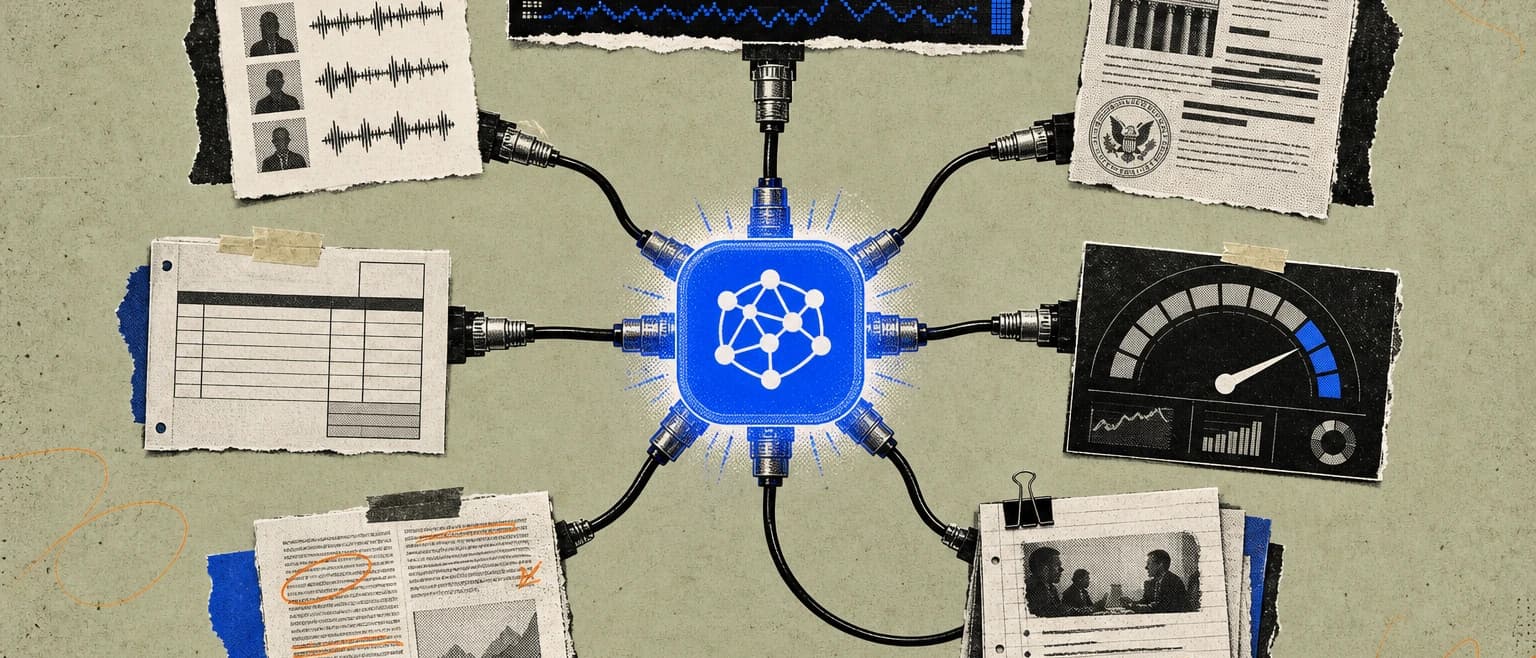
Buy-side AI research agents stopped being demos in 2025 and started being plumbing in 2026. The interesting question is no longer whether a chat interface can answer a finance question, but what it is grounded in when it does. This piece catalogs the seven distinct data-source categories that agents such as Rogo, Hebbia, AlphaSense Assistant, Bloomberg ASKB, and Aiera are actually wired into today, based on publicly announced integrations. For each, the useful detail is what the feed contributes, how the agent reaches it, and where the compliance line sits.
1. Expert-network transcript libraries
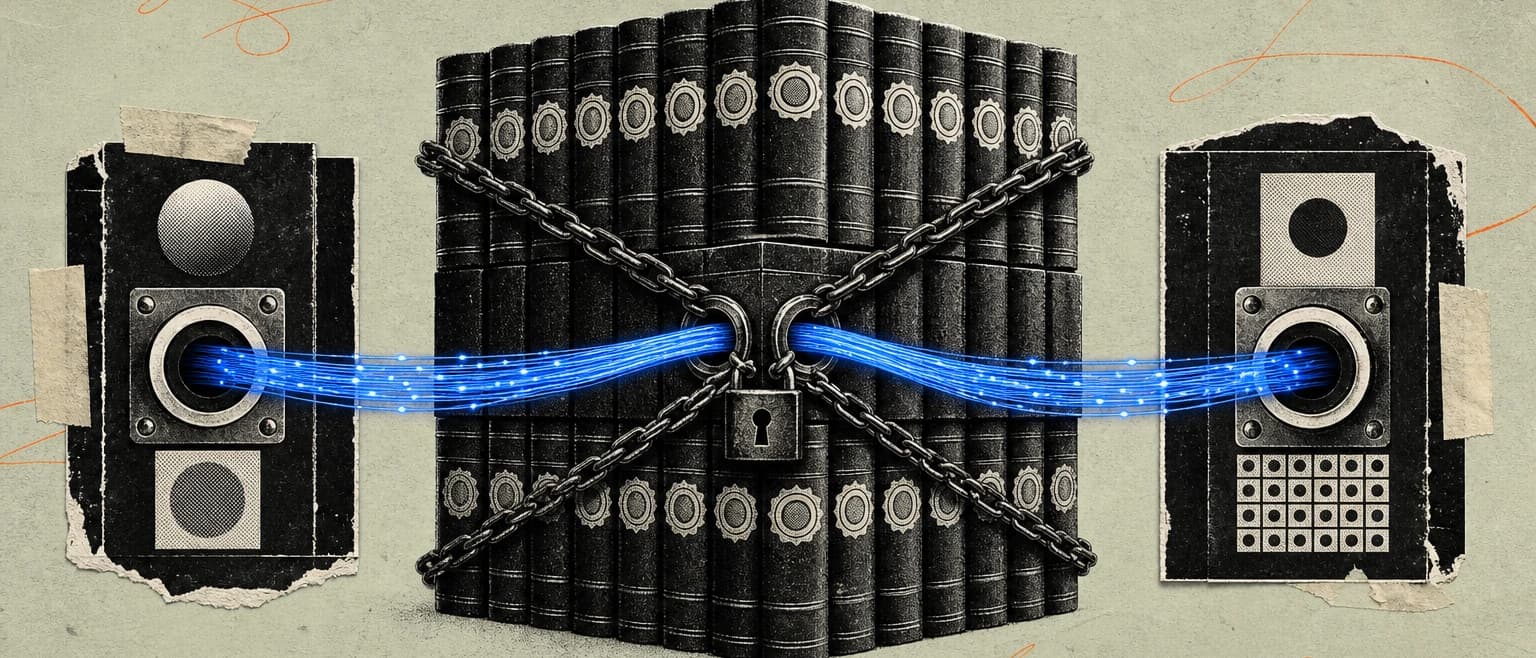
Expert-call transcripts were the first large private research corpus to be exposed to agents through structured protocols rather than seat-based UIs. Guidepoint opened an MCP server accessible from Claude and Perplexity that exposes more than 100,000 expert transcripts to agent workflows, and GLG integrated its transcript corpus into Bloomberg ASKB.
What this feed contributes is qualitative color that is otherwise unreachable: former operators, channel checks, and industry practitioners describing how a market actually functions. For a research agent building a thesis, that is the layer that turns a financial model into an investment case.
The compliance line here is the hardest one in the stack. Expert-network content is vetted precisely so it can be used by paying clients, and MCP-mediated access does not change the MNPI perimeter. Agents pull vetted transcripts within an existing entitlement; they do not get a shortcut around compliance review.
2. Structured financial data and KPIs
Document retrieval is not the same as structured data retrieval, and the buy-side workflow has always known this. Daloopa closed a USD 47M Series C and connected its structured financial-data layer into Rogo via MCP, positioning normalized KPIs as a distinct source layer that sits above raw filings.
The reason this matters is grounding accuracy. Daloopa's own published benchmark claims a 71-point retrieval advantage for grounded finance queries when an agent is pulling from a normalized KPI layer versus scraping the underlying documents. That number is provider-published and should be read as such, but the direction is intuitive: an agent that asks for segment operating margin gets a clean number, not a paragraph it has to parse.
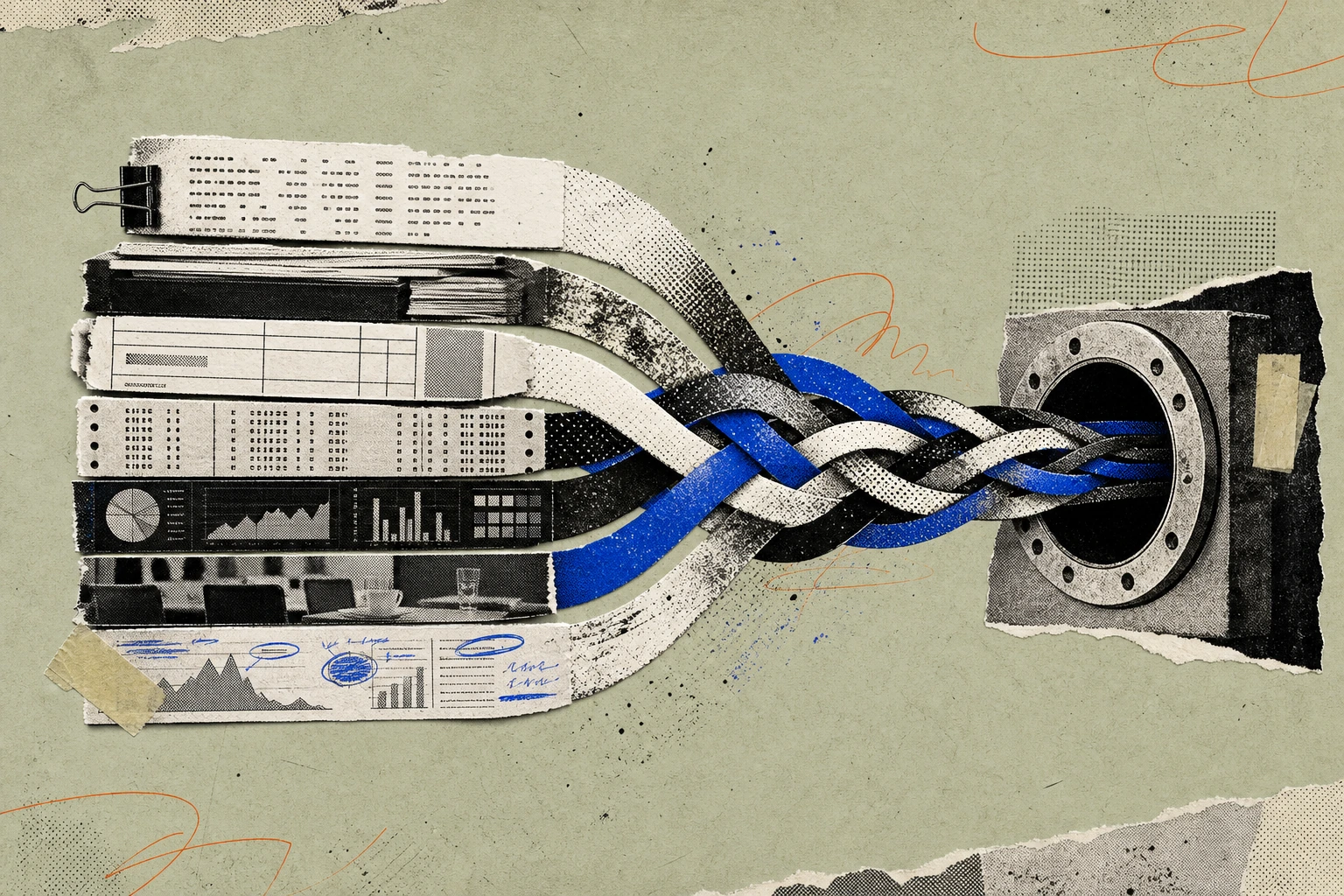
For a research analyst, the practical value is that model-ready inputs arrive as model-ready inputs. The agent is not reinventing a data-collection step that a data vendor has already normalized.
3. Earnings and sell-side call transcripts
The third category is public-company audio: earnings calls, analyst days, and sell-side conference sessions. Aiera launched a sell-side-validated content platform with MCP access for AI research agents, treating this audio-derived text as an AI-grade dataset rather than a human-listening product.
The distinction from expert transcripts is important. Earnings and analyst-day content is public and material, which places it firmly in the safe zone for agent workflows. There is no MNPI question, and the corpus is dense with the exact language management uses about guidance, segment performance, and forward commentary.
For an agent building a comp set or tracking a management team's tone across quarters, this is a first-order feed. The MCP wrapper matters because it means the agent can query the corpus programmatically instead of the analyst manually pulling transcripts one ticker at a time.
4. Deal-room and private-side documents
Private-side workflows have a different data topology. The material lives in virtual data rooms, not in filings, and access is scoped to a specific deal, a specific counterparty, and a specific window. Hebbia connected to SS&C Intralinks DealCentre AI for live data-room access, giving agents controlled reach into deal documents inside an existing entitlement.
This is where compliance controls carry the most weight. A data room is by definition non-public, and the entire access model exists to enforce that. Wiring an agent into a data room only works when the agent inherits the same scoping the human user has. The Hebbia and Intralinks integration is structured that way: the agent reads what the deal team can read, and no more.
For PE associates and M&A teams, the value is throughput on the same document-heavy work that consumes junior time today. Search across a 4,000-document data room, cross-reference the disclosure schedule against the reps and warranties, extract every mention of a specific customer contract. The agent operates inside the wall, not around it.
5. Portfolio and market analytics
Agents also need to answer questions grounded in the client's own book. FactSet extended its MCP suite to portfolio analytics, giving agents a way to query holdings, exposures, and performance attribution against the same analytics layer the desk already uses.
The workflow this changes is the internal one. An analyst who wants to know how a specific factor exposure moved across the portfolio last quarter, or which holdings drove a given performance number, previously ran that query through a dedicated UI. An MCP-accessible analytics layer lets the same question sit inside a broader agent workflow that also touches transcripts, KPIs, and news.
This category is quieter than the others because it does not produce viral demos, but it is arguably the most integrated into an actual portfolio manager's day. It also has the cleanest compliance story: the data is the firm's own, and the analytics vendor is already inside the trust boundary.
6. General-purpose news, filings, and broker research
The sixth category is the broad research surface: SEC and non-US filings, broker research entitlements, and business news. AlphaSense Assistant surfaces this material to agent-style queries, and AlphaSense reported that its AI features drive roughly half of new-business conversations, closing a USD 350M round at a USD 7.5B valuation on that thesis.
The function of this feed is breadth. It is the layer an agent hits when the question is about a company or theme it does not already have deep structured coverage of: a new market entrant, a regulatory filing in a jurisdiction outside the analyst's usual coverage, a sudden news event affecting a comparable.
Broker research access carries an entitlement layer of its own, since sell-side notes are licensed content. Agent access is scoped to what the client's entitlements already cover, which is the same principle that applies to expert transcripts and data rooms: the agent inherits the seat's access, it does not expand it.
7. Code-execution and sandbox environments
The seventh source is the one that looks different from the others because it is not a data feed at all. Rogo has detailed a Claude plus E2B sandbox stack where the agent runs Python against retrieved data as a first-class step in the workflow.
The reason this counts as a source, not a post-processing step, is that agent output is only as good as the calculations behind it. Asking a language model to compute a weighted average across 40 line items is a bad idea. Asking it to write and execute Python that does the same calculation in a sandboxed environment is a good idea, because the numbers are computed rather than generated.
This pattern is spreading. The sandbox becomes the place where retrieved KPIs from a Daloopa-style layer, transcript excerpts from an expert or earnings feed, and portfolio positions from an analytics feed are combined into an actual answer. It is the compute substrate underneath the other six sources.
Powering institutional-grade transcription for expert networks.
INFLXD provides AI-powered, human-edited transcription with sub-1% error rates for the world's leading expert networks and financial research firms.
Visit inflxd.com →Keep reading.
Inside Guidepoint's MCP deployment: wiring 100,000+ expert transcripts into Claude and Perplexity
How one of the largest traditional expert networks routed its transcript archive into two LLM ecosystems without unbundling its compliance layer.

Inside the Hebbia-Centerview deployment: how an advisory firm operationalized agentic research across its bankers
What it actually takes to put an agentic research platform in front of a banker base, traced through the Centerview Partners rollout.

6 Pricing Models for Expert Network Calls: How Buy-Side Firms Actually Pay for Primary Research
A structural breakdown of the commercial models buy-side procurement and research operations encounter when contracting expert-network access.