

7 Ways Buy-Side Firms Handle Recording Consent on Expert Network Calls
A practical map of the consent, disclosure, and permission mechanics buy-side research teams run before an expert call hits the transcript pipeline.
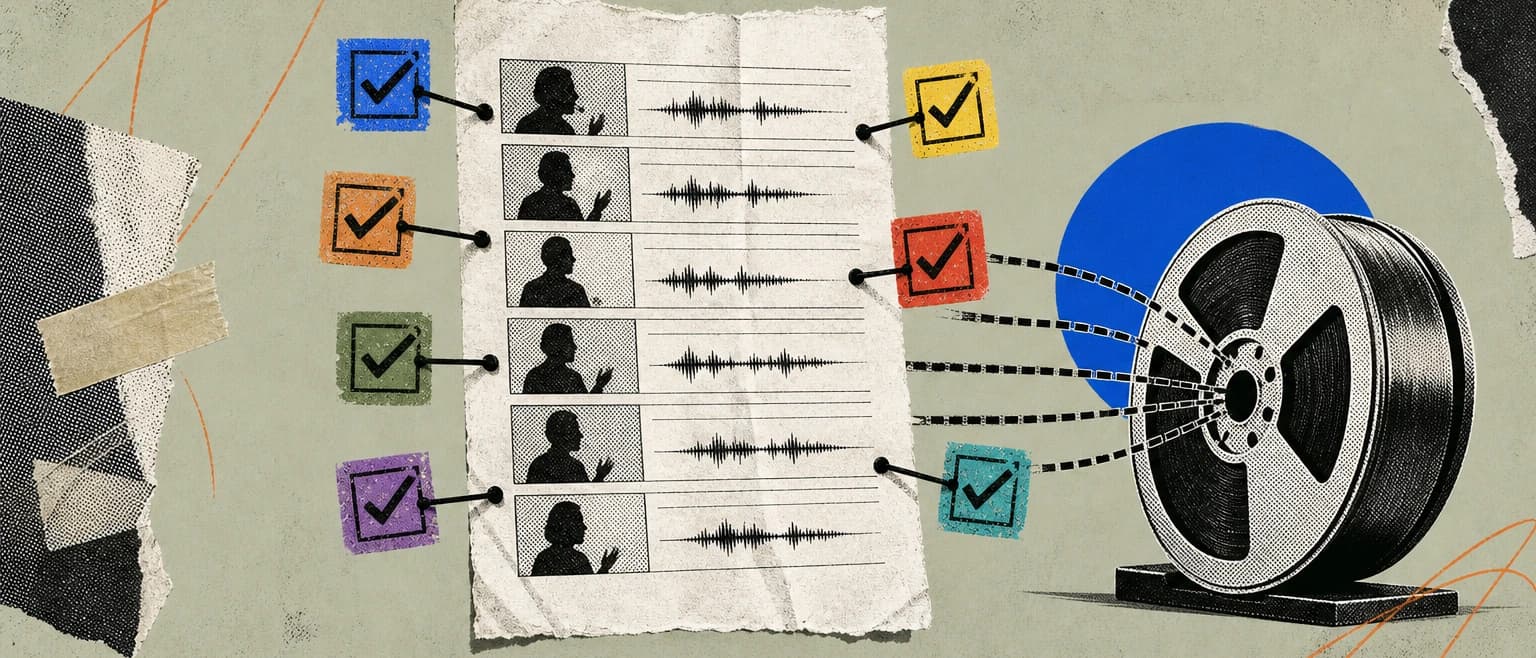
Recording an expert-network call for AI ingestion is now standard practice inside most hedge funds, long-only shops, and PE research desks. The mechanics of getting consent, however, vary sharply by jurisdiction, expert type, and network policy, and the compliance cost of getting them wrong has climbed since 2024. This guide walks through seven distinct consent structures buy-side firms use in 2026, aimed at research operations leads, compliance officers, and analysts who own the transcript pipeline.
1. Pre-engagement written attestation in the expert's terms
The first consent layer sits upstream of any specific call. When an expert onboards to a network, the terms of engagement include a recording clause the expert accepts once, in writing, before ever being matched to a client. Networks including GLG, Guidepoint, AlphaSights, and Third Bridge publish compliance frameworks that describe expert-side onboarding attestations covering recording, confidentiality, and MNPI handling.
On the buy-side, the practical value is that the client sees the recording clause surfaced in the call brief before the call is booked. That gives the analyst a first-line defense: recording permission was granted at the network layer, documented, and dated, before the analyst joined the line. It does not remove the need for on-call confirmation, but it establishes the paper trail.
2. Verbal on-call consent captured in the transcript header
The second layer is the one most analysts think of as the consent. At the top of the call, the analyst or moderator reads a scripted disclosure, typically some variant of "this call is being recorded for internal research purposes," and the expert affirms. Well-run pipelines treat this exchange as the first utterance in the transcript, timestamped, so the consent is not stored separately from the recording it authorizes.
This is more than ceremony. In a compliance review, the auditor wants to see the consent inside the artifact, not attached to it. A transcript whose first 30 seconds contain a clear, affirmed disclosure is materially easier to defend than one where the consent lives in a separate PDF in a separate system. The scripted language matters too: buy-side compliance teams increasingly review the disclosure script itself, not just whether one was read.
3. Two-party-consent jurisdictional routing
US federal law is a one-party-consent baseline, but a meaningful set of states require all parties to consent to recording. California, Florida, Illinois, Massachusetts, Pennsylvania, and Washington are the ones research operations teams flag most often. EU experts sit under a separate regime: GDPR Article 6 requires a lawful basis for processing personal data, and voice recordings of identifiable individuals fall inside that scope.

The operational response is a routing rule. When the expert's stated location or the analyst's location falls inside a two-party jurisdiction, or when the expert is EU-resident, the call is diverted to a workflow that requires explicit written confirmation, typically an email or portal acknowledgment, before the recording is armed. Firms that skip this step and rely on verbal consent alone are exposed on two fronts: the recording itself may be unlawful, and any downstream transcript inherits that defect.
4. Employer-restriction screening and no-record categories
Not every expert can be recorded even with consent. Current employees of public companies, active partners at consulting firms with strict NDAs, and operators with residual confidentiality obligations from a prior employer are the common cases. Networks handle this at the screening layer: certain expert categories are flagged and either declined outright or routed to note-only calls where the analyst cannot arm a recorder.
Dialectica and Coleman Research both publish compliance materials describing categorical restrictions on recording for specific expert types. On the buy-side, the mirror-image control is a screening question in the intake form: if the transcript pipeline is mandatory for a given research workflow, and the expert cannot be recorded, the call should not be booked as a transcript-consuming call in the first place. Handling this at intake avoids the worst outcome, an analyst discovering the restriction 90 seconds into the call.
5. Purpose-limitation consent and the AI tier
The fifth layer is newer, and it is where 2024 to 2026 practice has diverged from earlier norms. Purpose-limitation consent tells the expert what the recording will be used for: only the requesting analyst, shared across the fund's research team, or ingested into an AI or LLM-backed system. The rise of MCP-style pipelines, which let internal models retrieve across a firm's transcript corpus on demand, has forced firms to separate two distinct uses: retrieval, where the transcript is queryable but not used to train a model, and training, where the transcript's content becomes part of a model's weights.
Buy-side compliance teams are increasingly asking for these to be consented separately. An expert may reasonably agree to have a transcript retrievable by the requesting fund's analysts through an internal RAG system, and refuse to have that same transcript folded into training data for a broader model. Consent tiering makes that distinction machine-readable, so the ingestion pipeline can enforce it downstream.
6. Retention-window disclosure
The sixth layer is retention: how long will the recording and transcript be kept? Common windows disclosed at the point of consent are 30, 90, or 365 days, with some firms disclosing an indefinite retention policy tied to the life of the fund. The disclosure matters both for the expert (who may accept 90-day retention and refuse indefinite) and for the firm (whose deletion controls have to actually enforce the window that was disclosed).
In practice, retention-window consent ties directly to the retention-clock mechanics inside the transcript store. If the expert consented to a 90-day window, the transcript object needs a deletion timer that fires on day 90 unless a documented legal-hold exception intervenes. Firms that disclose a window but retain indefinitely, or retain a window they never disclosed, have a defect the compliance team will find on the next audit.
7. Revocation and redaction rights within a post-call window
The last layer is the newest. A growing number of networks give experts a post-call window, typically 24 to 72 hours, to request redaction of specific passages, or in rarer cases, to revoke consent entirely. This is a response to two pressures: expert experience, since experts who feel they have a right of review are more willing to be recorded, and compliance risk, since a documented redaction right reduces the surface area for later disputes about what was said and how it was used.
On the buy-side, this reshapes the ingestion pipeline. A transcript that could still be redacted for 72 hours should not hit the production vector store on hour one. A common pattern is a staging tier: the transcript is available to the requesting analyst immediately, but not indexed into the firm-wide retrieval system until the revocation window closes. This adds latency, but it means a redaction request never has to be chased across dozens of downstream systems.
Why this stack keeps growing
The seven layers have accreted, not replaced each other, because the underlying risks have accreted. Capvision's 2023 regulatory episode in China put every major network on notice about cross-border expert calls, and MNPI enforcement has kept documented consent front of mind for compliance officers on both the network side and the buy-side. The result is a practical convergence: in-house compliance teams at hedge funds increasingly require the consent record itself to be attached to the transcript as metadata, so the artifact carries its own audit trail into whatever downstream system consumes it.
Powering institutional-grade transcription for expert networks.
INFLXD provides AI-powered, human-edited transcription with sub-1% error rates for the world's leading expert networks and financial research firms.
Visit inflxd.com →Keep reading.

Inside the PE data-platform stack: how expert-network transcripts became a structured research layer
A three-layer pattern has emerged across private-equity data platforms, wiring expert-call transcripts into deal workflows alongside financials and CRM.

7 Ways Buy-Side Firms Vet Expert Credentials Before an Engagement
A practical map of the verification steps research teams and expert-network operators run before a paid consultation clears compliance.

Inside the Accenture Ventures stake in AlphaSense: how a strategic investment became an agentic-workflow distribution channel
A corporate-venture check turned a Big Four consulting firm into a delivery channel for AI-native primary research.