

How Buy-Side Firms Handle Expert-Network Call Transcripts After the Engagement Ends: 7 Retention and Access Models
A structural map of how multi-managers, long-onlys, and credit shops retain, redact, or purge expert-call transcripts once the research is done.

Expert-network call transcripts have a strange second life. The call itself is a one-hour event bounded by a compliance script and a moderator. The transcript that falls out of it can live in a firm's systems for days, months, or years, and that choice is now a load-bearing design decision for buy-side research operations. It governs MNPI tail risk, books-and-records exposure under the SEC's adviser recordkeeping rule, and whether the firm's AI research stack can actually retrieve anything useful six months later.
The retention question used to be answered by default: the expert network held the file, the analyst pulled a PDF when needed, and nothing ever hit the firm's own storage. That default is breaking. Internal retrieval-augmented generation (RAG) corpora, agentic research copilots, and tighter privacy regimes have pushed buy-side firms toward seven distinct structural models for post-engagement transcript handling. Most sophisticated shops now run two or three in parallel, keyed to ticker sensitivity, mandate type, and the compliance budget of the desk.
1. Vendor-held only: the transcript never leaves the portal
The simplest model is the oldest one. The expert network records the call, generates a transcript on its own infrastructure, and makes it readable inside its client portal. The buy-side firm never takes custody of the file. Networks such as AlphaSights, GLG, Guidepoint, and Third Bridge all offer some version of this posture, and compliance teams at those firms publish their frameworks for how hosted content is handled, as GLG and Guidepoint both describe on their public compliance pages.
The cleanest expression of the vendor-held model is the Tegus library, now part of AlphaSense, where the client reads the transcript but does not host it. From a compliance perspective, this is the lowest-risk option: the firm has nothing on its servers to subpoena, index, or accidentally leak. From a research-stack perspective, it is also the most limiting. The transcript cannot be fed into an internal RAG corpus, cross-referenced against earnings call text, or surfaced by an in-house agent without re-ingesting it, which defeats the point of leaving it with the vendor in the first place.
2. Firm-hosted indefinite retention
At the other end of the spectrum, a large and growing number of multi-managers pull every transcript into their own research knowledge base and keep it there with no scheduled purge. The pattern is familiar: an S3 bucket, a vector store, an embedding pipeline, and an internal search layer that treats expert calls as first-class research artifacts alongside broker notes and earnings transcripts.
The analytical case for indefinite retention is strong. A transcript about semiconductor capex in 2023 is still a useful data point against 2026 guidance. The compliance case is harder. Every incremental month of retention is another month of MNPI exposure, another month inside a potential discovery window, and another month during which an analyst who has since left the firm might still be quoted in a file that touches a restricted name. Firms that run this model usually pair it with aggressive access controls and periodic compliance sweeps rather than a time-based purge.
3. Scheduled-purge retention
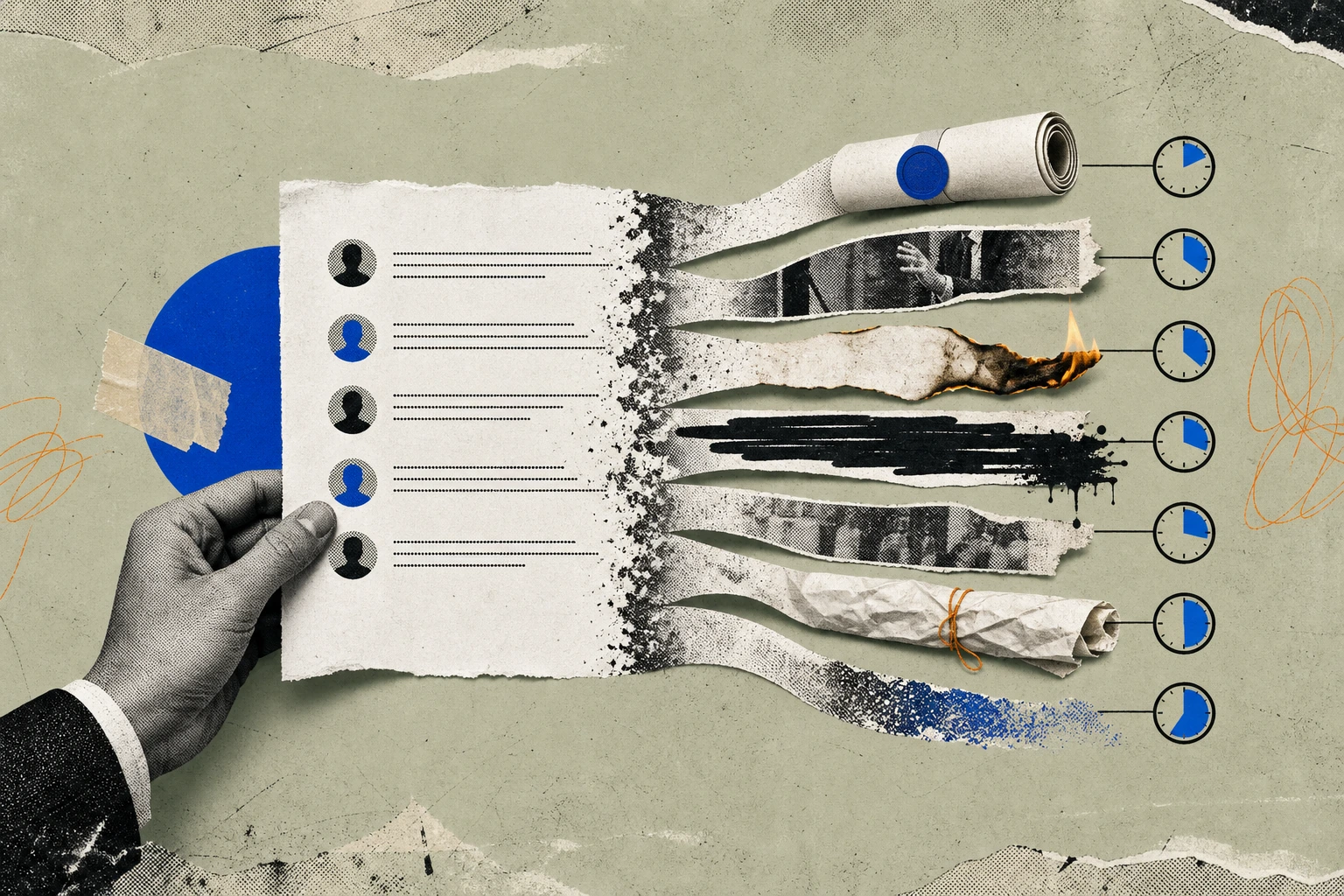
The middle path is a scheduled purge. Transcripts live in the firm's systems, but an automated job deletes them after a defined window , 12, 18, or 36 months are the most common choices , tied to the useful life of the research memo they informed.
The anchor here is the SEC's adviser recordkeeping rule, which requires registered investment advisers to retain certain books and records for at least five years, with the first two years in an easily accessible place. Firms that treat expert-call transcripts as research work-product subject to the rule generally cannot purge inside the five-year window; firms that treat them as supplemental background that never informed a trade decision have more latitude. The classification is a legal judgment, not a technical one, and most compliance teams want it documented per-call rather than per-corpus.
4. Redaction-on-ingest
Redaction-on-ingest tries to resolve the retention-versus-risk tradeoff at the file-processing layer rather than the policy layer. The transcript is stored, but a compliance tool strips expert identifiers, current employer names, specific ticker references, or any phrase flagged by a named-entity model before the text lands in the searchable store.
In practice this is often a lightweight pipeline sitting on top of a Zoom, Otter, or Fireflies transcript, running a named-entity recognition pass tuned to the firm's restricted list and expert-roster taxonomy. The redacted text is still useful for thematic retrieval, which is often what analysts actually want when they query the corpus months later. The unredacted original either stays with the vendor or is held in a smaller, access-controlled vault for the subset of cases where identity actually matters. The tradeoff is real: aggressive redaction degrades retrieval quality for exactly the queries that would most benefit from it.
5. Tiered access by ticker sensitivity
The fifth model borrows directly from how firms already gate research notes. Transcripts covering restricted-list or watch-list names are quarantined in a compliance-only vault, accessible only through a formal request and a logged justification. Transcripts covering unrestricted names flow into the general research index with normal analyst access.
The operational logic is clean: the firm already maintains a restricted list, already has infrastructure for gated review, and already has a compliance workflow for touching sensitive names. Extending that gating to expert-call transcripts is incremental rather than greenfield. The weakness is that ticker sensitivity is not a static attribute. A name that was unrestricted when the call happened may be restricted by the time the transcript is queried, and most firms' systems do not retroactively re-tier existing files. Firms running this model well tend to re-run the restricted-list classifier on the full transcript corpus on a scheduled basis.
6. Transcript-only, recording-destroyed
The sixth model separates the audio from the text. The recording is purged after the transcription pipeline completes, and only the transcript is retained for research use. The driver here is not usually MNPI; it is voice-biometric and consent exposure under GDPR, the Illinois Biometric Information Privacy Act, and the growing cluster of state-level biometric regimes in the United States.
A voice recording is biometric data in a way a transcript is not. Keeping it indefinitely creates a consent and data-subject-rights surface that most buy-side firms would rather not maintain, especially for calls with experts in European or Illinois-adjacent jurisdictions. Destroying the audio immediately after transcription materially shrinks that surface while preserving the research-useful artifact. The cost is that any dispute about what was actually said , a redaction challenge, a compliance review, a subpoena , now rests on a transcript that cannot be re-verified against source audio.
7. Agent-scoped retention
The seventh model is the newest and the least settled. In agent-scoped retention, a transcript is kept only as long as an active research agent, model, or thesis has it in its retrieval window. When the thesis closes, the position exits, or the agent is retired, the transcript expires on a deterministic schedule tied to that lifecycle rather than to a calendar.
This pattern is emerging as buy-side agent stacks , Rogo, Hebbia, and in-house copilots , formalize how context is scoped to individual research workflows. The compliance appeal is that retention becomes purpose-bound rather than open-ended, which maps more cleanly onto data-minimization principles than any time-based rule. The operational challenge is that thesis lifecycles are messy. Positions get re-opened, agents get forked, and a transcript tagged to a closed thesis is often exactly the file an analyst wants when a related name resurfaces. Firms experimenting with this model generally run it alongside a longer-dated backup rather than as the sole retention layer.
Why the choice is harder than it used to be
For most of the last fifteen years, transcript retention was a compliance decision made once, documented in a policy, and forgotten. The transcript either sat on the vendor's portal or lived in a shared drive, and nobody in the research org cared very much either way. That is no longer true. A transcript that is not in the firm's own systems is not retrievable by the firm's own agents, and a transcript that is in the firm's own systems is a compliance artifact that someone has to govern.
The seven models above are not alternatives so much as a menu. Sophisticated buy-side research operations are running several of them in parallel, keyed to ticker sensitivity, mandate type, jurisdiction, and the research workflow the transcript was generated to support. The design question is no longer whether to keep the transcript; it is which combination of retention, redaction, and access tiers matches the firm's actual research and compliance posture.
Are your experts using AI to cheat?
Try our free demo to find out today.
Powering institutional-grade transcription for expert networks.
INFLXD provides AI-powered, human-edited transcription with sub-1% error rates for the world's leading expert networks and financial research firms.
Visit inflxd.com →Keep reading.
Halluminate raises $30M Series A for AI training environments
The nine-person startup building simulated finance workflows for frontier labs counts four top U.S. AI labs as customers.
SEC proposes rule changes to widen retail access to private market funds
The Commission's proposal would expand retail investor choice in regulated fund structures that hold private assets.
How Buy-Side Firms Handle Expert-Network Call Follow-Ups: A Field Guide to Re-Engagement Workflows
The seven operational shapes a follow-up engagement can take, and the compliance layer sitting under each one.