The private-market transcript gap: why expert-call libraries are becoming the primary training corpus for pre-IPO AI research
As buy-side agents extend into private-company diligence, expert-network transcripts are becoming the structured qualitative backbone that 10-Ks and earnings calls provide on the public side.

Public-equity AI workflows inherited a corpus. Earnings-call transcripts, 10-Ks, 10-Qs, sell-side notes, investor-day decks: all structured, all dated, all speaker-tagged, all sitting behind mature vendor pipes. When a buy-side team wires an agent to answer a question about Nvidia's data-center segment, the retrieval layer has a spine to grip. Private-company diligence has no such spine. There is no SEC filing on a Series D logistics platform, no scheduled quarterly call from a founder-controlled fintech, no analyst day from a private equity portfolio company preparing for a 2027 IPO window. The only recurring, structured qualitative record of a private company's operations, unit economics, and competitive posture is the expert-network call transcript.
Our read is that this asymmetry is quietly rewiring the private-market research stack. The category-level shift is not that expert networks are doing more calls. It is that transcript-library depth on private issuers is becoming the asset that agents actually consume, and the firms that own those libraries are becoming infrastructure for a workflow that did not exist two years ago.
Why the public-equity corpus does not port to private issuers
The public-equity research stack has spent twenty years standardizing its qualitative record. An earnings call is a scheduled event. The transcript is produced by multiple vendors within hours, tagged by speaker, timestamped, and cross-referenced against the prepared remarks and the Q&A. A 10-K arrives on a known cadence, in a known structure, with a management discussion section that reads the same across sectors. Sell-side initiations and updates arrive through the same pipes every buy-side firm has plumbed since the 2000s. An agent retrieving against this corpus is retrieving against a substrate that was, effectively, designed for machine consumption even before machine consumption was the point.
None of that exists for a private company. There is no scheduled call. There is no management discussion section. There is no independent third party producing a transcript of the founder's board update. The financial data that does exist, in PitchBook, CB Insights, S&P Capital IQ, and the LP-facing reports of the sponsors themselves, is structured but thin on the qualitative dimensions that drive a diligence memo: how does the sales motion actually work, which competitor is winning the last three bake-offs, what is the churn shape by cohort, what did the last GTM hire change.
The expert-network call fills exactly that gap. A 60-minute transcript with a former VP of sales, a current channel partner, or a departed engineering lead is, in practical terms, the private-market equivalent of a management discussion section plus an analyst Q&A. It is qualitative, it is structured (question, answer, question, answer), it is dated, and, critically, it is speaker-tagged with a role and a compliance-vetted relationship to the issuer.
No other artifact in the private-market research workflow carries all four of those properties.
The library, not the call, is the asset
The count that matters is not calls per year. It is transcripts per private issuer, over time, across roles.
A single expert call on a Series C SaaS company is a data point. Forty transcripts on the same company, spanning three years, six former employees, four channel partners, and two competitor executives, is a longitudinal qualitative dataset that no filing regime produces on any private issuer anywhere in the world. That dataset is what an agent needs to answer a diligence question with any texture: is the sales cycle lengthening, is the win rate against the incumbent stable, is the CFO churn a signal or a coincidence.
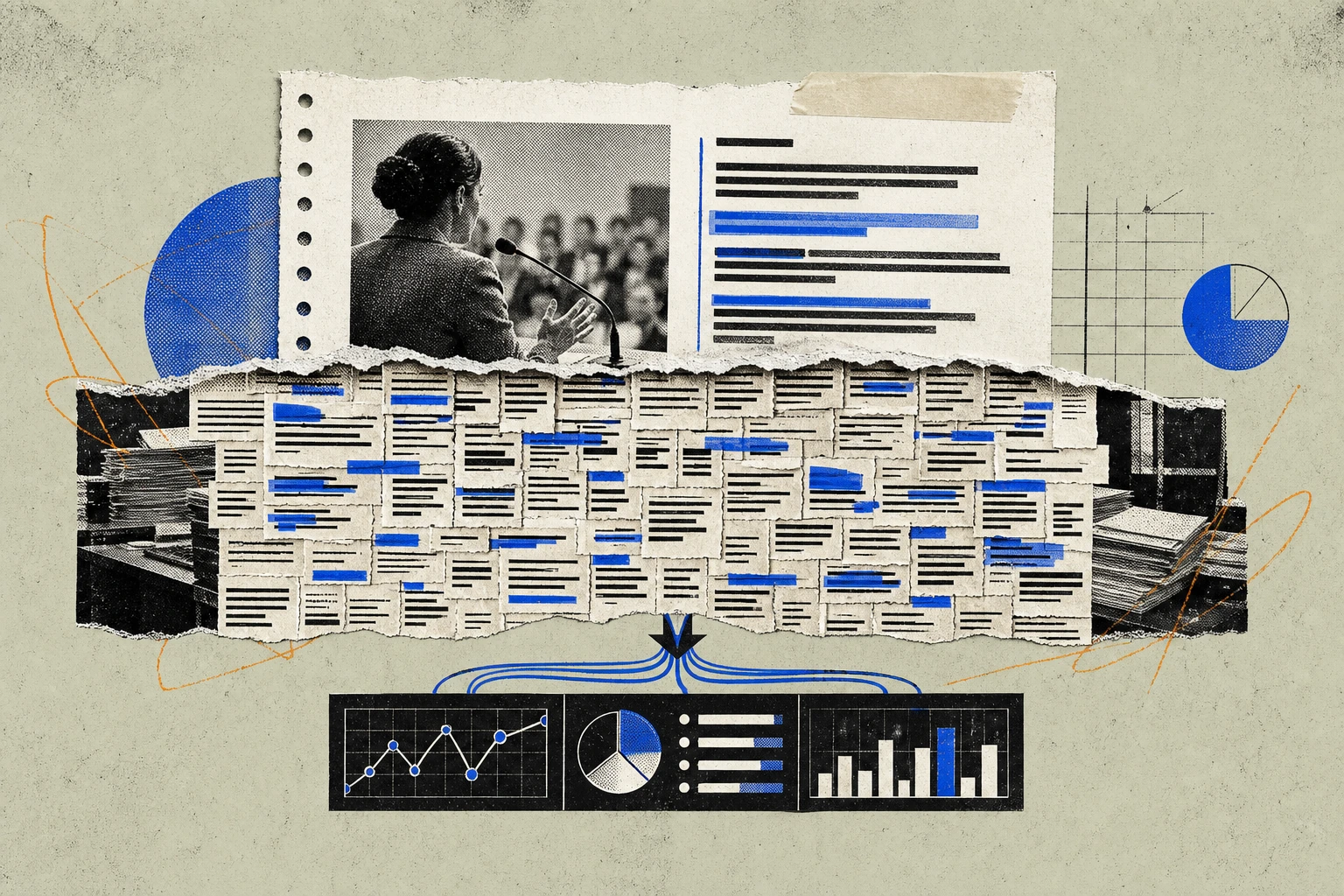
Tegus, since combining with AlphaSense, has publicly discussed a library exceeding 150,000 expert transcripts as of 2024. That number sits alongside the aggregate call output of AlphaSights, GLG, Guidepoint, Third Bridge, and Dialectica, most of which do not publish comparable library figures but which, in aggregate, represent the deepest structured qualitative corpus on private companies that exists.
Our view is that the competitive dynamic among the expert networks is quietly shifting from a services business (moderated calls sold as a subscription) toward a data business (a searchable, retrievable transcript library that agents plug into). The services layer is not going away. It is what produces the corpus. But the asset that a buy-side agent workflow actually consumes is the library, not the individual call, and the pricing, packaging, and product surface of the category will move toward that reality.
The product moves that make the backbone visible
A handful of 2024 and 2025 product decisions make the shift concrete rather than theoretical.
Six Degrees Intelligence began feeding Chinese qualitative research into S&P Capital IQ Pro in 2025, wiring a regional qualitative corpus into a workflow that historically ran on quantitative feeds. The signal is that the incumbent private-market data platforms are treating qualitative depth as a gap they need to fill through partnership rather than build.
Perplexity's Comet routes analyst queries through Guidepoint, D&B, and IBISWorld, an architecture choice that says the retrieval layer for a research agent is a stack of vetted vendor corpuses rather than the open web. Guidepoint's inclusion in that stack, alongside a credit-data vendor and an industry-report vendor, is the clearest external validation that expert-network content is being treated as tier-one infrastructure by the AI-native research products.
Maywood wired PitchBook private-company records into its Maverick agent, an obvious pairing on the quantitative side that inevitably raises the question of what the qualitative equivalent looks like. Our read is that the answer, for any agent doing serious private-market work, has to include a transcript library. PitchBook tells the agent that a company raised a Series D at a $1.2B post. The transcript library tells the agent what the customers think of the product.
Rogo's acquisition of Arvo folds a finance-tuned meeting-transcription layer directly into deal-team workflows. This is a slightly different vector, transcription of the deal team's own meetings and interviews rather than a third-party expert-network library, but it points to the same underlying claim: the deal team's future memory is going to be a searchable transcript corpus, and the tooling category is being built around that assumption.
Who is actually building on it
The demand side is not hypothetical. Hedge funds like Bracket22, and pods within Citadel and Balyasny, are extending agent workflows into private-issuer names that will not have public filings for years, if ever. The private-credit desks at the same firms have been consumers of expert-network research on private borrowers for longer than the public-equity desks have been agent-curious. Growth-stage crossover funds run private books alongside their public books and have needed a qualitative corpus on the private side for at least a decade.
What has changed is not the demand for private-issuer qualitative research. It is the mechanism by which that research is consumed. A pod PM in 2019 who wanted qualitative color on a private company read the transcripts, took notes, and held the context in their head. A pod PM in 2026 who wants the same color asks an agent, and the agent's answer is only as good as the corpus it retrieves against. That shifts the value of a deep private-issuer transcript library from a nice-to-have subscription feature to a determinant of whether the agent workflow is usable at all.
Buy-side firms are also, based on INFLXD's own recent coverage of private-company sourcing playbooks, building distinct diligence workflows for private issuers rather than trying to bolt private names onto the public-equity process. Those distinct workflows have a distinct corpus, and the transcript library sits at the center of it.
Consent artifacts, provenance, and the compliance surface
The public-equity side of the AI-research stack has spent the last two years working out how to give compliance officers a defensible answer to three questions: where did this claim come from, was the underlying source obtained with appropriate consent, and can the retrieval chain be audited end-to-end. Model context protocol wiring, provenance metadata, and consent-artifact standards are the technical answers taking shape on the public side.
None of that infrastructure was originally built for a private-company transcript corpus. Expert-network transcripts have always carried a consent artifact, the compliance-vetted expert agreement is the entire reason the industry exists, but the artifact was designed to be surfaced to a human moderator and a human compliance reviewer, not to a retrieval chain that ends in a machine-generated answer that a PM will act on.
Our view is that this is the next enforcement surface. A private-market agent that returns an answer sourced from an expert transcript needs to carry, in the answer itself, a machine-readable provenance record: which network, which call, which expert role, which date, which consent scope. The buy-side compliance function will not accept less as agent output moves from exploratory tools to decision-support. The expert networks that produce clean provenance chains, natively wired for MCP-style retrieval, will be the ones whose libraries the agents actually route through. The ones that do not will find their content quietly dropped from the retrieval stack by every serious buy-side integrator.
This is where the private-market corpus question stops being an interesting category observation and becomes an operational problem for the networks themselves. The transcript library is only an agent-consumable asset if the metadata around each transcript survives the trip through the retrieval chain. That is not a research problem. It is a product problem, and the networks that treat it as such over the next 18 months will be the ones whose libraries anchor the private-market agent stack.
The China caveat
One region-specific note that materially affects the corpus question. Several expert networks paused or restructured their China-based call operations after the Capvision and Bain incidents, and the qualitative corpus on Chinese private issuers thinned as a result. Six Degrees Intelligence's move into S&P Capital IQ Pro reads, in that context, as a partial rebuild of a corpus that the traditional networks stepped back from.
The implication is that the transcript-library depth on any given private issuer is not uniform across regions, and an agent workflow that assumes it can retrieve equally against a US Series D SaaS company and a Chinese consumer-internet company will produce very different answers to structurally similar questions. Buy-side teams building agent workflows on private-market research need to know where the corpus is thin, and adjust the confidence calibration of the agent's output accordingly. Our read is that most current implementations do not do this, and the first serious diligence misstep sourced to a thin regional corpus will be a category-defining moment.
What we would want to ask a research head next
Five questions we think a research head at a growth-stage crossover fund, a private-credit desk, or a multi-manager pod should be putting to their vendors and their internal AI team this quarter.
- What is the transcript depth, measured in unique transcripts per issuer, that your agent workflow requires before it will return a confident answer on a private-company diligence question, and how does that threshold vary by sector?
- Which expert-network libraries are wired into your retrieval stack today, and what is the provenance-metadata standard each of them delivers?
- When the agent returns an answer sourced from an expert transcript, what does the compliance-facing audit trail look like, and would it survive a regulator inquiry two years from now?
- How thin is your private-issuer corpus by region, and where are the geographies in which the agent should default to lower confidence or a human-in-the-loop step?
- What is your policy on transcripts generated by your own deal team's internal calls, including calls with prospective portfolio companies, and how are those transcripts distinguished in the retrieval chain from third-party expert-network content?
These are not exotic questions. They are the questions every equivalent workstream on the public-equity side has already worked through, in a corpus that was built for the purpose. The private-market equivalent is being assembled in production, on top of a corpus that was not.
Are your experts using AI to cheat?
Try our free demo to find out today.
Powering institutional-grade transcription for expert networks.
INFLXD provides AI-powered, human-edited transcription with sub-1% error rates for the world's leading expert networks and financial research firms.
Visit inflxd.com →Keep reading.

How Buy-Side Firms Handle Expert-Network Call Cancellations: 7 Structural Models
A field guide to the fee, rebooking, and consultant-compensation structures that shape cancellation economics across the expert-network industry.
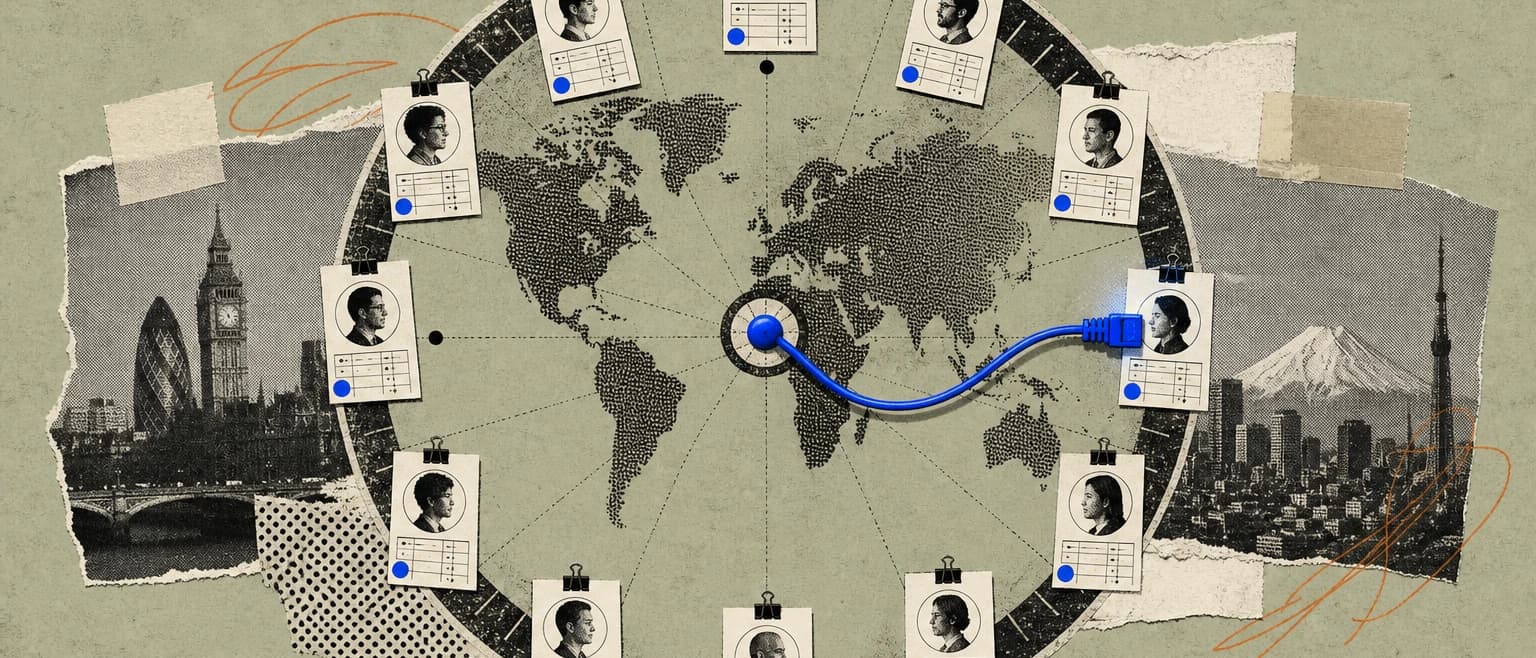
How Expert Networks Handle Scheduling Across Time Zones: A Field Guide to Global Primary Research
The operational mechanics that decide whether a London analyst gets a Tokyo engineer on the phone by Wednesday or Friday.

How Expert Networks Retain High-Value Consultants: 7 Structural Models
The supply side is the binding constraint on premium topics. Here is how the major networks keep scarce experts responsive.