

7 Ways Buy-Side Firms Structure Expert-Network Call Transcripts for Litigation Hold and Discovery
As AI agents ingest expert-call content, the discoverable surface grows. Seven structural patterns compliance teams are using to keep transcripts, summaries, and agent outputs defensible.
Expert-network call transcripts sit in an awkward legal position. They are research artifacts to the analyst, ephemeral notes to the PM, and, increasingly, discoverable business records to opposing counsel. The gap between how buy-side firms treat this content operationally and how litigators treat it under FRCP Rule 34 has widened as AI agents ingest, summarize, and re-embed the same source transcript across a dozen downstream systems. This guide walks through seven structural patterns compliance, legal, and research-ops teams at hedge funds and asset managers are using to make expert-call content durable under litigation hold and responsive under e-discovery, without breaking the research workflow that made the calls valuable in the first place.
1. WORM storage for raw transcripts and audio
The foundation is preservation of the source object in a form that cannot be silently altered. Broker-dealers have lived under SEC Rule 17a-4 for decades, which requires certain records to be maintained in a non-rewriteable, non-erasable format, historically WORM (write-once-read-many) media. The 2022 amendments modernized the rule to allow an audit-trail alternative, but the preservation logic did not change: the original artifact has to be provably unaltered.
Investment advisers are not directly bound by 17a-4, and most expert-network transcripts sit outside the strict scope of the rule. In practice, though, buy-side firms with any broker-dealer affiliate, or firms that anticipate an SEC exam touching their research process, mirror the control voluntarily. That means routing raw transcript files and, where available, the underlying audio into an archive layer with cryptographic write protection and time-stamped hashes. Communications-archiving vendors including Smarsh and Global Relay have extended coverage from email and chat into voice and meeting content, which is the closest off-the-shelf fit for expert-call preservation.
2. Legal-hold tagging inside the EN portal
The cleanest place to freeze a transcript is at the point of origin. Networks such as GLG, Guidepoint, and AlphaSights support engagement-level metadata that a client-side compliance team can flag, so that a matter opened against a portfolio company, an industry, or a specific expert can auto-freeze the corresponding transcripts and any pending deletions.
The operational trick is mapping the internal matter code, which lives in the firm's legal-hold system, to the identifiers the EN portal uses for engagements, experts, and custodians. Most firms handle this with a periodic reconciliation job rather than a live integration. That is workable for a small caseload; it becomes a liability when a firm has multiple concurrent holds touching overlapping sectors, and a transcript sits under two matters with two different retention outcomes. Compliance teams building this out are pushing their EN counterparties for tag hierarchies rather than flat labels.
3. Derivative-artifact tracking for AI outputs
This is the pattern that has changed the most in the past 18 months, and it is the one most firms have not fully instrumented. A single expert transcript now typically generates a set of downstream artifacts: an LLM-generated summary, a set of embeddings sitting in a vector store, one or more agent outputs that cited the transcript in a chain of reasoning, and often a set of chat exchanges where an analyst asked follow-up questions of an internal research bot pointed at the transcript.
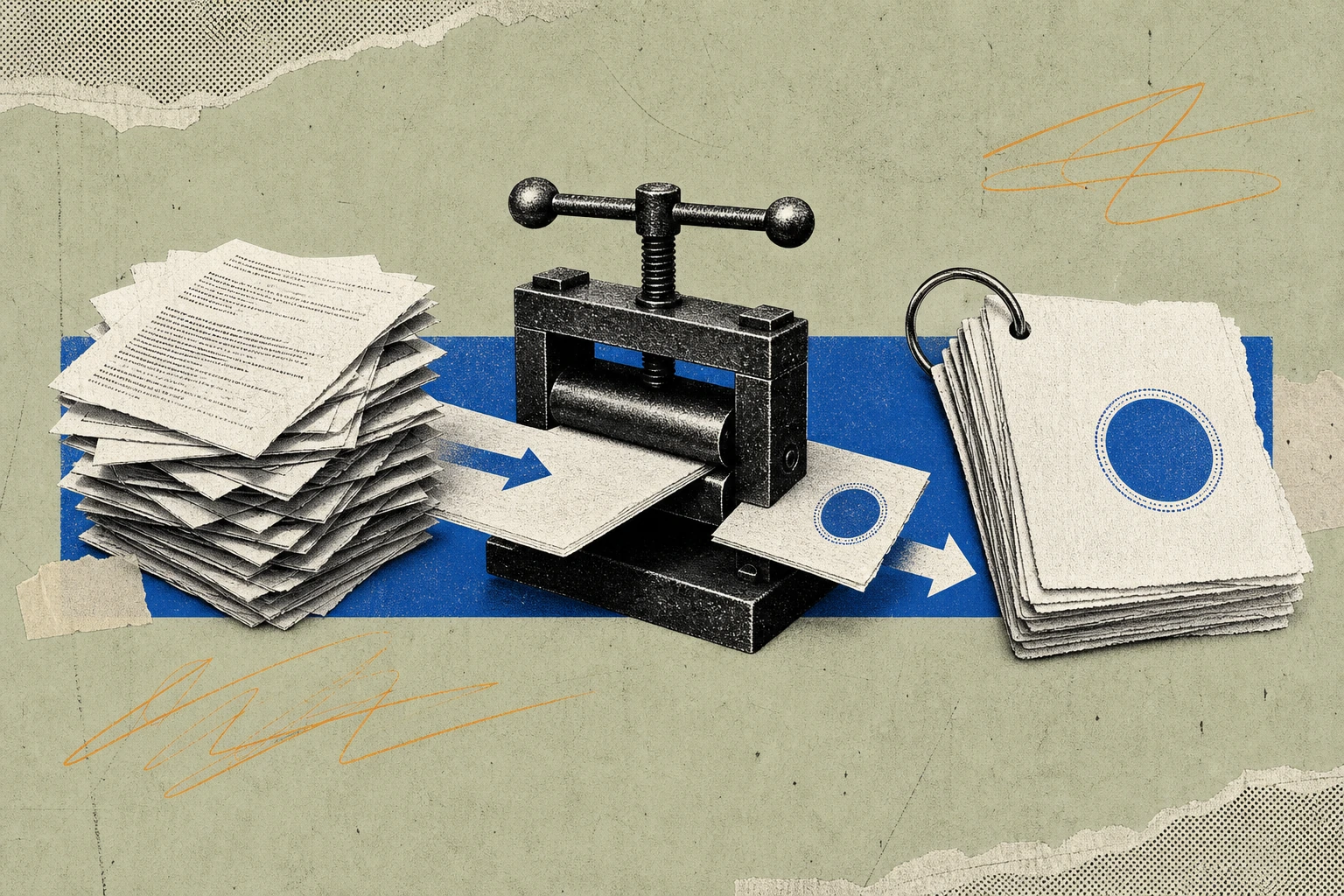
Under a preservation duty, all of those derivatives are potentially responsive. An e-discovery request framed as all documents and communications referencing an expert or a portfolio company will reach the summary and the agent output, not just the transcript. The structural fix firms are adopting is a lineage graph: every derivative artifact carries the hash of its source transcript and the identifier of the model and prompt that produced it. Relativity and Everlaw both support custom-metadata ingest that can carry those lineage fields into review, though the population of the metadata is still a firm-side responsibility.
4. Retention-clock harmonization
Expert networks typically default to transcript retention windows of 12 to 24 months, driven by their own storage economics and by client contracts that often specify a maximum rather than a minimum. Investment advisers registered with the SEC sit under a separate obligation: Rule 204-2 under the Advisers Act requires books and records related to the investment advice given to clients to be maintained for five years, with the first two years in an easily accessible location.
The two clocks rarely line up. A transcript that supported an investment thesis is arguably a record that reflects the advice, and letting the EN's default lifecycle delete it before the five-year window closes creates a records gap that surfaces awkwardly in an exam or a litigation production. The pattern here is export-and-vault: transcripts are pulled into a firm-controlled archive at the point of delivery, and the EN's own retention becomes a redundant secondary copy rather than the system of record. This also has the effect of putting the firm, not the network, in control of the deletion event.
5. Custodian mapping when the consumer is an agent
E-discovery workflows assume a custodian: a human whose files, mailbox, and devices are collected. Expert-call transcripts have historically had a clean custodian, the analyst who requested the call. As AI agents move from summarization into active research consumption, the custodian question gets messier. If an agent ingested a transcript into a firm-wide knowledge base that then answered questions for three different PMs, who is the custodian of the transcript for the purpose of a hold notice?
The workable answer most firms are landing on is dual custody: the requesting analyst remains the human custodian for hold-notice and interview purposes, and the research platform itself is registered as a system custodian with its own preservation obligations and its own collection procedure. This mirrors how firms already treat shared drives and Slack channels. It requires the research-ops team to maintain an inventory of which systems consume EN content, which is a useful artifact for reasons well beyond litigation.
6. Privilege-log workflows for legally sensitive engagements
Some expert engagements touch legal advice: a call arranged in consultation with in-house counsel to understand a regulatory regime, a call where outside counsel is on the line, a call whose subject matter is the basis of pending or anticipated litigation. Those transcripts may be subject to attorney-client privilege or work-product protection, and they need to be logged as such rather than produced.
The structural pattern is a privilege flag at the engagement level, applied at the time the call is booked rather than retroactively at production time. Retroactive privilege review of expert transcripts is expensive because the reviewer has to read the whole document to decide. A prospective flag, set by legal ops when the engagement is opened, moves the decision to the moment when the context is freshest and the cost is lowest. Review platforms including Relativity and Everlaw handle the log generation once the flag is present; the discipline is upstream.
7. Cross-border data residency and the GDPR conflict
The hardest pattern to resolve cleanly. When an EU-based expert is on a call, the transcript is personal data under GDPR, and the expert has a right of erasure under GDPR Article 17 that can be invoked at any time. When the same transcript is subject to a US litigation hold, the fund has a preservation duty that directly conflicts with the erasure request.
The pragmatic patterns firms are using: pseudonymization of expert personal identifiers at ingest, so the substantive content of the transcript is preserved while the personal data footprint is minimized; jurisdictional routing of storage, so EU-expert transcripts sit in EU-region archives with EU-side access controls; and documented reliance on Article 17(3)(e), which carves out an exception where processing is necessary for the establishment, exercise, or defense of legal claims. None of these fully eliminates the conflict, and firms with material EU expert flow are typically getting outside privacy counsel to bless the specific workflow rather than relying on a general policy.
Are your experts using AI to cheat?
Try our free demo to find out today.
Powering institutional-grade transcription for expert networks.
INFLXD provides AI-powered, human-edited transcription with sub-1% error rates for the world's leading expert networks and financial research firms.
Visit inflxd.com →Keep reading.
How Buy-Side Firms Handle Expert-Network Call Prep Documents: 7 Retention Models
The agenda, question list, and background memo sit in an awkward category after the call ends. How firms retain them shapes compliance exposure and AI-research reusability.

How Expert Networks Pay Experts: 7 Compensation Structures Behind the Consulting Fee
The mechanics that shape who accepts a call, what the buy-side pays per hour, and why survey work looks nothing like a consulting engagement.
How Buy-Side Firms Handle Expert-Network Call Note-Taking: 7 Structural Models
The workflow choice is rarely documented, varies materially by firm type, and shapes everything from IC-memo latency to agent-readiness.