

Hebbia ships new version of Matrix as AI research tools crowd Wall Street
The 2020-founded company known for grid-style document analysis is updating its flagship product as competitors push into the same workflow.

Hebbia has released an updated version of Matrix, its document-analysis product, as the company works to defend an early lead in AI tools built for Wall Street research desks, according to Business Insider.
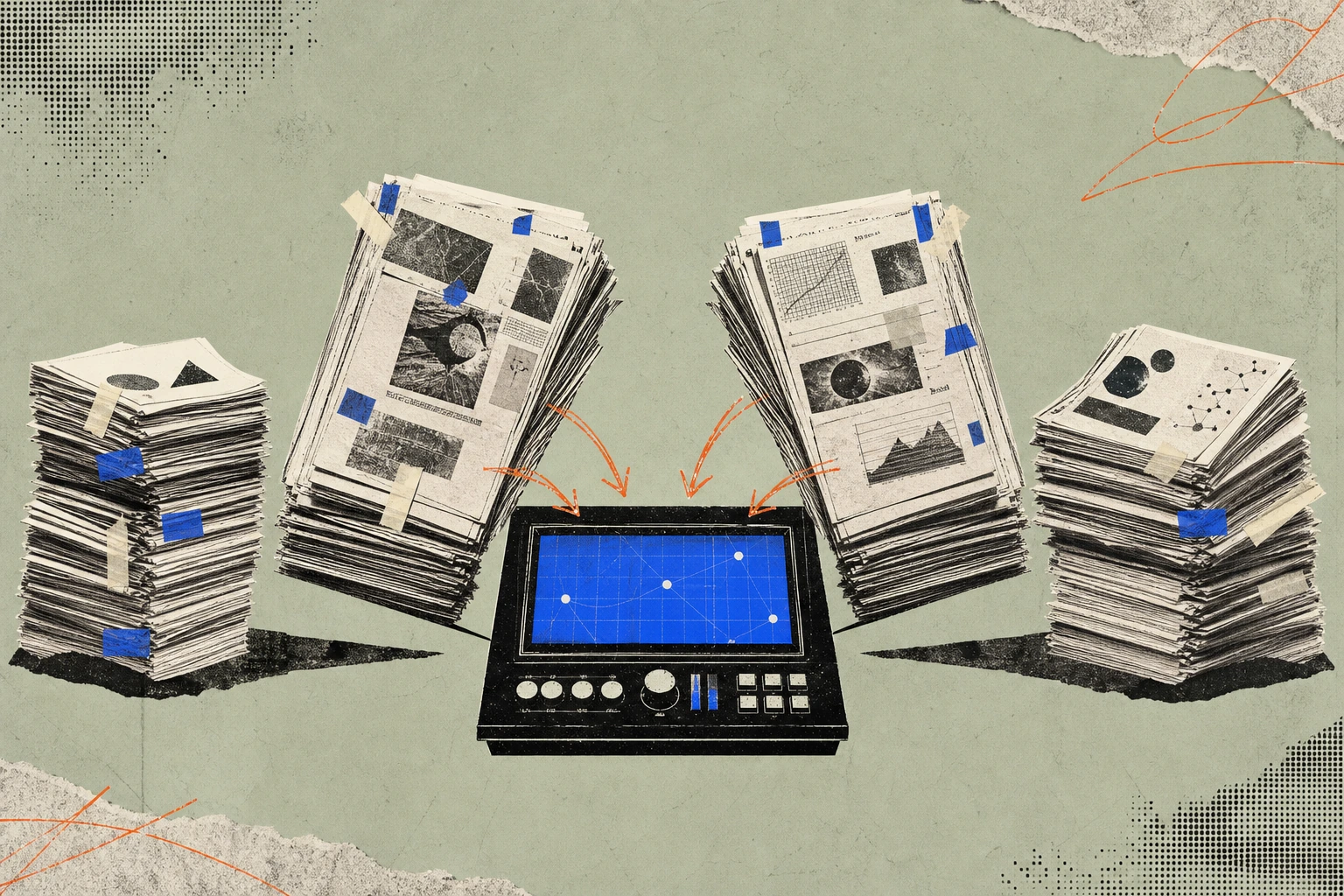
The original Matrix product took a specific bet on interface. Rather than a chatbot answering one question at a time, users upload a set of documents and pose several questions at once. The system returns a grid: one row per document, one column per question. That format matched how analysts already worked in Excel and made the output easier to audit than a conversational thread.
In a blog post accompanying the release, CEO George Sivulka argued that AI capability alone does not create value, and that the product layer is what turns a model into something a professional can use. He compared the relationship to fire and the torch, or the wheel and the chariot, per Business Insider's account of the post.
Hebbia was founded in 2020. In 2024, it raised USD 130M in a round led by Andreessen Horowitz. That round put the company among the better-capitalized entrants in the AI-for-finance category, alongside AlphaSense, Rogo, Linq, and a growing set of horizontal players extending into the same workflow.
The competitive backdrop is what makes the Matrix update notable. When Hebbia launched, the grid interface was differentiated. Four years later, most large vendors serving buy-side and sell-side research have shipped some version of multi-document Q&A, whether as a standalone product, a feature inside a broader terminal, or an agentic workflow built on top of a foundation model. The moat is no longer the idea of asking many questions of many documents. It is the accuracy of retrieval, the latency of the grid, the auditability of each cell, and the depth of integration into existing research stacks.
Business Insider's piece is paywalled beyond the setup, so the specific feature set of the new Matrix version is not public in the excerpt available. What is public is the framing: Sivulka is positioning Hebbia as the product layer for AI in finance, not as a wrapper on someone else's model.
Are your experts using AI to cheat?
Try our free demo to find out today.
The broader signal is that the AI-for-finance category has moved past the phase where a single interface choice was enough to define a company. Product-layer arguments now have to be defended feature by feature, benchmark by benchmark, and desk by desk.
Powering institutional-grade transcription for expert networks.
INFLXD provides AI-powered, human-edited transcription with sub-1% error rates for the world's leading expert networks and financial research firms.
Visit inflxd.com →Keep reading.

How Buy-Side Firms Handle Expert Substitution Requests: 7 Structural Models
When a scheduled expert falls through or the first call misses the thesis, the swap workflow is governed by firm-level process, not vendor policy.

Buy-side research budgets flat in H1 2026 as AI spend climbs 40%
Overall research wallets grew just 0.4% in the first half, with the reallocation flowing into AI tooling rather than external providers.

ABI Research names Starlink and Skylo leaders in D2C satellite ranking, Elveo flagged on innovation
The direct-to-cell satellite competitive map now has a public scorecard, with Elveo Mobile positioned as the challenger behind Lynk and Omnispace's merger.