

How Buy-Side Firms Structure Expert-Network Spend Approval: 7 Threshold Models
A practical map of the dollar, volume, and engagement-type gates that buy-side firms use to control expert-network spend without slowing the research desk.
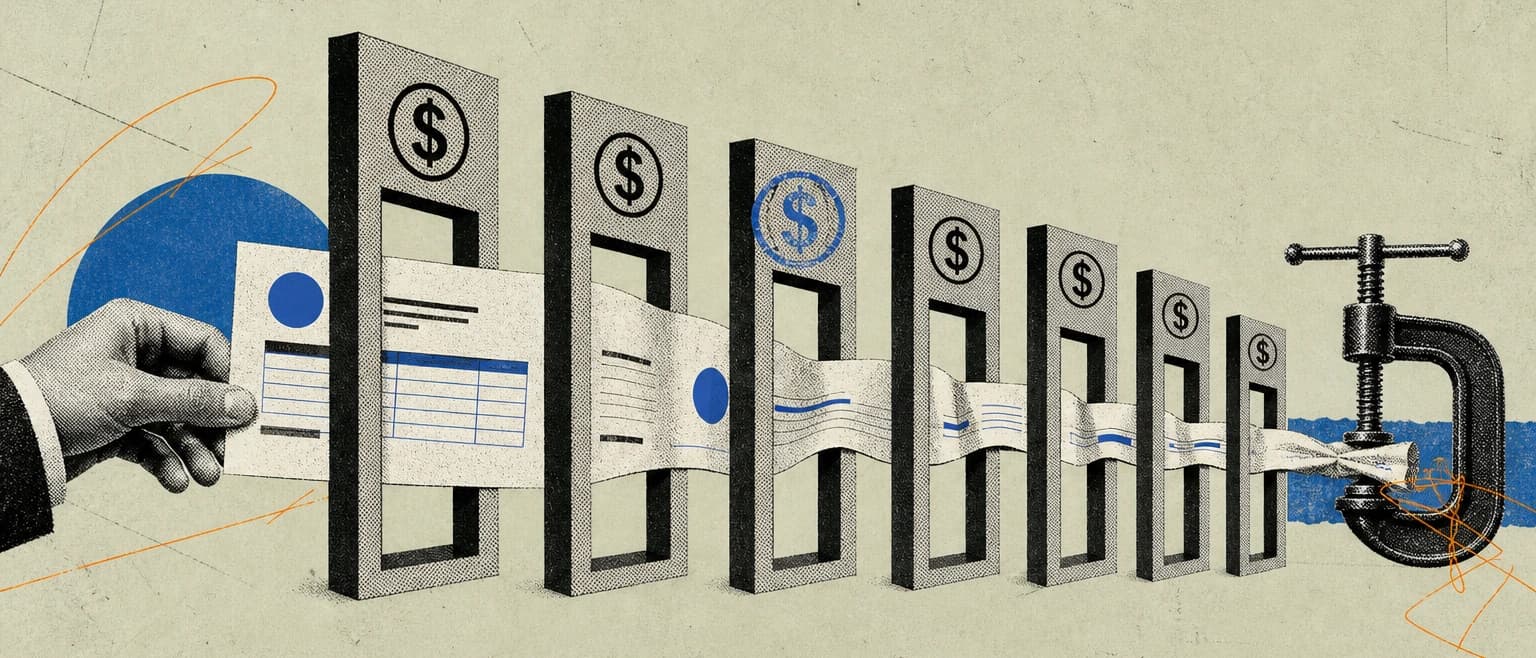
Expert-network spend is one of the few external research line items where a junior analyst can, in a single click, commit the fund to a four-figure invoice. Buy-side firms respond with layered approval thresholds: dollar caps, volume caps, engagement-type gates, and compliance-driven escalations that sit on top of the vendor's own booking flow. The specific shape varies by fund size and strategy, but the underlying models are consistent enough to catalogue.
The seven models below are the ones that surface repeatedly in buy-side research operations. Most funds run two or three of them in combination rather than any single model in isolation.
1. Per-Call Flat Threshold
The most common first gate. An analyst can book any one-hour call under a standard rate , usually USD 1,000 to USD 1,500 , without a second signature. Anything above the line requires portfolio-manager sign-off before the call is confirmed.
The threshold exists because standard expert rates cluster tightly. When a booking crosses it, one of two things is usually happening: the expert is a premium-tier consultant (former C-suite, former regulator, hard-to-source geography), or the expert network is quoting a specialist rate that reflects scarcity rather than seniority. Premium rates at established networks such as GLG and Guidepoint routinely land above USD 2,000 per hour for the C-suite and former-official tier, which is why the USD 1,500 line is where most desks place the trigger.
The model's strength is speed: the median call clears without human review. Its weakness is that it treats every sub-threshold call as equivalent, which is why most firms layer at least one other model on top.
2. Monthly Analyst Budget Cap
The second-most common model, and the one that best matches how sell-side and buy-side analysts actually work. Each analyst is allocated a monthly pool , typically 8 to 12 calls, or USD 10,000 to USD 15,000 , with auto-approval up to the cap and PM override above it.

The pool structure does two things. First, it pushes the prioritisation decision onto the analyst, which is where it belongs: the person closest to the thesis is the person best placed to decide whether a marginal call is worth a marginal slot. Second, it produces clean per-analyst spend telemetry, which matters at year-end when the head of research is defending the external-research budget to the CFO.
The monthly cadence is deliberate. Quarterly caps concentrate spend in earnings season; weekly caps create administrative friction without meaningfully changing behaviour. Monthly is the interval at which most desks find the trade-off tolerable.
3. Coverage-Team Pooled Budget
A variant used at multi-manager platforms and larger long-onlys where analysts sit inside sector pods. The threshold is set at team level, and the sector head approves any engagement that draws down more than a defined share of monthly allocation , commonly 20% to 25% , in a single call or project.
The pooled model handles the reality that coverage teams have uneven research cadence. A consumer-staples team in a quiet week can lend capacity to a semis team preparing for a print. The gate on any single large drawdown prevents one analyst from consuming the pod's budget on a speculative project without the sector head weighing in.
The operational cost is a shared spend view, which is where the aggregation layer matters. Firms running pooled budgets across multiple networks , AlphaSights, GLG, Guidepoint, Third Bridge, Dialectica, Tegus , typically enforce the threshold through an aggregator such as Inex One or Proceed rather than trying to reconcile invoices manually.
4. Engagement-Type Tiering
The cleanest model conceptually, and the one that most reliably survives compliance review. Standard one-hour calls auto-approve up to the per-call threshold. Custom surveys , typically USD 15,000 to USD 50,000 , moderated panels, in-person expert meetings, and multi-expert projects require both compliance and PM approval regardless of dollar value.
The rationale is that engagement type is a better predictor of risk than dollar value. A USD 40,000 custom survey involves recruitment, screener design, and a written work product that lives on the firm's systems indefinitely. A USD 1,800 premium call is a 60-minute conversation with a transcript that compliance has already reviewed under the vendor's process. The two engagements have different risk profiles even if the survey is only marginally more expensive than a handful of premium calls.
Engagement-type tiering is also the model that best accommodates in-person meetings, which several firms treat as a distinct category because of the compliance overhead: no recording, no vendor-side transcript, and a higher burden on the analyst to document the conversation contemporaneously.
5. Cumulative-Per-Expert Threshold
This one is compliance-driven, not cost-driven. Any single expert who exceeds a cumulative hours cap , commonly 8 to 10 hours across the firm per calendar year , triggers escalation regardless of the per-call rate.
The threshold exists because the SEC's 2010 pay-to-play and consultant guidance, and the broader body of enforcement actions that followed, flag repeat-consultant patterns as an elevated MNPI risk vector. An expert used once or twice is a data point; an expert used a dozen times across multiple funds inside the same firm starts to look like a relationship, and relationships are where the SEC has historically found problems.
Enforcement of this model is where the aggregation layer matters most. Firms running four or five networks in parallel cannot detect a cumulative-hours breach without a unified expert identifier across vendors , which is precisely the problem aggregators such as Inex One were built to solve. Without that layer, the threshold exists on paper and fails in practice.
6. Idea-Stage Gating
A more recent addition to the approval stack, and one that speaks directly to how expert calls interact with position management. Pre-position research , the analyst is exploring a name but has no exposure , auto-approves up to a lower cap. Post-position or thesis-defense calls, where the fund already owns the name and the analyst is looking for confirmation, require explicit PM approval.
The logic is behavioural. Expert-network spend has a known tendency to inflate around existing positions because confirmation-seeking is cheaper than thesis-challenging: it is easier to book a call with an expert who will validate the view than to design a research plan that could kill it. Gating post-position calls at the PM level forces the conversation about whether the marginal call is genuinely informative or is buying comfort.
This model is less common than the first four but tends to appear at funds that have been through a drawdown attributable to a thesis they held too long. It rarely stands alone; it usually sits on top of a monthly budget cap.
7. Fund-Level Annual Burn Threshold
The final gate is the one the analyst never sees. CFO or COO review is triggered when total expert-network spend crosses a benchmarked share of the external research budget. Published benchmarks from Integrity Research and Substantive Research put typical expert-network spend at roughly 15% to 30% of external research budgets, depending on strategy and fund size, with fundamental long-short funds concentrated at the higher end and systematic strategies at the lower.
The threshold is not really about individual approvals. It exists to catch structural drift: an analyst hire that quietly doubled the desk's call volume, a strategy shift toward more idiosyncratic single-name work, a vendor renegotiation that changed the effective per-call rate. All three show up as a slow rise in the annual burn ratio rather than as any single expensive booking.
Most firms review the ratio quarterly and act on it annually. The action is rarely a hard cap; more commonly it is a rebalancing conversation between the head of research and the CIO about which networks are earning their contract and which are candidates for renegotiation or non-renewal.
How the Models Combine in Practice
Most buy-side firms run three or four of these thresholds concurrently. A representative stack at a mid-size fundamental long-short fund might look like: per-call flat threshold at USD 1,500 (Model 1), monthly analyst budget of 10 calls (Model 2), engagement-type tiering for anything beyond a standard hour (Model 4), and a cumulative-per-expert cap enforced through an aggregator (Model 5). The CFO's annual burn review (Model 7) runs in the background.
What the stack does not do , and this is where operations teams routinely underinvest , is enforce itself. Every one of these thresholds depends on a spend and engagement dataset that is unified across networks, and most firms still assemble that dataset from vendor invoices at month-end. The gap between the policy and the enforcement is where compliance surprises tend to originate.
Are your experts using AI to cheat?
Try our free demo to find out today.
Powering institutional-grade transcription for expert networks.
INFLXD provides AI-powered, human-edited transcription with sub-1% error rates for the world's leading expert networks and financial research firms.
Visit inflxd.com →Keep reading.
How Expert Networks Pay Consultants Across Borders: A Field Guide to Global Payout Rails
The payment rails a network uses shape who it can recruit, how fast experts come back, and what compliance paperwork sits behind every one-hour call.

How Buy-Side Firms Handle Expert-Network Call Transcripts After the Engagement Ends: 7 Retention and Access Models
A structural map of how multi-managers, long-onlys, and credit shops retain, redact, or purge expert-call transcripts once the research is done.

proSapient and Oliver Wyman publish survey on agentic AI in sales workflows
A joint survey of 100 sales leaders reports productivity gains alongside a 40% rate of AI-related incidents.