

9 Ways Experts Are Using AI to Cheat on Expert Calls
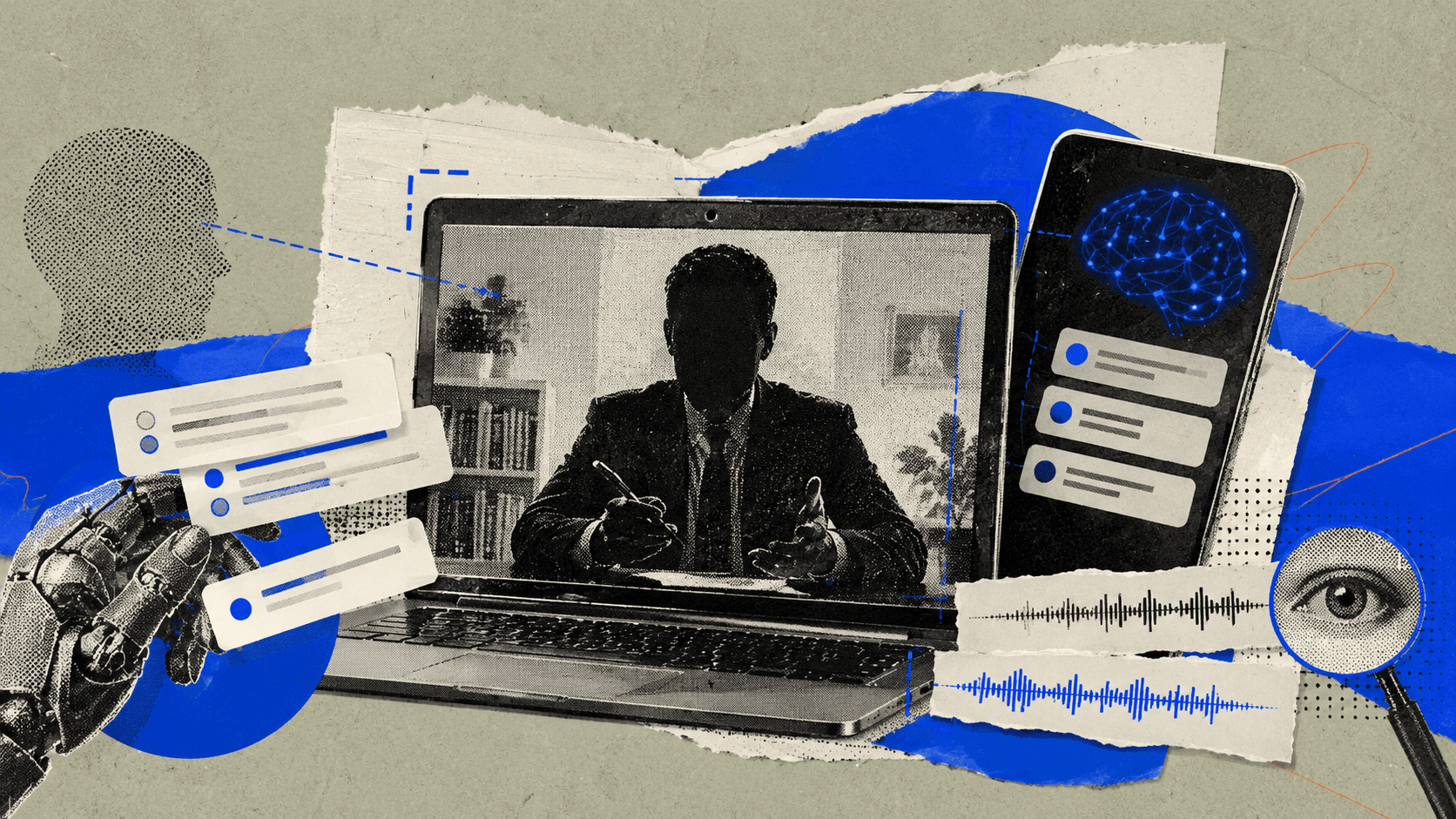
Your client pays for one thing on an expert call: a human’s unique insights. But what happens to your value as an expert network when all they get back is AI-generated answers?
Your client pays for one thing on an expert call: a human’s unique insights. But what happens to your value as an expert network when all they get back is AI-generated answers?
Experts are increasingly using AI to answer questions in real-time. Read on to find out how your network's credibility and reputation could be under threat.
1. Typing into an LLM mid-call
The crude version, and the most common. The expert keeps n LLM chat window open off-screen - be it Gemini, Claude, ChatGPT, or another LLM - and pastes in the analyst's question.
The tells: long pauses before any specific number, answers that arrive in tidy list form, a sudden shift in vocabulary. Obvious on a recording. Invisible at scale, because nobody listens back.
2. Pre-generated answers
The expert reads the call brief, runs it through a model the night before, and arrives with prepared material on topics they have never touched.
No live tooling. No artefacts. Nothing to catch in the moment. The call sounds fluent because it was written before it started.
3. Purpose-built cheating overlays
Cluely raised $5.3m in seed funding and then $15m from Andreessen Horowitz for software that watches your screen, listens to your audio, and feeds you answers through a hidden overlay.
It launched as a tool for beating technical job interviews, and has evolved into a tool to help consultants, sales reps, podcasters, white-collar employees at large, and you guessed it, experts.
4. Vibe-coded conversation copilots
Almost anybody with a basic command of language and access to a decent LLM can now assemble a conversation copilot of their own, much like Cluely…in minutes.
We built one for illustrative purposes ourselves using Claude Code in under 30 minutes flat (below). Speech recognition transcribes the analyst's question in real time, routes it to a model, and surfaces the answer as text.
5. The second device
Phone or tablet, off camera, out of frame.
6. Proxy experts
The person on the call is a different person to the one you screened. A junior colleague, a former colleague, or somebody paid to sit in, with a model carrying the technical load.
Gartner surveyed 3,000 job candidates and 6% admitted to interview fraud, either impersonating someone or arranging for someone to impersonate them. Expert networks carry the same structural exposure as employers, with a fraction of the contact time and no probation period to catch it.
7. Deepfaked video and cloned voice
A finance worker at Arup was tricked into paying out US$25 million to fraudsters using deepfake technology who posed as a company’s chief financial officer in a video call, according to Hong Kong police.
Palo Alto Networks' Unit 42 built a working synthetic identity in 70 minutes using a five-year-old computer and no prior deepfake experience.
Eleven allied governments have since issued an advisory on operatives using this exact technique to pass live hiring interviews.
Rare today. Cheap by next year. Security teams already treat it as routine.
8. Gaming the screening rather than the call
Some of the cheating happens before anyone dials in. AI-written profiles, fabricated project histories, model-generated answers to compliance questionnaires, all tuned to clear vetting.
Gartner projects that one in four candidate profiles worldwide will be fake by 2028. Everything downstream inherits that fraud. A flawless call with a fabricated expert is still a fabricated call.
9. Fabricated primary data
The expensive one.
The expert brings numbers. Pricing benchmarks. Churn rates. Market sizing. Headcount. Competitor win rates. A model produced them. They are delivered as first-hand knowledge.
Nothing in the transcript flags it. It reads as exactly the specificity your clients pay premium rates for, and it flows straight into an IC memo, a valuation model, a diligence pack.
Deloitte Australia refunded part of a A$440,000 government contract after academics found citations to research that did not exist. That was a written deliverable, with named authors, a review process, and months of lead time. An expert call has none of those controls.
What this means for your network
Three things worth sitting with.
Your transcript archive is the evidence base, and it looks fine. Every method above produces a clean recording. Reviewing transcripts will not surface any of them. Detection has to operate on speech timing, response latency, prosody, and linguistic fingerprints. Content gives nothing away.
Screening and call integrity are separate problems. Verifying a person once at onboarding tells you nothing about who spoke on Tuesday, or what was helping them. Most networks currently treat vetting as the control. Vetting sits upstream of the risk.
How we can help
We’ve developed the world’s first AI detection tool specifically targeted at expert networks. Contact us to learn more.
Powering institutional-grade transcription for expert networks.
INFLXD provides AI-powered, human-edited transcription with sub-1% error rates for the world's leading expert networks and financial research firms.
Visit inflxd.com →Keep reading.

How Buy-Side Firms Handle Expert-Network Call Cancellations: 7 Structural Models
A field guide to the fee, rebooking, and consultant-compensation structures that shape cancellation economics across the expert-network industry.
How Expert Networks Handle Scheduling Across Time Zones: A Field Guide to Global Primary Research
The operational mechanics that decide whether a London analyst gets a Tokyo engineer on the phone by Wednesday or Friday.

How Expert Networks Retain High-Value Consultants: 7 Structural Models
The supply side is the binding constraint on premium topics. Here is how the major networks keep scarce experts responsive.